Difference Between Tornado Cyclone And Hurricane
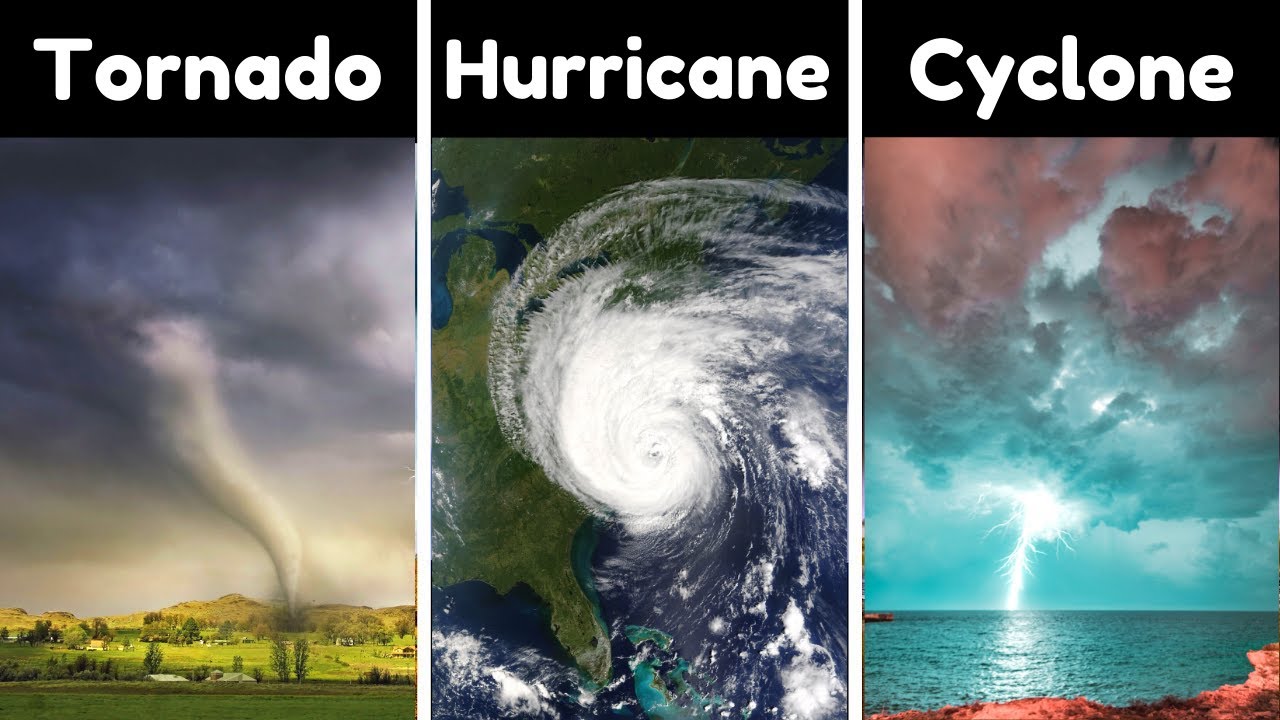
Okay, let's talk about swirling winds – because honestly, who hasn't felt like their life is a swirling vortex of chaos at some point? We're diving into the wonderful (and sometimes terrifying) world of tornadoes, cyclones, and hurricanes. Think of it like this: they're all basically grumpy siblings in the weather family, but each has their own unique personality quirks.
Tornadoes: The Tiny, Tantrum-Throwing Toddlers
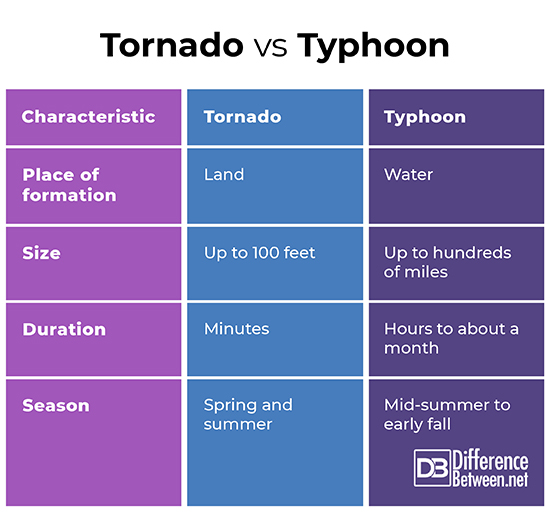
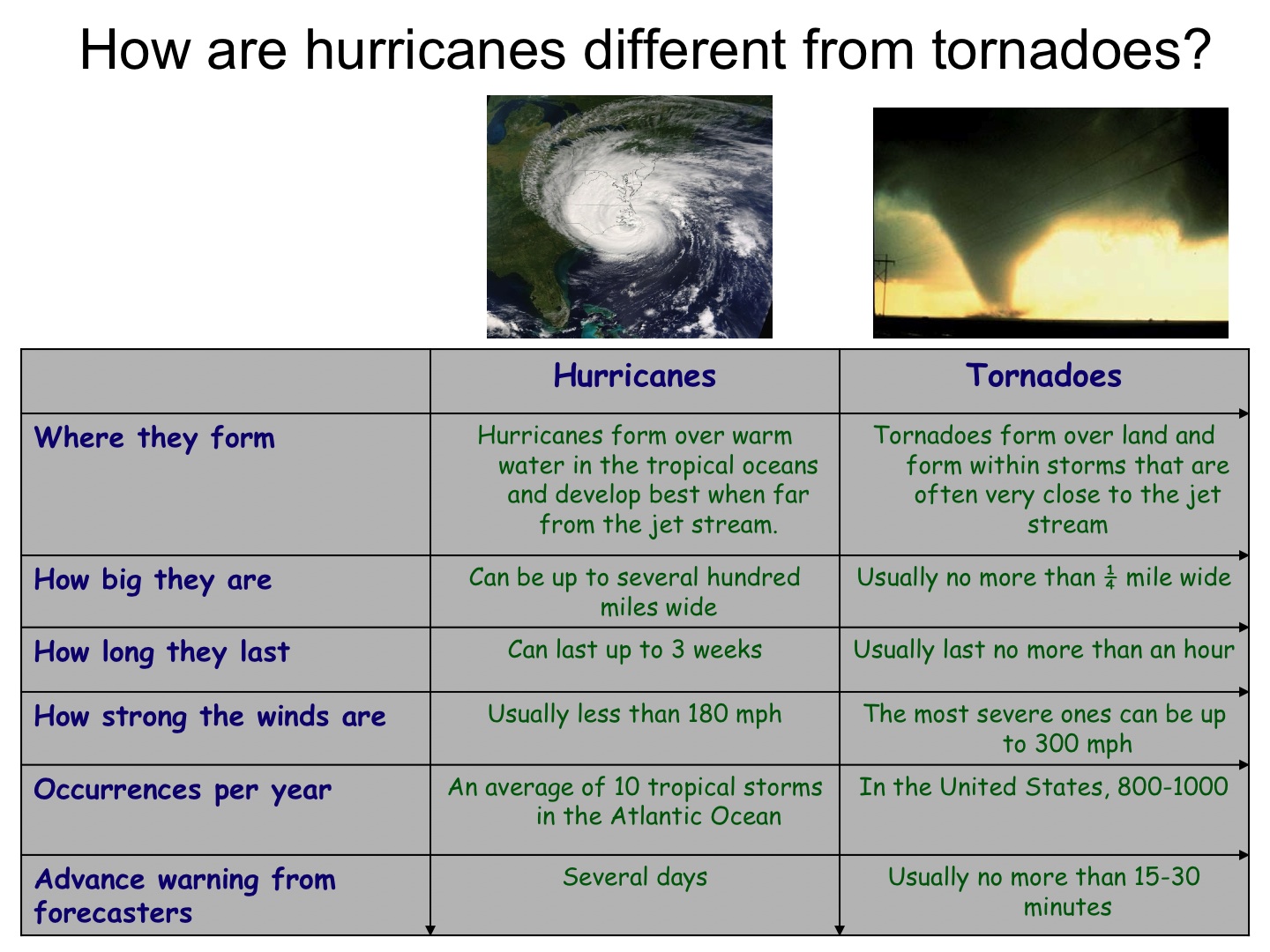
Tornadoes are like those toddlers who throw epic tantrums out of nowhere. One minute you're peacefully eating your ice cream, the next, BAM! Screaming, kicking, and a general sense of apocalyptic doom. That's a tornado for you. They're the smallest and shortest-lived of the bunch, usually only lasting a few minutes to an hour. But boy, do they pack a punch!
Think of it: you're driving down a country road, minding your own business, maybe humming along to some questionable 80s music, and then you see it – a big, angry funnel cloud snaking down from the sky. You immediately forget the lyrics, stomp on the gas, and pray to whatever higher power you believe in. That's the tornado experience. They're localized, meaning they affect a relatively small area, but within that area, everything's getting tossed around like salad.
Must Read
They're caused by supercell thunderstorms - those particularly nasty storms that look like they're about to swallow the entire sky. When warm, moist air collides with cool, dry air, and the winds start swirling in different directions, you've got the potential for a tornado. So, the next time you see a sky that looks like it's actively plotting against you, maybe head inside. Just a thought.
Cyclones: The Moody Teenagers
Cyclones, now these are like moody teenagers. They're bigger than tornadoes, last longer (days, sometimes weeks!), and can be incredibly destructive. But here's the kicker: "cyclone" is a general term. It basically just means a system of winds rotating around a center of low atmospheric pressure.

The thing is, where you are determines what you call it. In the North Atlantic and Northeast Pacific, we call them hurricanes. In the Northwest Pacific, they're called typhoons. And in the South Pacific and Indian Ocean? Cyclones! Same storm, different name, depending on the region. It's like ordering a "soda" versus a "pop" – same sugary goodness, just a regional preference.
Cyclones feed off warm ocean water, so they usually form in tropical regions. As they move over land, they start to weaken (because they’re essentially starving). But before they do, they can bring massive amounts of rain, powerful winds, and devastating storm surges. So, while they may be "moody," they're also seriously powerful.
Hurricanes: The Fully Grown, Drama-Loving Adults
Hurricanes, as mentioned earlier, are just cyclones with a fancy North Atlantic name. Think of them as the fully grown, drama-loving adults of the wind world. They’re the largest and most intense of the three, capable of causing widespread devastation.
Hurricanes are like the diva of weather events. They demand attention, they have elaborate naming systems, and they bring a whole entourage of problems with them: torrential rain, flooding, high winds, and storm surges (that's when the ocean decides to come inland and visit, uninvited). They're also tracked obsessively by meteorologists, because, well, they're that important (and scary).

You've probably seen the news footage: houses ripped apart, trees uprooted, streets turned into rivers. That's the hurricane's calling card. They’re fueled by warm ocean water and atmospheric conditions. The warmer the water, the stronger the potential storm. Hence, there's a lot of research going into this area.
In a nutshell: Tornadoes are the quick, localized bursts of anger. Cyclones are the broad term for rotating storms. And hurricanes (or typhoons) are the fully-formed, destructive beasts. So, the next time you hear about one of these weather events, you'll know which grumpy sibling is causing all the fuss.