
Difference Between Shear Stress And Normal Stress

Alright, settle in, folks! Grab your metaphorical coffee (or something stronger, I’m not judging), because we’re about to tackle the thrilling world of… stress! Specifically, shear stress and normal stress. Now, before your eyes glaze over faster than a donut fresh out of the fryer, trust me, this is more exciting than watching paint dry… marginally.
Think of it this way: Imagine you’re at a party. A really, really bizarre party thrown by materials scientists. (I know, I know, bear with me). You walk in and BAM! There's tension in the air. That's stress, baby! But what KIND of tension?
Normal Stress: The "Right in Your Face" Kind of Pressure
Normal stress is the kind that hits you head-on. It's the straightforward, no-nonsense pressure. Picture yourself standing in front of a really grumpy Sumo wrestler. He’s just… there. Imposing. His sheer mass is exerting a force perpendicular to you. That, my friends, is essentially normal stress.
Must Read
Okay, maybe that’s a bit extreme. A more relatable example? Imagine inflating a balloon. The air inside is pushing outward, perpendicular to the balloon's surface. That's normal stress doing its thing! We call it tensile stress if it’s pulling (like trying to stretch that balloon), and compressive stress if it’s squishing (like if the grumpy Sumo wrestler decides to… well, you get the picture).
So, if you’re ever feeling crushed by the weight of the world, congratulations! You’re experiencing compressive normal stress. Just, you know, on a metaphorical scale.

Shear Stress: The Sneaky Sideways Shove
Now, shear stress is a bit more subtle. It’s the kind of stress that comes at you from the side. Think of it as the annoying cousin who keeps nudging you during a movie. It's a force acting parallel to a surface.
Picture this: you’re trying to glue two pieces of wood together. You apply glue, press them together, and then slide one piece relative to the other. That sliding action? That’s shear stress! The glue is resisting that sideways force, trying to keep everything stuck together. If the shear stress is too high, the glue will fail, and your woodworking project will resemble a toddler's abstract art.
Another example? Think of playing cards. When you deal a deck, you're essentially applying a shear force to the top card, causing it to slide off the rest of the deck. If the friction between the cards wasn’t strong enough (maybe they’re covered in butter… don't ask), you'd end up with the whole deck sliding onto the floor. Buttered cards! The horror!
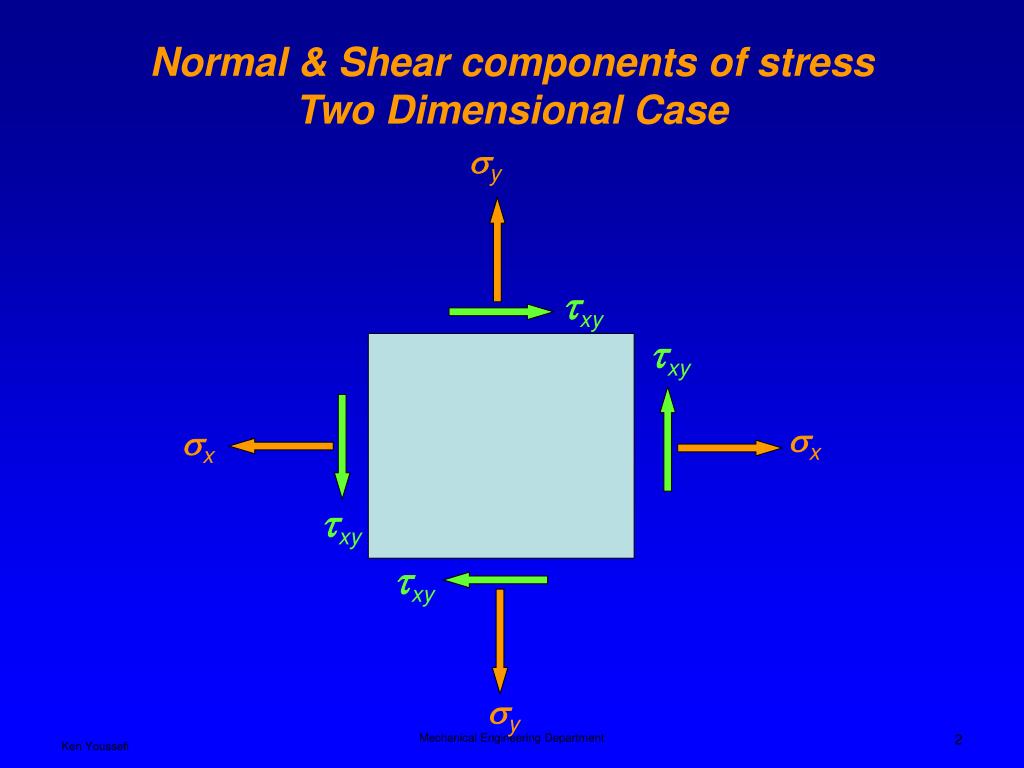
Basically, if normal stress is like a headbutt, shear stress is like a sneaky elbow jab. Both are painful, but one is a lot more… well, direct.
Let’s Get a Little More "Technical" (But Still Fun!)
Okay, time for a slightly more formal definition, but I promise to keep the humor flowing. Normal stress is defined as the force acting perpendicular to a surface divided by the area of that surface. So, it's force/area. If you can remember that, you’re basically a structural engineer. Almost.
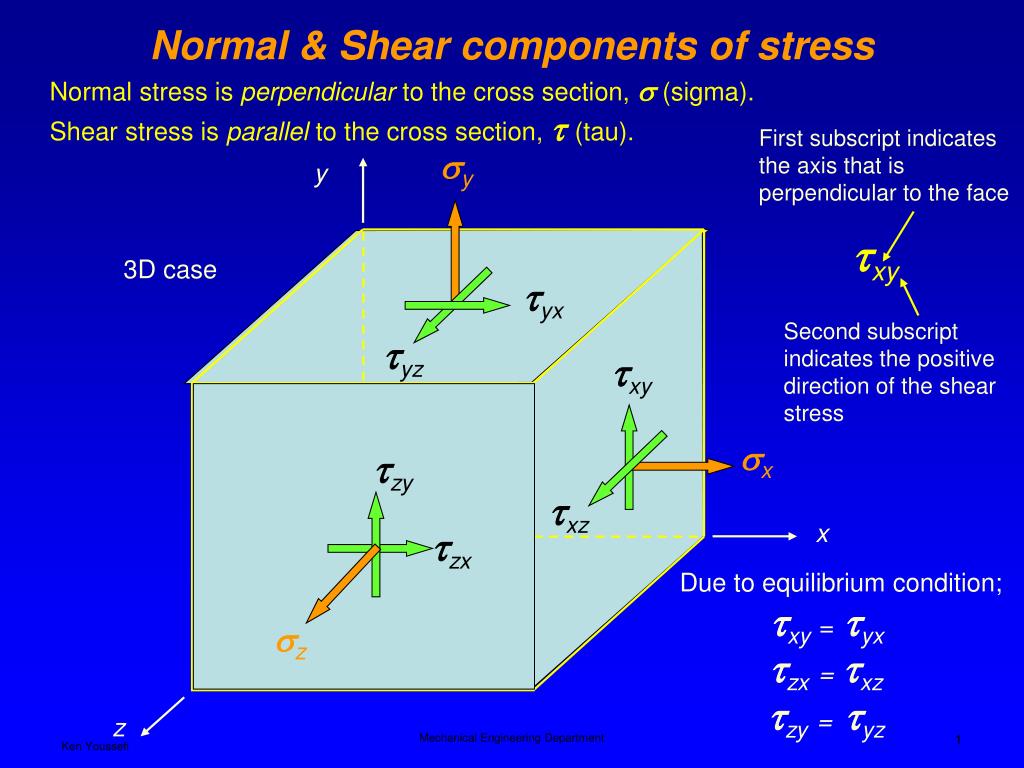
Shear stress, on the other hand, is the force acting parallel to a surface divided by the area of that surface. Same formula, different direction. It’s like the difference between pushing a door open and trying to slide a locked door sideways. One’s easy (hopefully), the other… not so much.
Fun Fact: Shear stress is what causes earthquakes! The tectonic plates are constantly grinding against each other, building up immense shear stress. When that stress exceeds the strength of the rocks, BAM! Earthquake. So next time you feel the earth move, you can thank shear stress (or blame it, depending on the magnitude).
Why Does This Matter Anyway?
Why should you care about normal stress and shear stress? Well, understanding these concepts is crucial in engineering. Engineers use them to design everything from bridges and buildings to airplanes and smartphones. They need to make sure that these structures can withstand the various stresses they'll be subjected to without collapsing, cracking, or generally falling apart.

Imagine building a bridge without understanding shear stress. You might end up with a bridge that looks great on paper, but collapses the first time a truck drives across it because the bolts holding the structure together sheared right off. Not a good look.
So, the next time you’re crossing a bridge, admiring a skyscraper, or even just enjoying a well-glued piece of furniture, take a moment to appreciate the unsung heroes of structural integrity: normal stress and shear stress. And maybe, just maybe, think about the grumpy Sumo wrestler and the buttered playing cards. You know, for good measure.
And that, my friends, is the (slightly) less boring explanation of normal and shear stress. Class dismissed! Now go forth and impress your friends with your newfound knowledge of materials science. You're welcome.