
Difference Between Robbery And Theft

Ever caught yourself saying, "Oh no, I was totally robbed!" when your favorite snack went missing from the fridge? Or maybe you've heard a friend lament, "My phone got stolen!" when they left it in a public place. It turns out, we often use these words almost interchangeably in casual conversation, without a second thought.
But did you know that in the eyes of the law, and even just common sense, there's a pretty big, surprisingly dramatic difference? It's not just about what went missing. It's all about how it vanished into thin air, and who was involved in the disappearing act.
Getting these terms straight can be quite illuminating, and sometimes, even a little amusing. It offers a new lens through which to view those everyday disappearing acts. Let's peel back the layers of these two often-confused concepts.
Must Read
The Case of the Vanishing Muffin: Understanding Theft
Let's imagine you baked the most glorious chocolate chip muffin. It was warm, gooey, and just begging to be devoured. You put it on the kitchen counter, just for a moment, while you went to grab a glass of milk.
When you returned, poof! The muffin was gone. No one was around, no dramatic confrontation, just an empty spot where your delicious treat once sat. This, my friends, is a classic case of theft.
Theft is often sneaky, subtle, and silent. It’s about taking something without the owner's permission, usually when they aren't looking or aren't aware. The perpetrator relies on discretion and the element of surprise.
Think of a skilled pickpocket gently lifting a wallet from a back pocket in a crowded street fair. The victim doesn't even realize what's happened until much later. There's no face-to-face showdown.
No "Your money or your life!" moment unfolds. Just a silent disappearance, often leaving you scratching your head and wondering, "Where did it go?" It's a mystery solved only by the absence of the item itself.
It can feel incredibly frustrating, even violating, when something is stolen. You feel a sense of loss and intrusion, even without a direct confrontation. But the key ingredient missing from theft is that direct, intimidating interaction with the victim.
Perhaps you left your umbrella at a coffee shop, and someone walked off with it, thinking it was theirs or simply taking a chance. That's theft. Maybe your neighbor "borrowed" your garden gnome indefinitely without asking, and it's now proudly displayed in their flowerbed. Also theft!
The value of the item doesn't change the definition. Whether it's a forgotten umbrella or a shiny new bicycle, if it's taken without permission and without direct force or threat, it falls squarely under the umbrella of theft. It's about a quiet, often opportunistic taking.

"The art of theft is often an art of invisibility, a silent ballet of taking what isn't yours under the cloak of unawareness."
The primary characteristic is that the victim is typically unaware of the act as it's happening. The moment of taking is not confrontational. It's designed to be unnoticed, a phantom taking.
The Muffin Mugging: Enter Robbery
Now, let's replay our muffin scenario, but with a dramatic twist. You're holding your precious chocolate chip muffin, just about to take that first, heavenly bite. You're savoring the aroma, dreaming of chocolatey goodness.
Suddenly, a figure steps forward, right into your personal space. "Hand over the muffin!" they declare, perhaps with a stern voice, a menacing glint in their eye, or an uncomfortable gesture implying unpleasant consequences if you don't comply.
You, understandably, feel a sudden jolt of fear. Your delicious muffin is no longer just a snack; it's a bargaining chip in a tense, unsettling moment. You hand it over, your appetite suddenly vanished.
This, dear reader, is robbery. The difference is stark, isn't it? It involves taking something directly from a person, using force or the threat of force, making them genuinely afraid.
The person taking the item isn't trying to be stealthy or unseen. They want you to know exactly what's happening, and they're actively using your fear or intimidation to get what they want. It's a direct, frightening interaction.
It's that direct confrontation, that feeling of being threatened or intimidated, that separates a simple theft from a much more serious act of robbery. Your peace of mind is directly assaulted.
Imagine someone snatching a purse right off your shoulder, using enough force to make you stumble. That's robbery. A mugger cornering you in an alley and demanding your wallet at an ATM is definitely robbery, leaving you shaken.
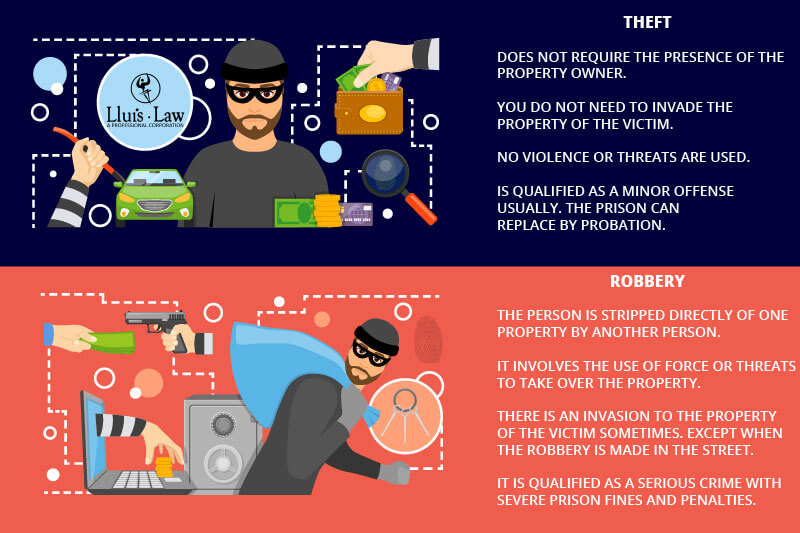
Even if no physical harm is done, the threat of harm or the use of intimidation is enough. The presence of a weapon, real or implied, also immediately pushes an act into the realm of robbery, making the situation much more severe.
"Robbery doesn't hide in the shadows; it stands right in front of you, demanding attention and compliance, often leaving a lasting chill."
The key element is the direct engagement with the victim, leveraging fear or force. It's about power dynamics and immediate control. The victim is fully aware of the taking, and often, actively participating under duress.
The Unexpected Escalation: When Theft Becomes Robbery
Here's where it gets really interesting, and sometimes, a little bit absurd in a movie-plot kind of way. What if someone tries to commit a theft, but things go sideways very quickly?
Imagine our muffin thief, carefully trying to sneak away with your treat, tiptoeing across the kitchen. But you turn around too quickly and catch them, muffin in hand, mid-escape!
In a moment of panic, the thief shouts, "Stay back, or you'll regret it!" and brandishes a spatula he just grabbed. Suddenly, what started as a simple muffin theft has drastically escalated.
That moment the thief used force or a threat to keep the stolen item, or to escape, it can instantly transform the situation into a robbery. It's no longer just about taking; it's about holding onto it through intimidation.
This is a crucial nuance often missed in casual discussions. The initial act of taking something might be theft. But if the perpetrator then uses force or threat to retain the property or to get away, it decisively crosses the line.
It highlights the element of direct interaction and fear that defines robbery. The law sees a huge difference in intent and impact when a person is made to feel unsafe, even if that fear arises from a botched theft.
The Humorous Side: The Unlucky "Robber"
Consider Bernard, a notoriously clumsy individual with a heart of gold but hands of butter. Bernard decided, on a whim, to try his hand at being a "master thief" for a local charity scavenger hunt. He spotted a particularly shiny, forgotten bouncy ball on a park bench.

As he reached for it, stealthily, mind you, with exaggerated tiptoeing, the owner, Mildred, a sweet elderly lady known for her prize-winning vegetables, turned around. Bernard, startled, stumbled backward with a dramatic gasp.
In his epic trip, Bernard accidentally collided with Mildred's picnic basket, sending her perfectly groomed, prize-winning zucchini rolling down the hill. "My zucchini!" Mildred cried out, more shocked and bewildered than scared.
Bernard, trying desperately to apologize, waved his hands frantically in a gesture of surrender, accidentally hitting Mildred squarely in the face with the very bouncy ball he was trying to "steal." There was a soft "thwack."
Now, did Bernard intend to threaten Mildred, cause her distress, or "rob" her? Absolutely not! He was just a bungling mess of good intentions and bad coordination. But the physical contact, however accidental, and the resulting distress could, in a very technical and slightly absurd legal sense, elevate his pathetic attempt at theft.
It shows how the line can become hilariously blurry, even humorous, when clumsy actions inadvertently trigger the criteria for a more serious charge. Poor Bernard just wanted a bouncy ball for his scavenger hunt; he ended up nearly "robbing" a lady of her zucchini and a moment of peace. His bungling turned a simple taking into a comically stressful situation.
The Heartwarming Twist: When "Taking" isn't Taking
Sometimes, what looks like theft isn't theft at all, leading to a truly heartwarming resolution that makes you smile. Think of Lily, who was distraught when her unique, handcrafted birdhouse, a gift from her late grandmother, went missing from her garden.
She was convinced it had been stolen, probably by a mischievous squirrel or a less scrupulous human. She grieved for her little feathered friends' potential loss of home, imagining them homeless and confused. Days later, a whimsical, hand-decorated note appeared on her porch.
It was from her elderly neighbor, Mr. Henderson, who had taken the birdhouse for "renovations." He had noticed a slight wobble after a storm and decided to reinforce it with new cedar, painting it a fresh, vibrant blue with tiny hand-painted daisies as a delightful surprise. He even added a little birdbath.

Lily hadn't been robbed or even had her cherished birdhouse stolen. It was a well-intentioned, albeit uncommunicated, act of kindness and community care. The initial fear and sadness of theft gave way to a wave of warmth, gratitude, and a refreshed birdhouse.
This delightful misunderstanding reminds us that sometimes, the story behind a missing item is far more complex and often more charming than our immediate, fear-driven assumptions. It wasn't about taking; it was about caring, a quiet act of neighborly love.
Why Does This Distinction Matter?
Beyond the purely legal definitions, understanding the difference between theft and robbery gives us a clearer picture of human interaction and intent. Theft is about exploiting opportunity and secrecy, often a crime of stealth. Robbery is about power, confrontation, and instilling fear, a crime of intimidation.
The consequences, both legally and emotionally, are vastly different for everyone involved. Being a victim of theft feels invasive, a silent violation of your space and possessions. You feel disappointed, maybe annoyed.
Being a victim of robbery, however, feels terrifying, violating, and often deeply traumatic. Your personal safety is directly threatened, and that fear can linger long after the event. The sense of vulnerability is profound.
One involves a sneaky hand moving in the shadows. The other, a direct threat and a glaring demand in broad daylight. Both are wrong, of course, but the experience of each is poles apart for the victim, marking a significant psychological difference.
So the next time your office stapler mysteriously disappears from your desk, you can confidently say it was "stolen." But if someone holds it ransom for your last donut, brandishing it like a menacing weapon, then yes, you've been robbed!
It's a small linguistic distinction that carries a world of difference in meaning and impact, weaving tales of quiet mystery versus dramatic confrontation. And sometimes, understanding these nuances can even lead to a chuckle, a moment of surprise, or even a heartwarming realization about the kindness lurking around us.
Keep your muffins safe, whether from a stealthy disappearance or a bold, dramatic demand! And remember, not every missing item means a villain is lurking; sometimes, it's just a kind neighbor with a paintbrush.