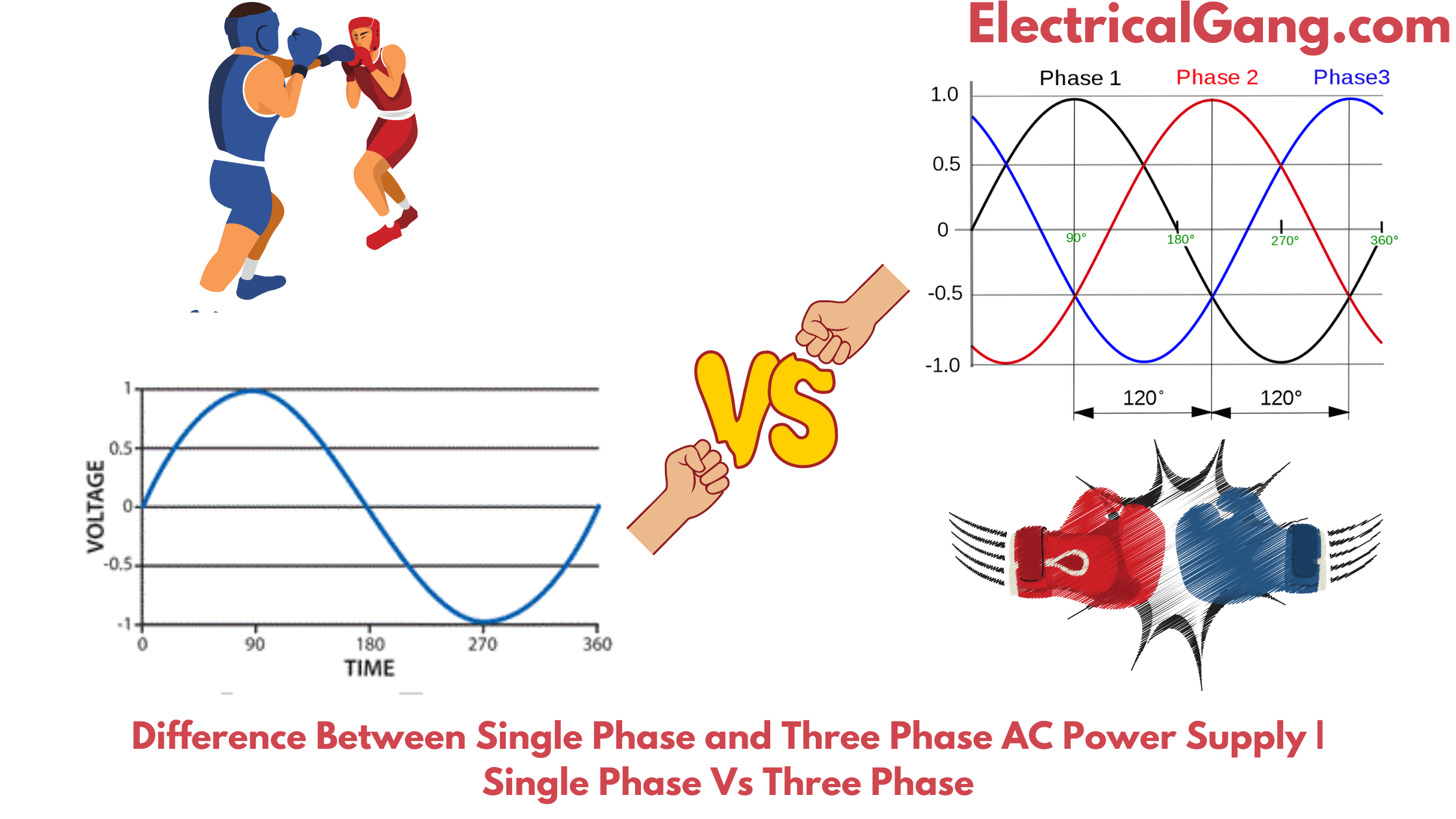
Difference Between One Phase And Three Phase

Hey there, sparky! Ever wonder what's buzzing behind the walls of your house, or powering that ridiculously huge machine at work? Chances are, it's either one-phase or three-phase electricity. Sounds complicated, right? Don't sweat it, we'll break it down like a Kit Kat bar – nice and easy.
Think of electricity as water flowing through a pipe. (Yeah, I know, it's not exactly water, but bear with me!). One-phase? That's like one pipe delivering water in a regular, predictable flow. Three-phase? Imagine three pipes, all delivering water, but each slightly offset. More pipes = more power! Boom.
One-Phase: Your Home's Best Friend
One-phase is the stuff that usually powers your home. Lights, fridge, TV, that crazy blender you bought on a whim? All one-phase. It's simple, relatively inexpensive, and perfect for smaller loads. Think of it as the efficient little engine that keeps your home humming along. And let's be honest, who needs more power than a good Netflix binge requires?
Must Read
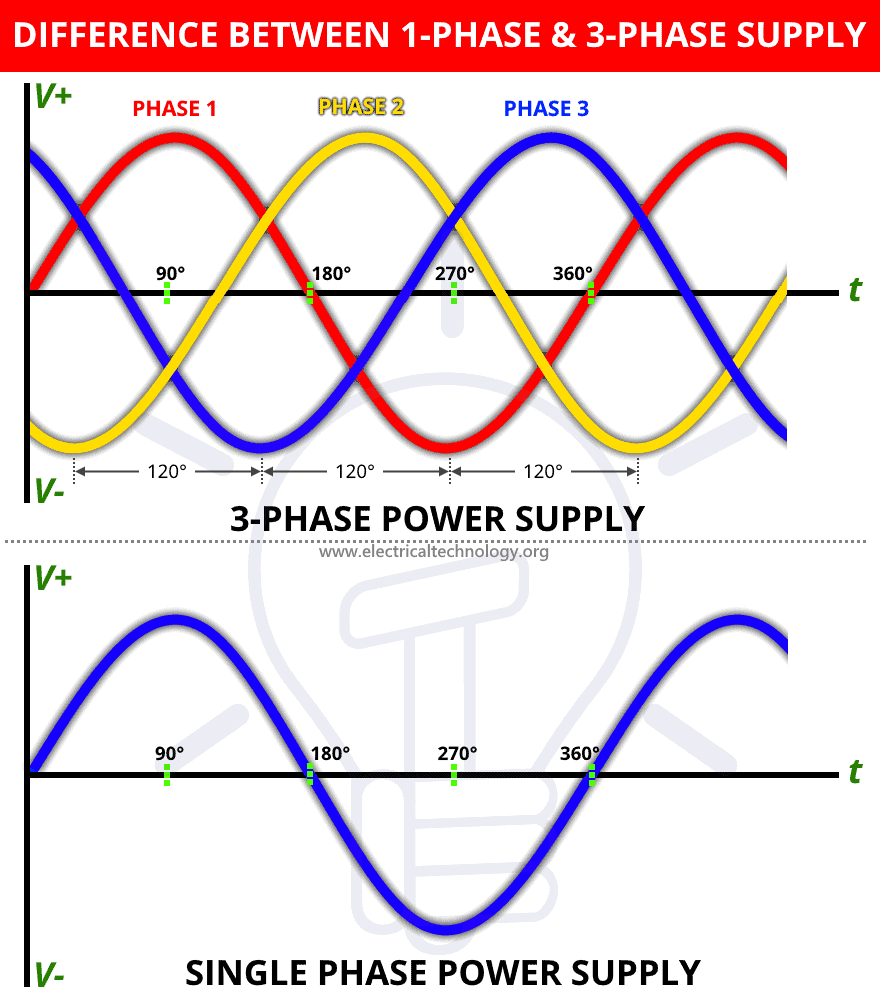
Technically, one-phase electricity uses two wires: a hot wire (the one carrying the power) and a neutral wire (the return path). It's delivered in a single, alternating current (AC) waveform. That waveform goes up and down, up and down, 60 times a second (in the US, anyway. Other countries have their own rhythm!). This "up and down" motion gives it its name: Alternating Current, or AC. Fancy, huh?
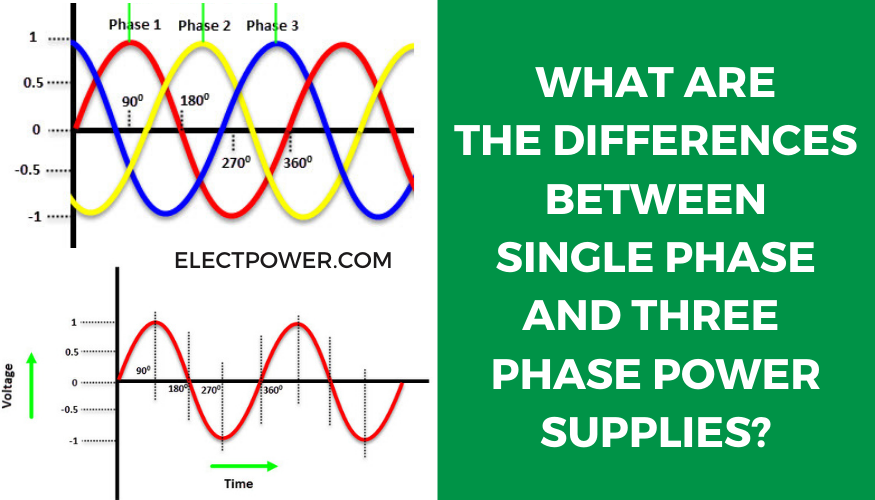
But here's the thing: one-phase power isn't constant. It pulses. Think of it like pedaling a bike – you have moments of peak power and moments where you're just coasting. This pulsing can make it less efficient for really heavy-duty stuff. Like, you wouldn’t try to power a steel mill with a household outlet, would you? (Please don't!)
Three-Phase: The Heavy Hitter
Now, let's talk about three-phase. This is the muscle of the electrical world. Factories, large commercial buildings, data centers – they all run on three-phase power. Why? Because it's consistent, powerful, and efficient.
Remember those three pipes delivering water, slightly offset? That's basically three-phase electricity. It uses three hot wires, each carrying an AC waveform, but staggered in time. This means that there's always a peak of power being delivered. No pulsing, just smooth, continuous energy. Imagine three people pedaling a bike together, each taking a turn to push – way more efficient, right?
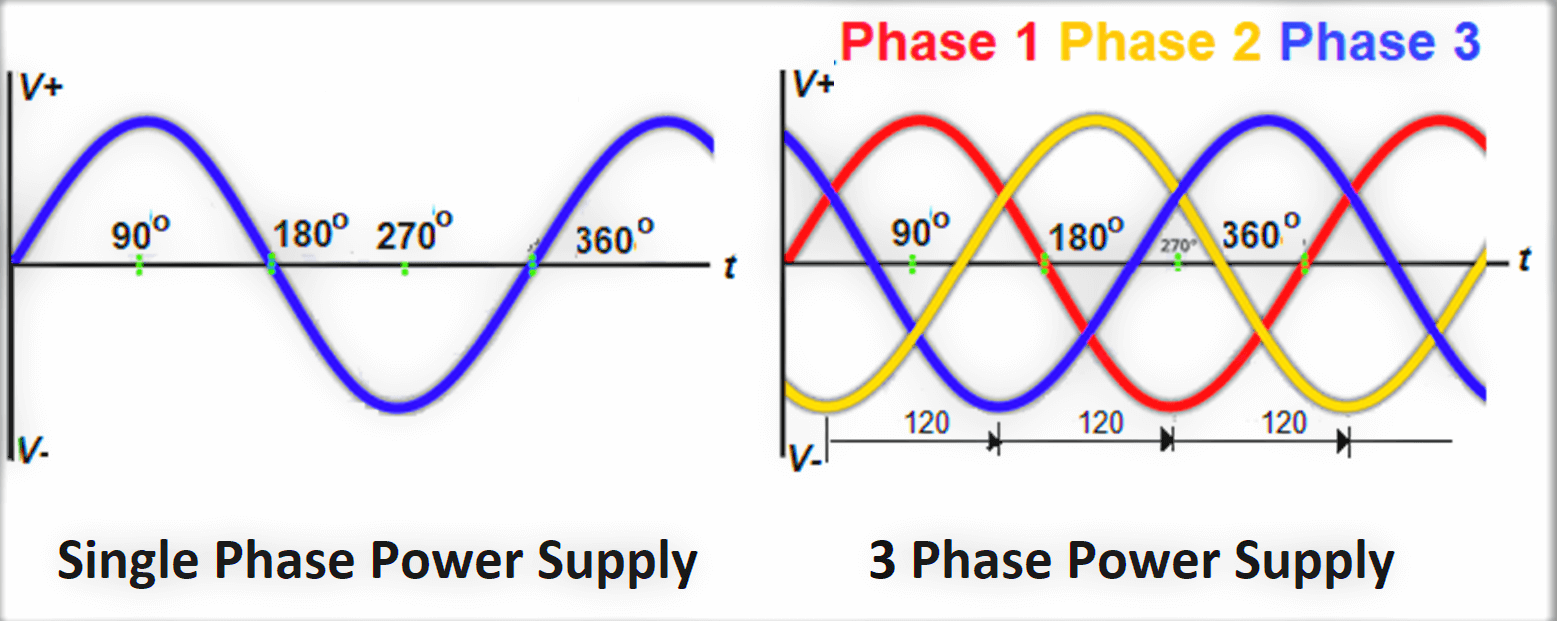
So, what's the big deal with three-phase being constant? Well, it means that machines can run smoother, more efficiently, and with less wear and tear. Think of a giant industrial motor – you want it to spin smoothly and consistently, not stutter and shake. Three-phase delivers that stability. It also means that smaller wires can be used for the same amount of power, which saves money. Who doesn't love saving a few bucks?
Key differences? One-phase is for smaller loads, like your home appliances. Three-phase is for larger loads, like industrial equipment. One-phase pulses, three-phase is constant. One-phase is like a tiny hummingbird, three-phase is like a majestic eagle. Okay, maybe that's a bit dramatic, but you get the picture!
Why Can't I Just Use Three-Phase At Home?
Good question! You could, in theory. But it's usually overkill and more expensive. Think of it like buying a monster truck to drive to the grocery store. Sure, you could do it, but is it practical? Nope. Plus, most homes aren't wired for three-phase. Rewiring your entire house would be a major (and expensive!) undertaking. So, stick with one-phase, and let the factories have their three-phase glory.
In a nutshell: One-phase is for small fry, three-phase is for the big leagues. Easy peasy, right?
Hopefully, this little chat has cleared up the confusion between one-phase and three-phase electricity. Now, go forth and impress your friends with your newfound electrical knowledge! (Or, you know, just enjoy your smoothly-running appliances.) Cheers!