
Difference Between Metal Non Metal And Metalloids
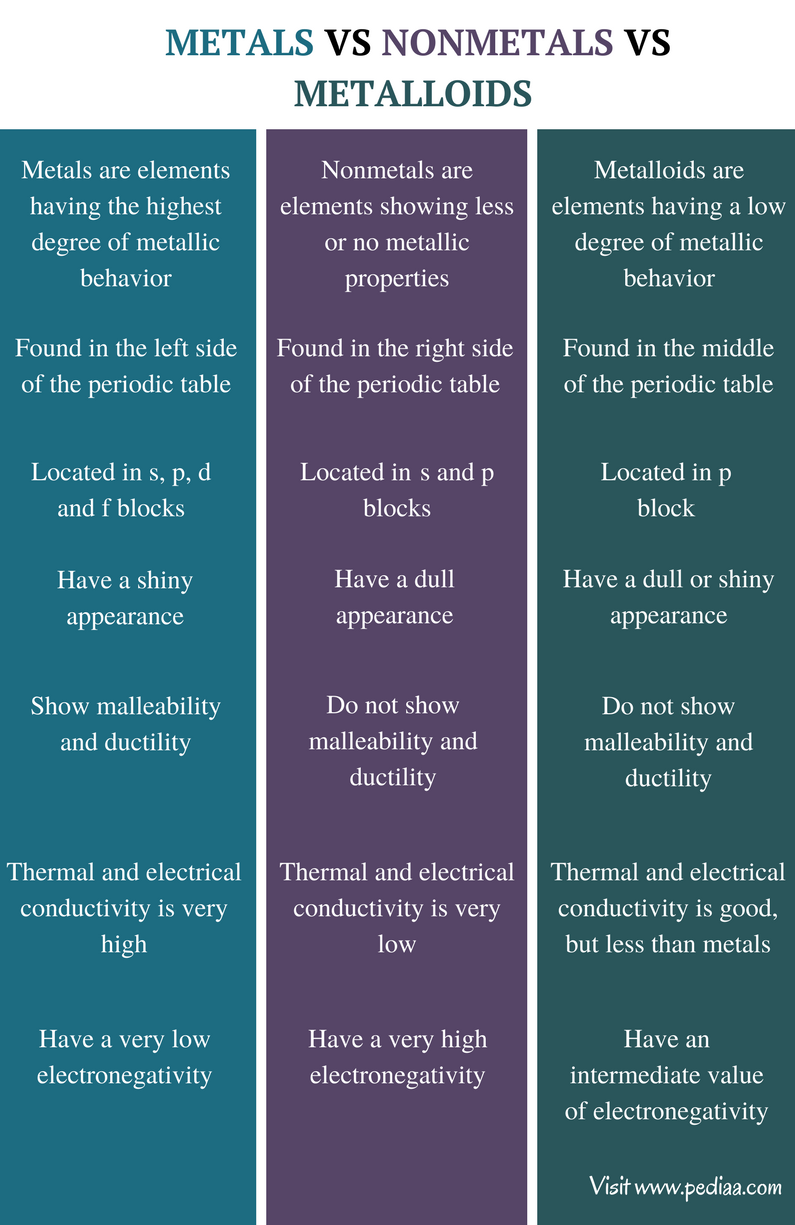
Alright, buckle up buttercups, because we're diving headfirst into the wild world of elements! Don't worry, this isn't your grandma's chemistry class. We're talking metals, nonmetals, and metalloids – the rockstars, rebels, and fence-sitters of the periodic table.
Metals: The Shiny Showoffs
First up, we've got the metals! These are the Beyoncé's of the element world – shiny, strong, and always ready to conduct a show (of electricity, that is!). Think of your favorite bling: gold, silver, maybe even some platinum.
That's right, metals are typically super good at conducting heat and electricity. Imagine trying to cook dinner on a wooden spoon – total disaster! But a metal pot? Dinner is served.
Must Read
Plus, they're generally malleable, meaning you can bash them into different shapes without them shattering. Try doing that with a cracker. We dare you!
Metal Mayhem: A Few Fun Facts
Iron, the backbone of buildings and bridges, is a total metal superhero! Without it, your house would probably look like a sad pile of Legos.
Gold, besides making you look fabulous, is used in electronics because it doesn't corrode easily. So, thanks gold, for keeping our gadgets running and looking good!
And let's not forget aluminum! From foil to airplanes, this lightweight metal is a workhorse. It's so versatile, it's practically the Swiss Army knife of elements!
Nonmetals: The Unsung Heroes (Sometimes)
Now, let's switch gears and meet the nonmetals. These are, well, pretty much the opposite of metals. They're often dull, brittle, and poor conductors of heat and electricity.

Think of things like sulfur, or even the air you breathe. Okay, maybe “unsung heroes” is pushing it a bit, but they’re definitely important!
They exist in all three states of matter: solid (like sulfur), liquid (like bromine), and gas (like oxygen). Talk about variety! They're the chameleons of the element world.
Nonmetal Nonsense: A Closer Look
Oxygen, our life support system, is a nonmetal. Without it, we wouldn't be here to argue about the best pizza toppings.
Carbon, in the form of diamonds, is a nonmetal that is neither dull nor brittle. Go figure! But hey, even rebels have their quirks.
Sulfur, with its distinctive smell, is used in everything from matches to fertilizers. It might not be glamorous, but it gets the job done.
Metalloids: The Awkward Middle Schoolers
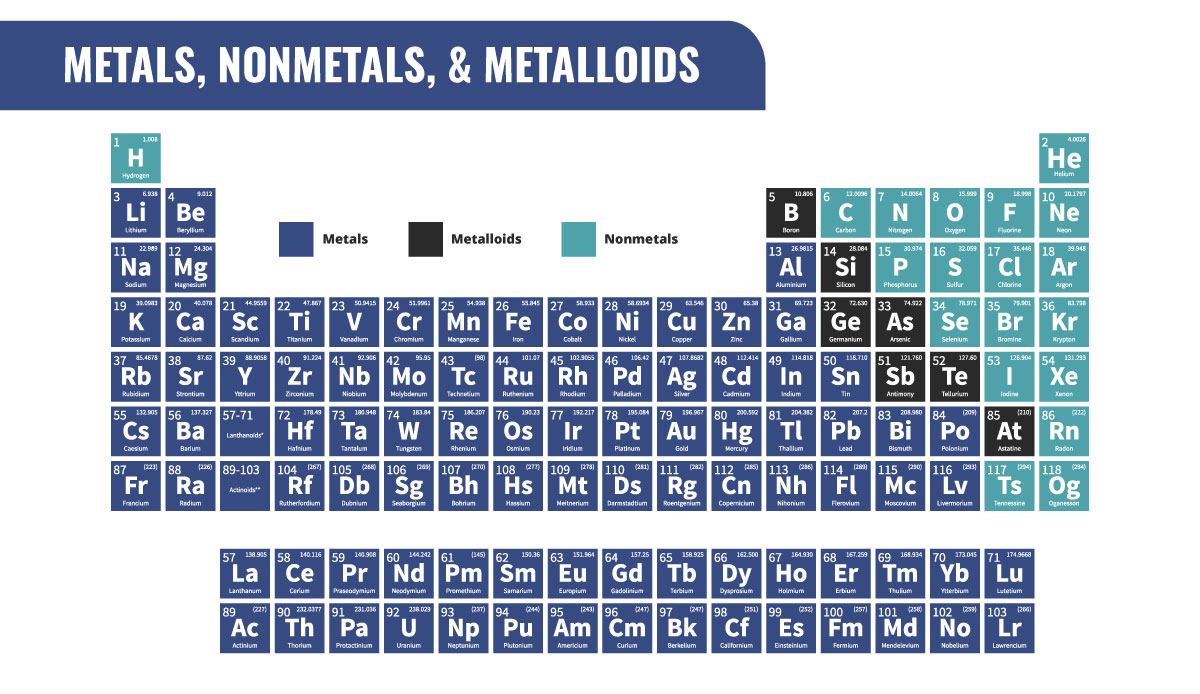
And finally, we have the metalloids! These are the elements that couldn't quite decide if they wanted to be metals or nonmetals, so they landed somewhere in between. They're like the awkward middle schoolers of the periodic table, trying to figure things out.
They possess properties of both metals and nonmetals. Think of them as the "sometimes" elements – sometimes they conduct electricity, sometimes they don't. Talk about indecisive!
Their behavior often depends on the conditions, like temperature or voltage. They're sensitive souls, easily influenced by their surroundings.
Metalloid Musings: The Best of Both Worlds?
Silicon, the star of the semiconductor industry, is a metalloid. It's what makes our computers and smartphones tick! Without silicon, we'd be stuck with carrier pigeons and rotary phones.
Arsenic, while poisonous in large doses, is used in some semiconductors and even in certain medications. It's a reminder that even the most dangerous things can have their uses.
Boron is used in everything from laundry detergent to rocket fuel. Seriously! It's the ultimate multi-tasker of the metalloid world.
Comparing the Crew: Metal vs. Nonmetal vs. Metalloid
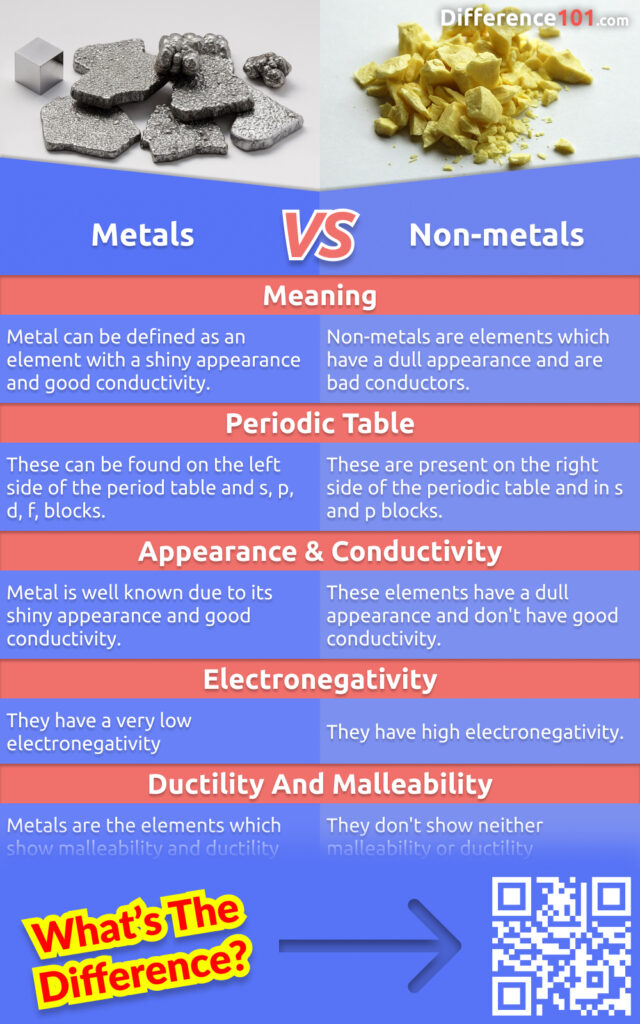
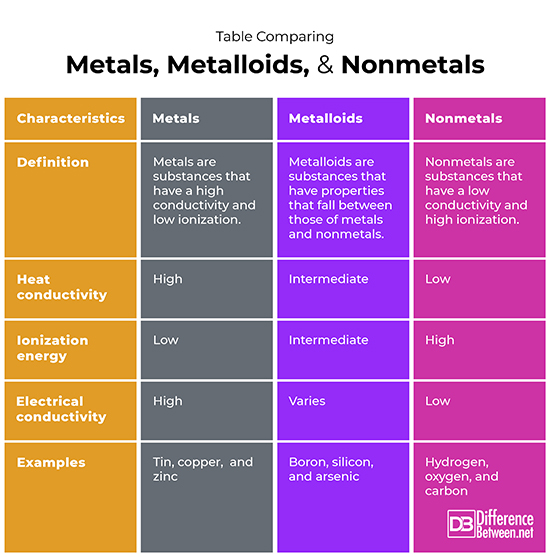
Let's break it down with a handy-dandy comparison!
Metals: Shiny, conductive, malleable. Think of your favorite kitchen pan or a shiny new coin.
Nonmetals: Dull, non-conductive (usually), brittle. Think of the air around you or a piece of charcoal.
Metalloids: Semi-conductive, properties of both metals and nonmetals. Think of the silicon chip in your phone or computer.
Why Does Any of This Matter?
Okay, so you might be thinking, "Why should I care about the difference between metals, nonmetals, and metalloids?" Well, because they're everywhere!
From the phone in your pocket to the air you breathe, these elements play a crucial role in our daily lives. Understanding their properties helps us understand the world around us.
Think of it this way: knowing the difference between these elements is like knowing the difference between a hammer, a screwdriver, and a wrench. Each tool has its own unique purpose, and so does each element!
The Grand Finale: Embrace the Elements!
So, there you have it! A whirlwind tour of the element kingdom. We've met the shiny metals, the (sometimes) unsung nonmetals, and the awkward-but-useful metalloids.
Hopefully, you've learned a thing or two and had a little fun along the way. Now go forth and impress your friends with your newfound knowledge of the periodic table!
Remember, chemistry isn't just about bubbling beakers and complicated equations. It's about understanding the building blocks of the universe – and that's pretty darn cool!
So, embrace the elements, and keep exploring the amazing world of science! Because who knows, maybe you'll be the one to discover the next groundbreaking element – or at least win a trivia night at your local pub.