
Difference Between Hurricane Typhoon And Cyclone
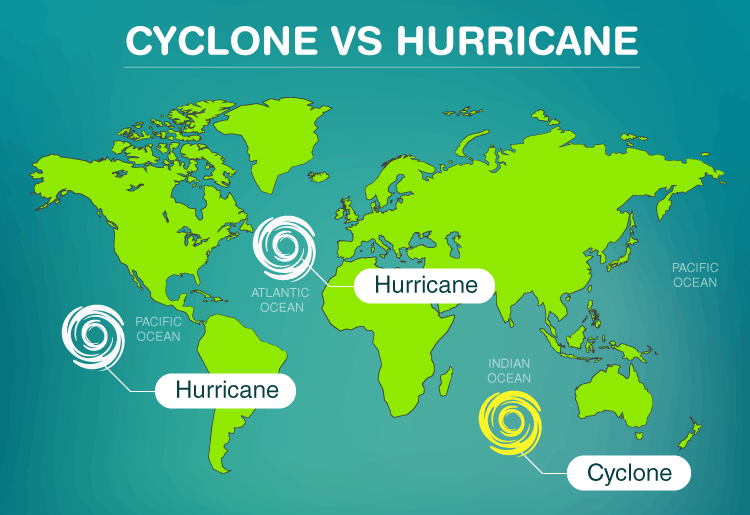
Hey! So, you ever wondered why some giant swirling storms are called hurricanes, and others... aren't? Like, what's the deal? Let's dive in, shall we? Grab your metaphorical life raft, it's gonna be a wild ride!
Basically, it all boils down to location, location, location! Think of it like real estate, but with way more wind. Seriously, way more.
Hurricane: The Atlantic & Eastern Pacific Rockstar
Okay, so first up, we have the Hurricane. These bad boys are born and bred in the North Atlantic Ocean, the Caribbean Sea, the Gulf of Mexico, and the eastern North Pacific Ocean. Prime hurricane real estate, basically.
Must Read
Imagine the scene: warm ocean water, lots of swirling air... chef's kiss. Perfect conditions for a meteorological monster! If it gets strong enough (winds reaching 74 mph, which is like, seriously fast), boom! You've got yourself a hurricane.
Now, about the name... It's said to come from "Huracan", a Caribbean storm god. Which, honestly, sounds pretty terrifying, right? I mean, if you were a storm god, wouldn't you want a cool name?

Typhoon: Western Pacific Fury
Next, we've got the Typhoon. These guys are the hurricanes' cousins, but they prefer the warmer waters of the western North Pacific Ocean. Think places like Japan, the Philippines, and China. Ooh, exotic! (Except, you know, when they're unleashing their fury.)
Where does the name come from? Good question! It's generally thought to be derived from the Cantonese word "tai fung," which, unsurprisingly, means "great wind." Apt, wouldn't you say?
Essentially, a typhoon is a hurricane. Just in a different neighborhood. It’s like calling your sweater a "jumper" if you're from England. Same article of clothing, different slang, right?

Cyclone: The Indian Ocean & South Pacific Spin Master
And then there's the Cyclone. These swirling dervishes call the Indian Ocean and the South Pacific Ocean home. That's around places like India, Australia, and Madagascar.
The word "cyclone" comes from the Greek word "kyklos," meaning circle or coil. Makes sense, huh? Given their circular, coiling nature and penchant for wreaking havoc!
Again, just like typhoons, a cyclone is fundamentally the same thing as a hurricane. Same storm recipe, just different ingredients of location.
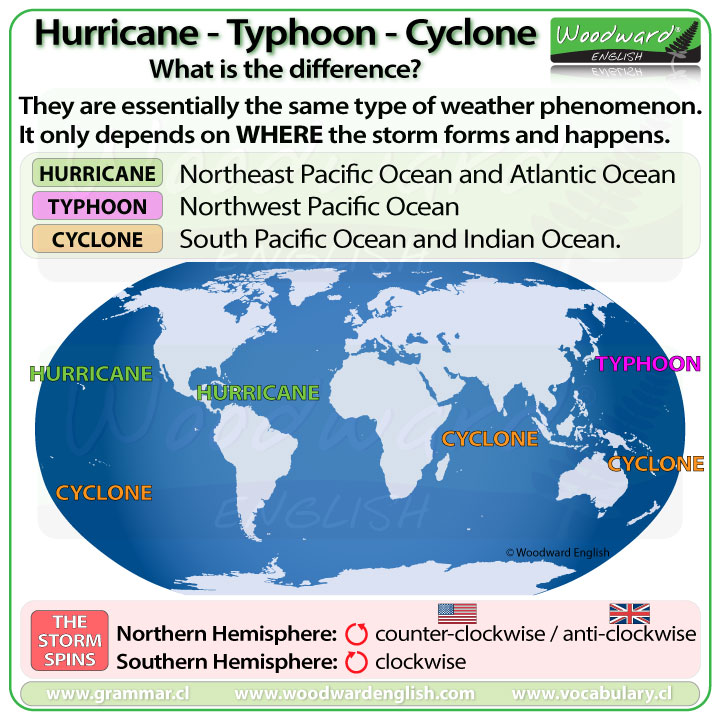
So, to recap:
- Hurricane: Atlantic and Eastern Pacific
- Typhoon: Western Pacific
- Cyclone: Indian Ocean and South Pacific
Wind Speed is Key: Regardless of what you call it, these storms have to hit a certain wind speed to earn the title. We're talking sustained winds of 74 mph (119 km/h) or higher. Otherwise, it's just a tropical storm... which is still not something you want to picnic in, mind you!
Are we clear? Pretty much the same beast, just roaming different parts of the globe. Different names, same intense weather.

Why different names, though? Honestly, that's just how language evolves over time, intertwined with cultural influences and regional jargon. Someone probably just thought "typhoon" sounded cooler than "hurricane" in the Western Pacific! Who are we to judge?
It's kinda like how some people call a carbonated beverage "soda," while others call it "pop," and some insist on "coke" for everything. Regional variations are a funny thing, aren't they?
So, next time you hear about one of these massive storms, you'll be able to confidently say, "Ah yes, a hurricane/typhoon/cyclone! Just depends on where it's decided to throw its tantrum today!" You'll sound so smart! And maybe a little bit nerdy. But hey, knowledge is power, right? Now, refill on that coffee, and let's talk about waterspouts... just kidding! (Maybe.)