
Difference Between Cyclone Tornado And Hurricane
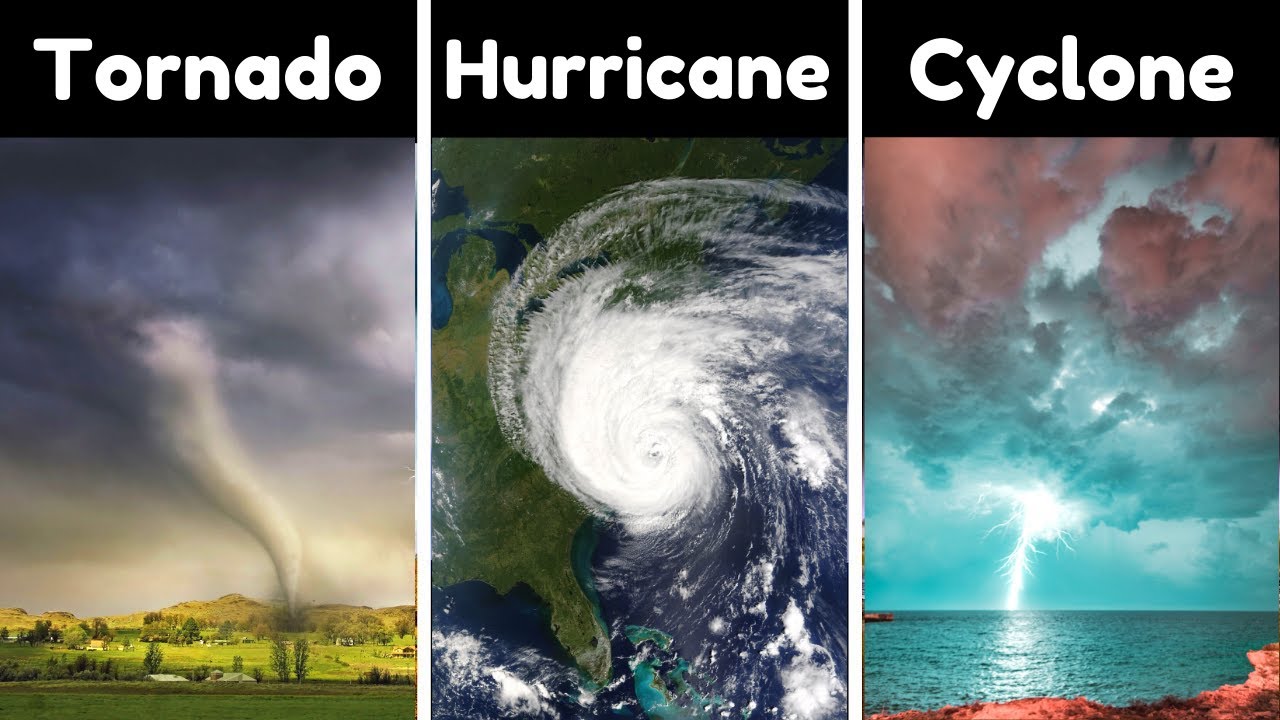
Okay, so picture this: you're sipping your latte, right? And your friend starts going on about the "cyclone that ripped through her backyard." You're like, "Wait, was that a tornado? Or a hurricane? Or something Godzilla sneezed out?" Don't worry, we've all been there. They're all windy things, but wildly different, like confusing a chihuahua, a wolf, and a whale just because they're all animals. Let's untangle this meteorological mess, shall we?
The Tiny Terror: Tornadoes
First up, we have the tornado, or "twister" if you're feeling folksy. Think of it as the hyperactive toddler of the weather world. It’s small, destructive, and gone before you can even say, "Dorothy!" Tornadoes are all about localized mayhem. They're like that one guest at a party who somehow manages to knock over a lamp, spill red wine on the carpet, and trip over the dog, all in the space of five minutes.
Here's the deal: tornadoes are spawned from supercell thunderstorms. These thunderstorms are already pretty angry, but when the wind shear (a change in wind speed and direction with height) gets involved, things get really interesting. It creates a rotating column of air inside the storm called a mesocyclone. Then, if conditions are just right (like, perfectly chaotic), a funnel cloud descends from the storm, and if it touches the ground... BOOM! Tornado time!
Must Read
Tornadoes are measured on the Enhanced Fujita (EF) Scale, ranging from EF0 (a gentle nudge, maybe breaks a few branches) to EF5 (total annihilation, houses gone, cars flying, the whole shebang). Luckily, they don't last very long, usually only a few minutes, maybe an hour tops. But in that short time, they can pack a serious punch. Imagine a lawnmower blade spinning at hundreds of miles per hour – that's kind of what a tornado feels like, only way more terrifying.
The Big Boss: Hurricanes
Now, let’s talk about hurricanes. These are the granddaddies of destruction, the ultimate weather events. Unlike tornadoes, which are short-lived and localized, hurricanes are massive, swirling storms that can last for days, even weeks, and travel thousands of miles. Think of them as the grumpy old men of the atmosphere, slowly but surely wreaking havoc wherever they go.
Hurricanes form over warm ocean waters near the equator. The warm water provides the fuel – moisture and heat – that these storms need to grow. As warm, moist air rises, it creates a low-pressure area, which sucks in more air. This air then starts to spin due to the Earth's rotation (the Coriolis effect, which is way too complicated to explain over a latte). And boom, you have a swirling vortex of wind and rain.
Hurricanes are categorized using the Saffir-Simpson Hurricane Wind Scale, ranging from Category 1 (some damage, maybe a few shingles blown off) to Category 5 (catastrophic damage, buildings leveled, widespread flooding). The strongest winds are concentrated in the eyewall, the area surrounding the calm "eye" of the storm. It's like the weather saying, "I'm going to destroy everything around you, but here's a brief moment of peace before I do." Charming, right?
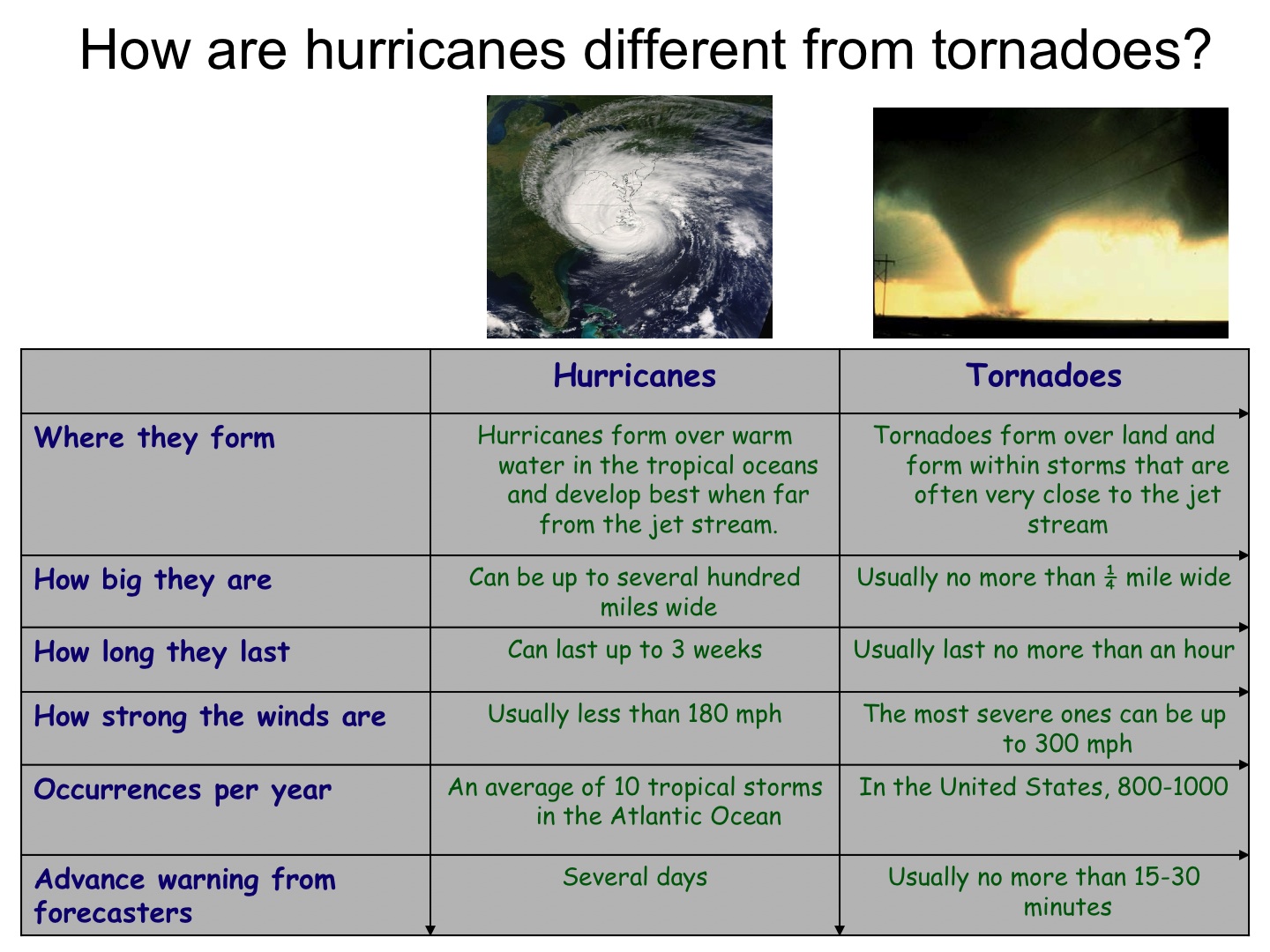
The really nasty thing about hurricanes is their size and duration. They can bring widespread flooding, storm surges (a wall of water pushed ashore by the storm's winds), and, of course, ridiculously strong winds. They're like the uninvited guest who shows up to your party, eats all the food, breaks your furniture, and then refuses to leave.
The Cyclone Connection
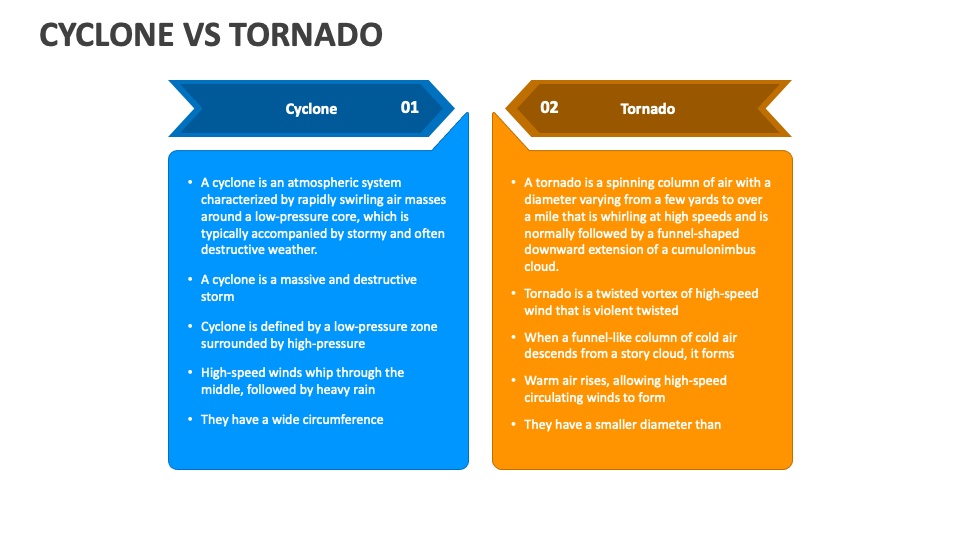
Okay, where does cyclone fit into all this? Here's the trick: "cyclone" is just a generic term for any swirling weather system with low pressure at its center. Think of it like "sandwich." A hot dog is technically a sandwich but, you know, doesn't quite feel like it. Hurricanes are cyclones, and typhoons (which are hurricanes in the Northwest Pacific) are also cyclones. It's all about location, location, location! Basically, if you hear "cyclone," don't panic immediately, but definitely pay attention to where it is and what kind of damage it's expected to cause.
So, to recap: tornadoes are small, intense, and short-lived; hurricanes are large, long-lasting, and devastating; and cyclones are just a general term for swirling storms. Now, go forth and impress your friends with your newfound meteorological knowledge! Just try not to bore them with all the details. Maybe just say, "Oh, that? Yeah, I know all about those swirling weather thingamajigs." And then wink. You'll look like a genius.

