Difference Between Brazing Soldering And Welding
Ever wondered how those intricate metal structures are put together? Or how your plumbing stays watertight (most of the time!)? The secret lies in joining processes like brazing, soldering, and welding. Now, you might think joining metal sounds about as exciting as watching paint dry, but trust me, understanding the difference between these techniques is surprisingly useful, and dare I say, even a little bit fun!
Think about it: from DIY projects to complex manufacturing, these methods are used everywhere. Knowing when to braze, solder, or weld can save you time, money, and a whole lot of frustration. So, let's dive in and demystify these metal-joining techniques.
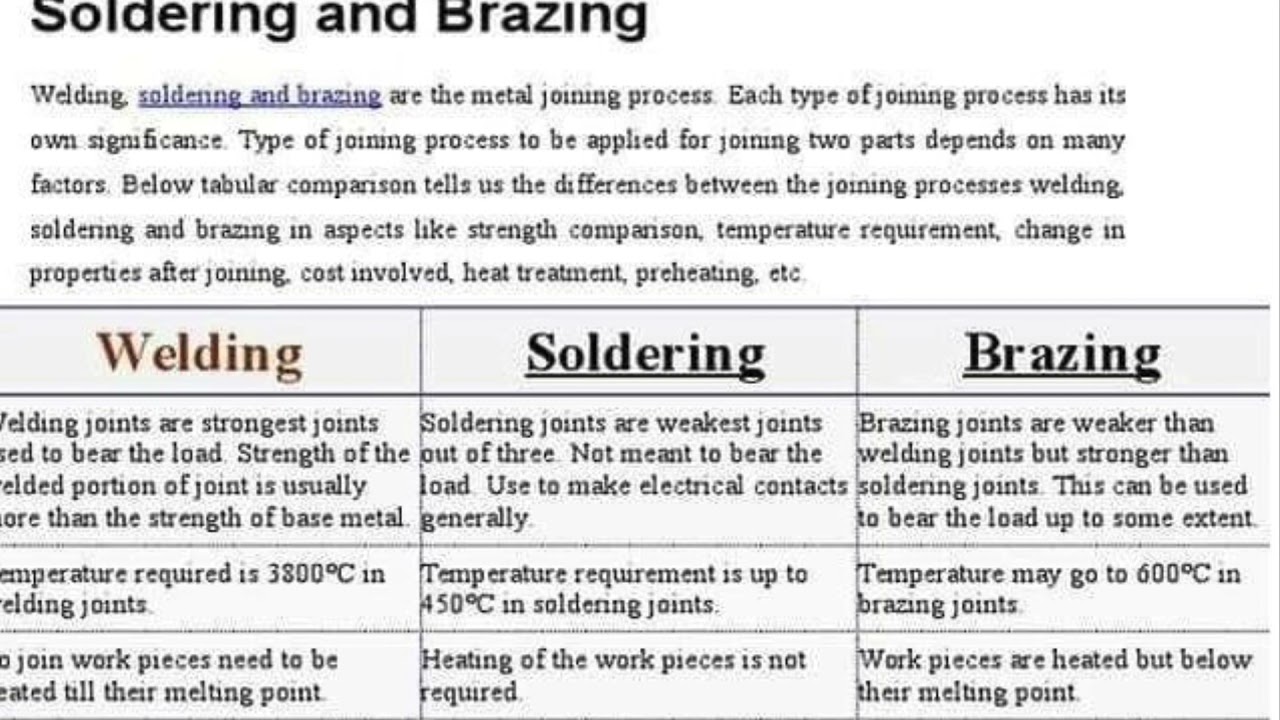
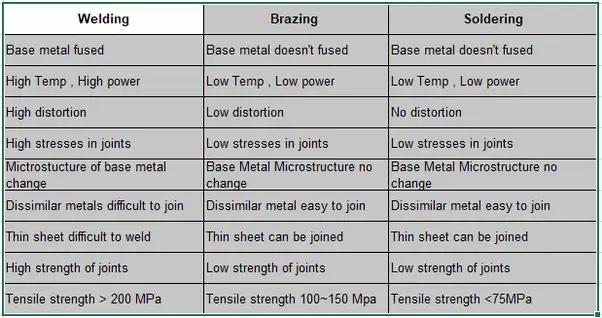
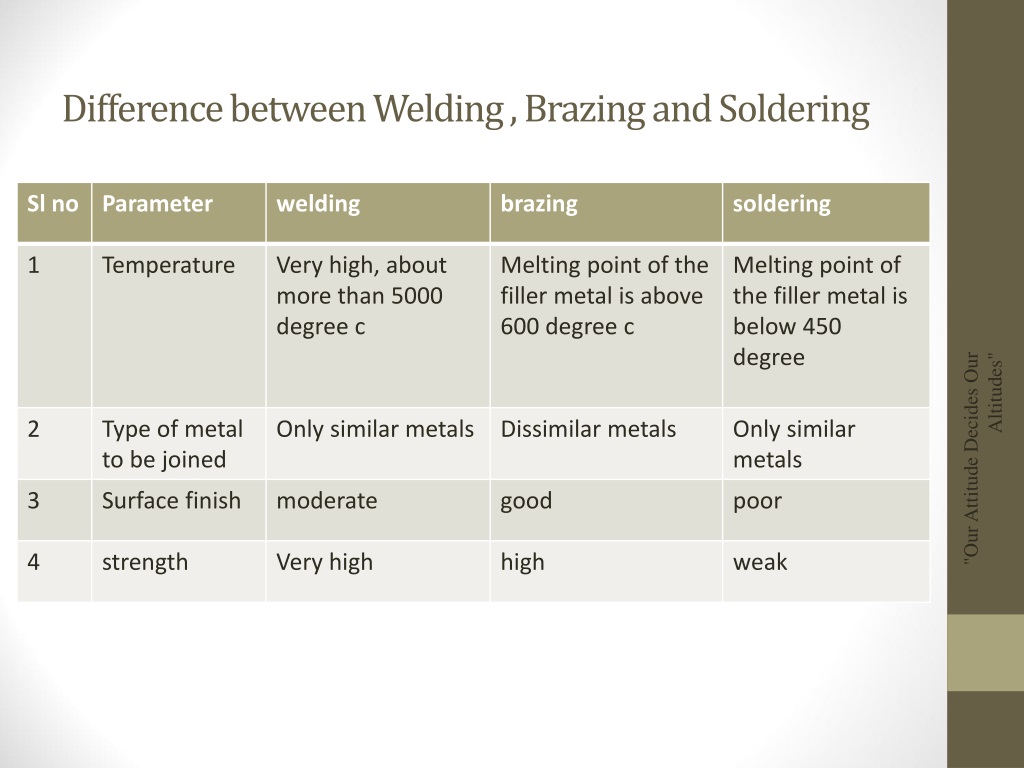
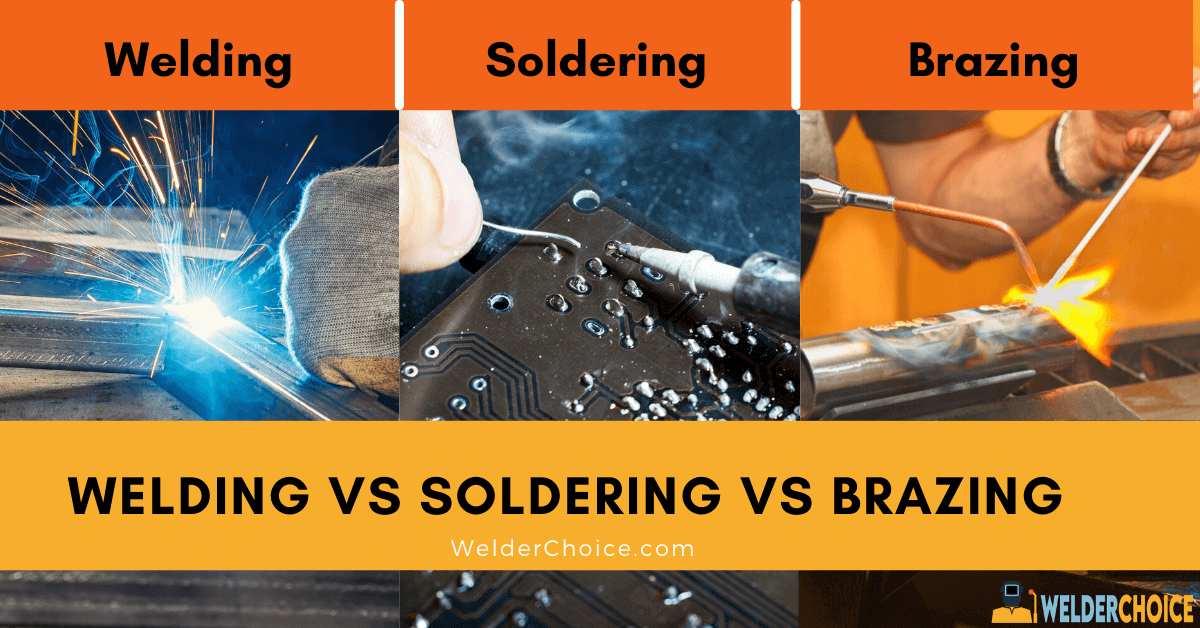
First up: Welding. Imagine melting two pieces of metal together until they become one. That's essentially what welding does. It involves heating the base metals to their melting point, causing them to fuse. Often, a filler metal is added to create a strong joint. Welding is the heavy-duty champion of metal joining, offering the strongest and most durable bonds. Think bridges, skyscrapers, and car frames – all held together by welding. The benefit is immense strength; the downside is that it often requires specialized equipment and skills.
Must Read
Next, we have Brazing. Brazing is like welding's slightly less intense cousin. Instead of melting the base metals, brazing heats them to a high temperature, but below their melting point. A filler metal, which has a lower melting point than the base metals, is then melted and flows into the joint by capillary action. The filler metal cools and solidifies, creating a strong bond. Brazing is used when you need a strong joint but want to avoid the high temperatures and potential distortion of welding. Think of joining copper pipes or attaching carbide tips to cutting tools. The advantage? Stronger than soldering and less likely to damage the base metals than welding.
Finally, let's talk about Soldering. Soldering is the gentle giant of metal joining. Like brazing, it doesn't melt the base metals. Instead, a filler metal with a low melting point (called solder) is melted and flows into the joint. Soldering creates a conductive and mechanically sound bond, but it's not as strong as brazing or welding. It's perfect for joining electronic components, creating stained glass, or light plumbing work. The key benefits of soldering are its low temperature requirement and ease of use, making it ideal for delicate tasks and DIY projects.
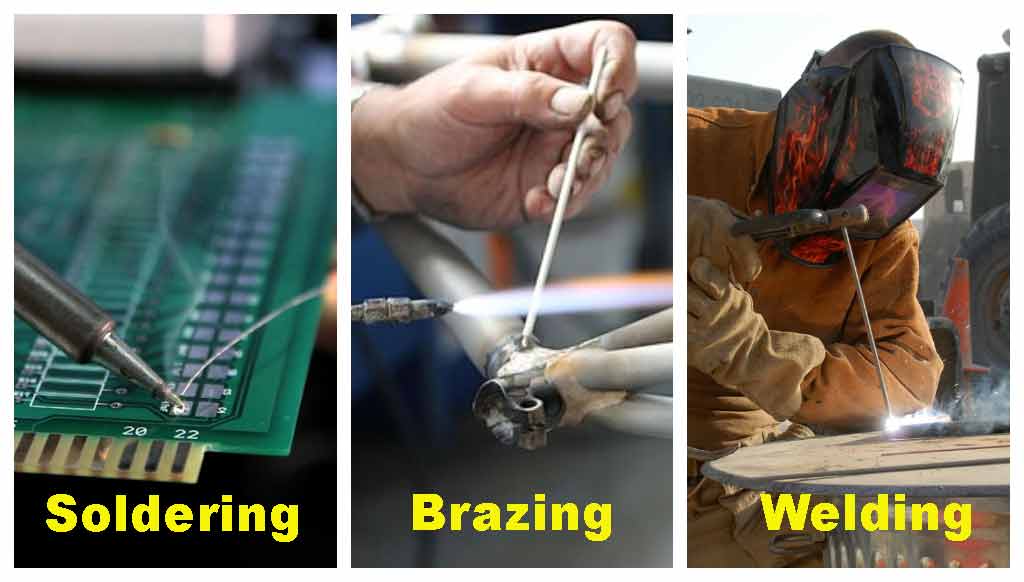
So, to recap: Welding melts the base metals, brazing uses a higher-temperature filler metal below the base metal's melting point, and soldering uses a low-temperature filler metal. Each method has its own strengths and weaknesses, making them suitable for different applications.
Understanding these differences empowers you to choose the right technique for your next project. Whether you're fixing a broken toy, building a metal sculpture, or tackling a plumbing repair, knowing the fundamentals of brazing, soldering, and welding will undoubtedly come in handy. Now go forth and join some metal!