
Difference Between Braze Welding And Brazing

Ever wondered what makes a sturdy bike frame so, well, sturdy? Or how your grandma’s antique brass teapot manages to hold water without leaking everywhere? Chances are, brazing or braze welding might be involved!
So, What's the Deal? (Braze Welding vs. Brazing: The Showdown!)
Imagine you're making a delicious grilled cheese sandwich. Brazing and braze welding are kind of like different ways to melt the cheese between the bread. Both involve using heat and a special "glue" – a filler metal – to join two pieces of metal together.
But here’s where things get interesting. Think of brazing as the gentler method, like carefully melting cheddar. Braze welding, on the other hand, is more like cranking up the heat and using a blend of mozzarella and provolone for a slightly different effect.
Must Read
Temperature is Key (Like Judging a Baking Competition!)
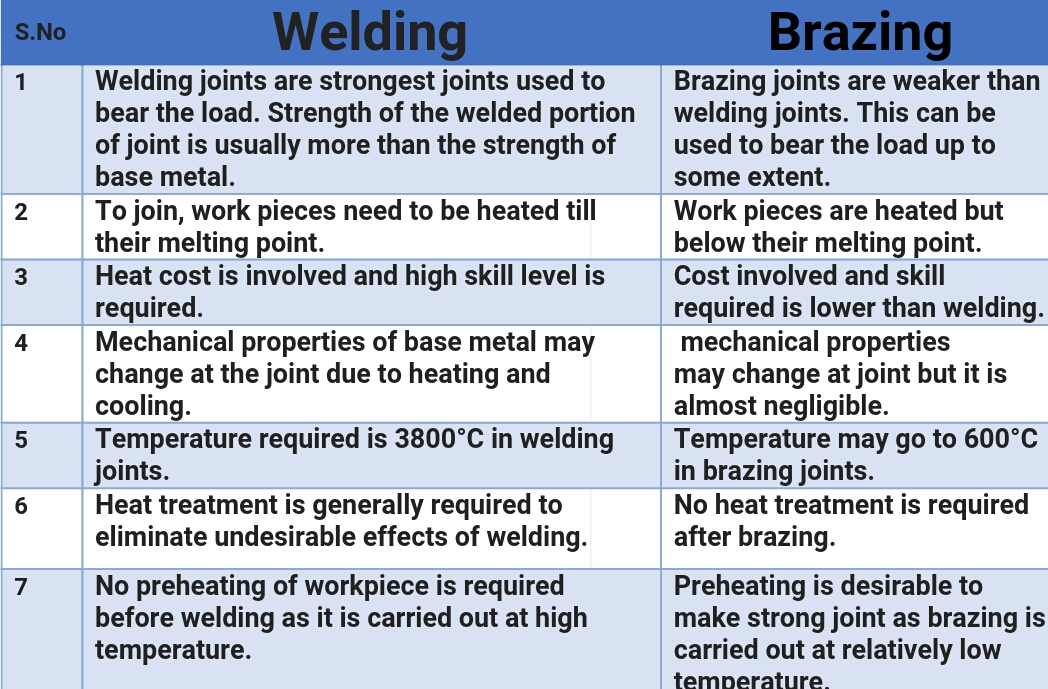
The first big difference lies in the temperature. Brazing uses a lower melting point filler metal. Think of it as the "low and slow" barbecue of the metalworking world.
Braze welding cranks up the heat, using a filler metal with a higher melting point, closer to the metal you're actually joining. It is like searing a steak to perfection.
Getting Intimate (How the Metals Interact)
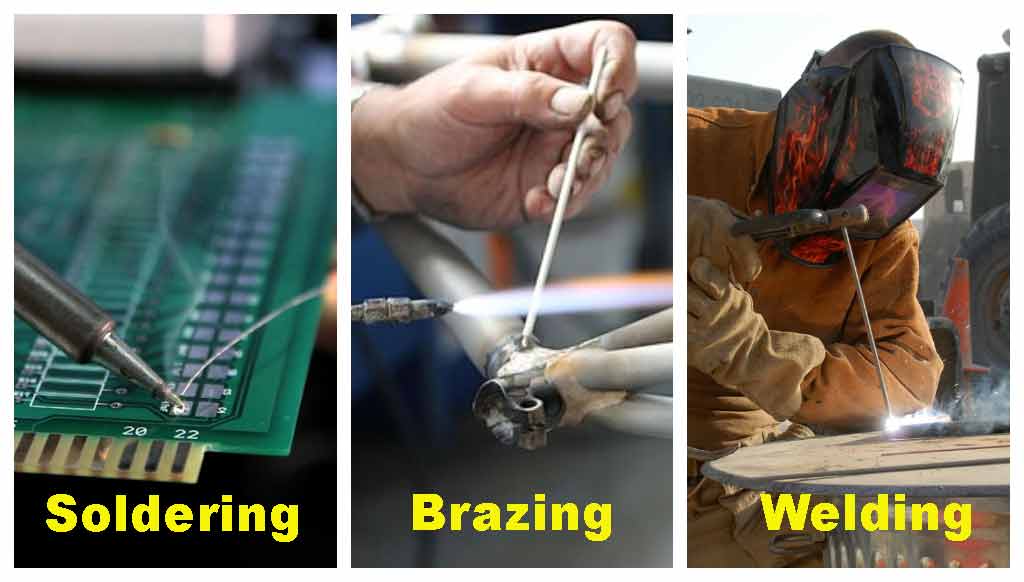
Another key difference is how much the original metals get involved. With brazing, the base metals (the pieces you're joining) don't actually melt. It’s more like the filler metal flows between them and sticks them together through surface adhesion. Imagine gently gluing two puzzle pieces together.
In braze welding, the base metals might get a little melty on the surface. Think of it like gently softening the edges of those puzzle pieces so they fuse together a bit more snugly. It’s a stronger bond than pure brazing, but less intense than full-on welding.
Filler Up! (The Secret Sauce)
The filler metals used are also different. Brazing often employs alloys like brass, silver, or aluminum-silicon. These create strong, neat joints, like the delicate frosting on a cake.
Braze welding often uses brass or bronze alloys, which can handle higher temperatures and create tougher bonds. Consider these alloys to be the sturdy pillars that support a building.
The Torch Technique (Painting with Fire)
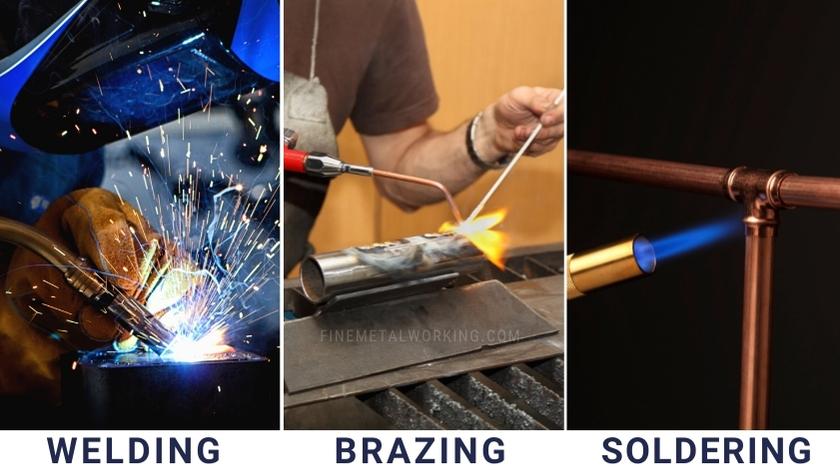
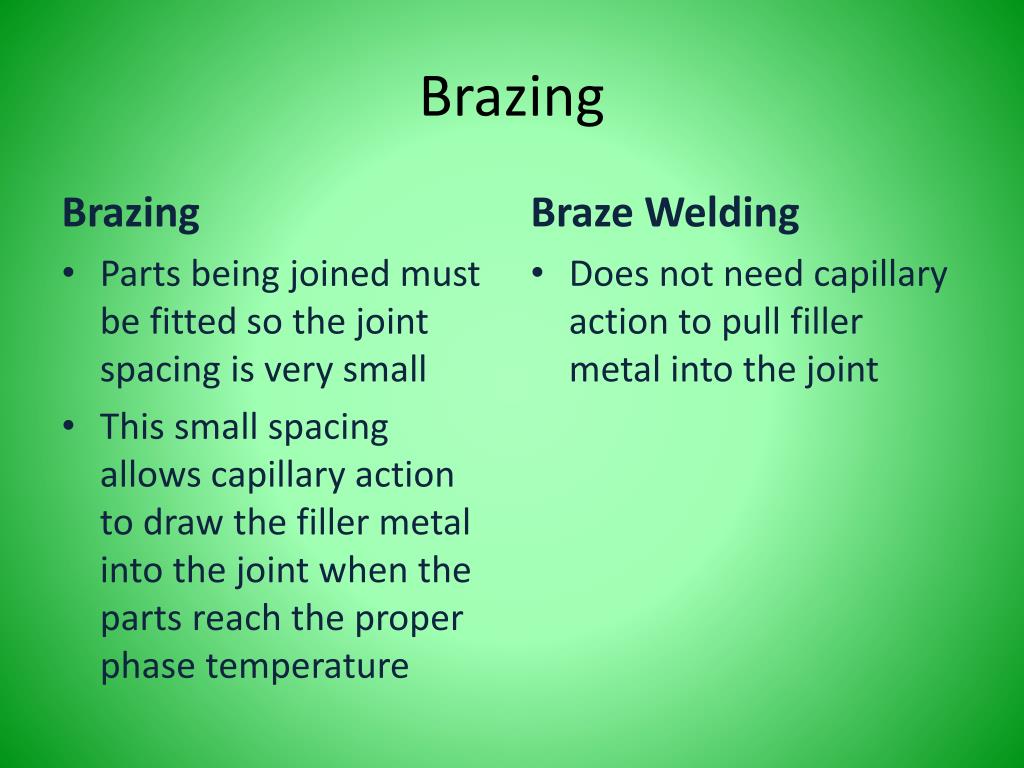
The way you wield the torch is also important. With brazing, you're generally aiming the heat at the base metals, allowing them to warm up and draw the filler metal in through capillary action. It is like letting the aroma of food gently entice people to the dinner table.
With braze welding, you're often directing the heat a bit more directly at the filler metal as well, encouraging it to fuse with the slightly softened surfaces of the base metals. Imagine actively guiding the food onto people's plates, making sure they get a good helping.
Why Choose One Over the Other? (A Matter of Preference!)
So, why pick brazing over braze welding, or vice versa? It really depends on the project! Brazing is great when you need a clean, precise joint without warping the base metals too much. Think delicate jewelry or intricate pipework.
Braze welding is a good choice when you need a stronger joint and don't mind a bit more heat distortion. Picture repairing a farm implement or joining thicker pieces of metal where strength is paramount.
Consider brazing for delicate items; the heat is lower and more controlled, reducing the risk of damage. For example, brazing could be perfect for joining small, intricate metal components.
When strength is your primary concern, braze welding steps up to the plate. This method provides a stronger bond, ideal for applications subject to stress and strain.
Think of Applications (From Teapots to Tractors!)
Brazing is commonly used in applications like joining copper pipes in plumbing systems. It ensures a tight, leak-proof seal without excessively heating the surrounding materials. Imagine the relief of a plumber fixing a leak with a reliable brazed joint.
Braze welding finds its place in repairing cast iron components or joining dissimilar metals. It offers a robust solution for mending broken machinery or fabricating parts that require high strength and durability. Consider the satisfaction of restoring a vintage tractor to its former glory.
Safety First, Always! (No Matter Which You Choose!)
No matter which method you choose, safety is paramount. Wear appropriate protective gear like gloves, goggles, and a respirator.
Ensure adequate ventilation to avoid inhaling harmful fumes. Always work in a clean and organized workspace to prevent accidents.
A Little History (From Ancient Times to Modern Marvels)
Both brazing and braze welding have ancient roots, dating back thousands of years. Early civilizations used these techniques to create jewelry, tools, and weapons.
Over time, these methods evolved, incorporating new materials and technologies. Today, they play a crucial role in industries ranging from aerospace to automotive, showcasing their enduring versatility.
The Takeaway (It's All About the Right Tool for the Job!)
Ultimately, the choice between brazing and braze welding comes down to the specific requirements of your project. Both offer distinct advantages and are valuable skills to have.
So next time you admire a beautifully crafted metal object, remember the hidden techniques that brought it to life. Whether it's the delicate artistry of brazing or the robust strength of braze welding, these methods continue to shape our world in countless ways.
Whether you are brazing or braze welding, practice makes perfect. So grab your torch, choose your filler metal, and start creating!