
Difference Between A Weather Warning And Watch

Let's talk weather. Specifically, those confusing alerts. You know, the ones that pop up on your phone and make you question every life choice you've ever made.
The Weather Alert Alphabet Soup
We've got watches and warnings. And let's be honest, who really knows the difference? I'm here to tell you, it's simpler (and maybe sillier) than you think.
The Watch: "Heads Up!"
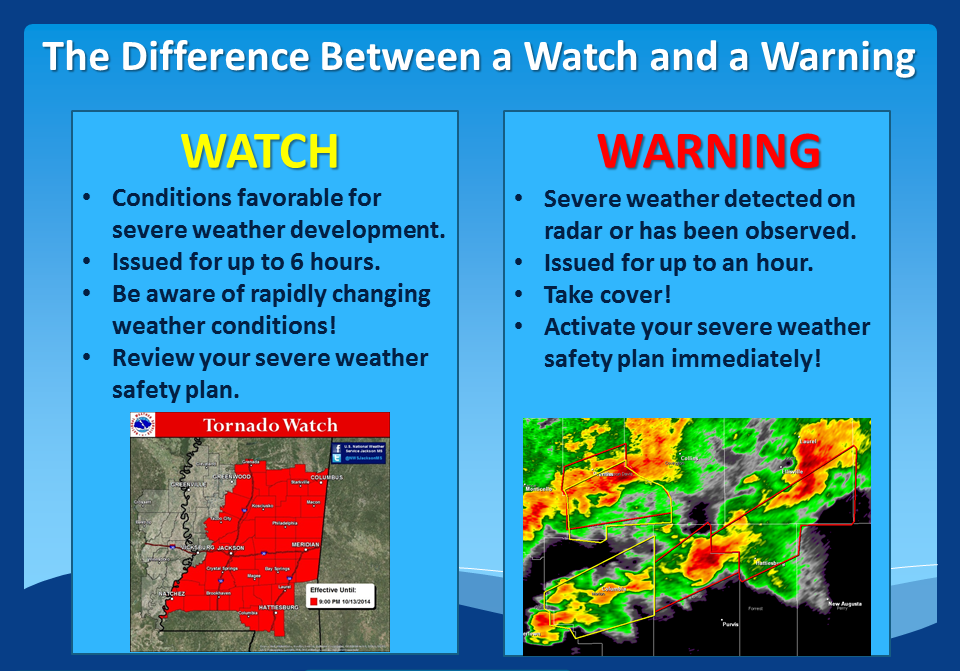
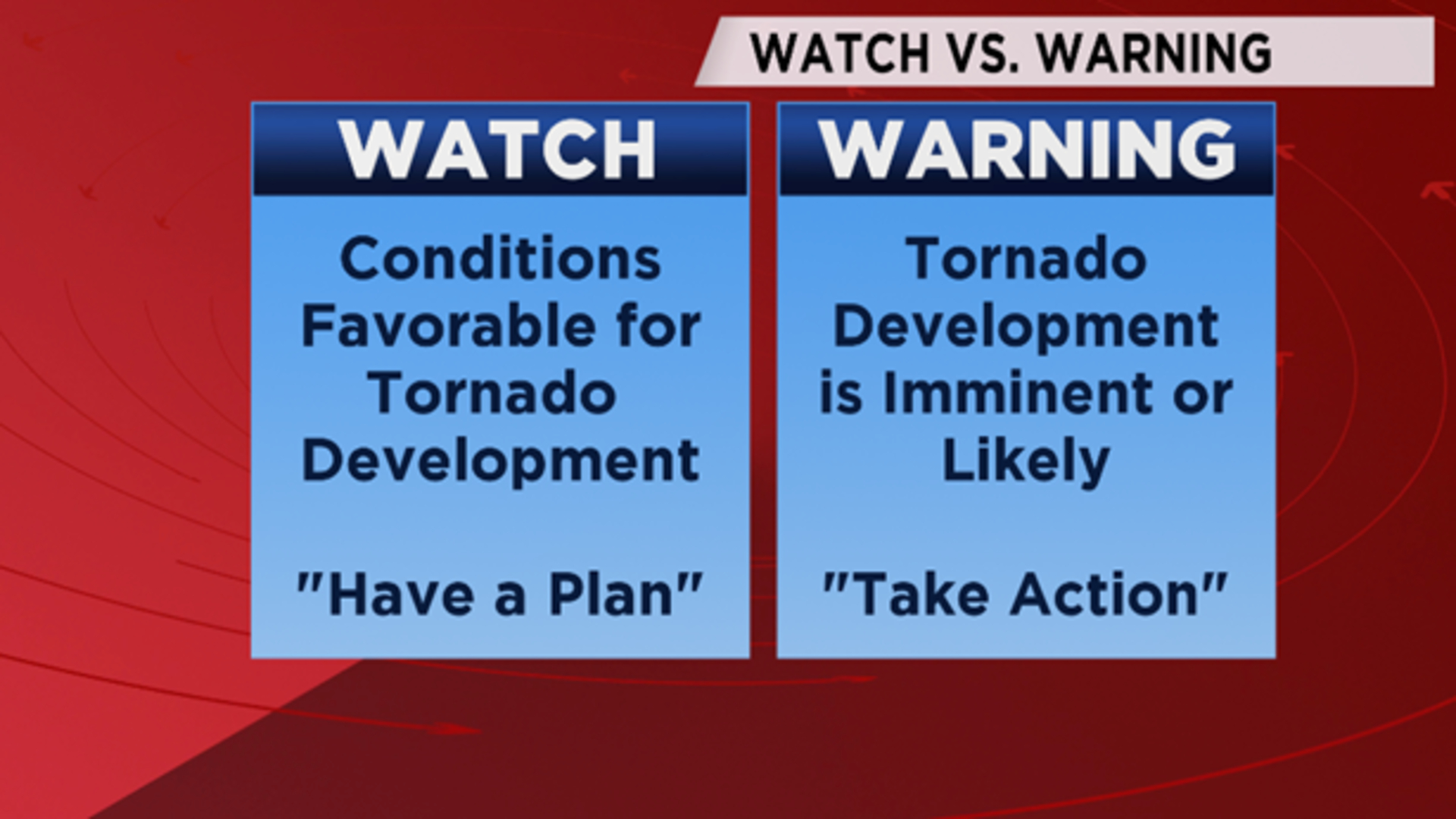
Think of a weather watch like a friendly "heads up!" Your local meteorologist is basically saying, "Hey, pay attention. Something could happen." It's like when your mom says, "There might be traffic."
Must Read
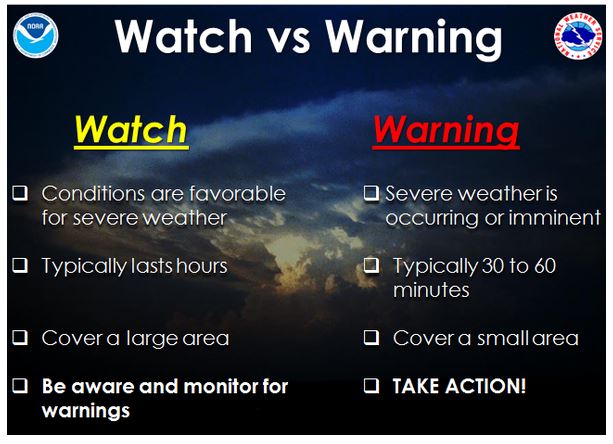
A watch means conditions are favorable for a specific weather event. It could be a tornado, a blizzard, or even excessive sunshine (yes, that's a thing!). Basically, the ingredients are there for something potentially unpleasant.
It's a time to be aware, not necessarily to panic. Stock up on popcorn. Prepare for the worst. Hope for the best.
The Warning: "This Is Happening!"
A weather warning, on the other hand, is the real deal. It's the meteorologist screaming, "Duck and cover! It's actually happening!"
This means the weather event is imminent or already occurring. A tornado has been spotted. The blizzard is raging. The excessive sunshine is causing spontaneous combustion (okay, maybe not that last one).
This is when you need to take action. Find shelter. Stay off the roads. Apply sunscreen (again, maybe not the combustion part).
My Unpopular Opinion
Okay, here's where I might lose some of you. I think we over-analyze these things. Like, way over-analyze.
I'm convinced half the population just sees "weather alert" and immediately starts building an ark. The other half ignores everything and then complains when they're stuck in a snowdrift.
There has to be a middle ground, people! A place where we're informed, prepared, but not paralyzed by fear.
It's like when you see the flash flood warning while you're driving.
Do you pull over to the side of the road right that moment? Nope. You drive slowly and steadily and check the condition ahead of you.
Analogies to the Rescue!
Let's break this down with some relatable analogies. Because who doesn't love a good analogy?
The Watch: Like a Doctor's "Possible" Diagnosis
Imagine your doctor says, "We see something on your x-ray. It could be serious, so we need to run more tests." That's a watch!
You're concerned, sure. But you don't immediately start writing your will. You wait for the results. You prepare for the possibilities. You Google your symptoms (don't do that!).
The Warning: Like a Doctor's "Confirmed" Diagnosis
Now imagine your doctor says, "It's confirmed. You have a rare condition, and we need to start treatment immediately." That's a warning!
Time to take action! Follow the doctor's orders. Get the treatment. Avoid Google at all costs.
The Watch: The "Maybe We Should Pack Umbrellas" Scenario
Your friend says, "The forecast says there's a chance of rain." That's a watch! Maybe grab an umbrella. Maybe don't. It's a gamble.
You glance out the window, see a few puffy clouds, and make a judgement call. Living on the edge, right?

The Warning: The "Run For Cover!" Scenario
Suddenly, the sky turns black. Thunder rumbles. Rain is pouring down in sheets. That's a warning!
Forget the umbrella. Find the nearest awning. Or just embrace the downpour and dance like you're in a movie.
So, What Should You Do?
Okay, enough with the analogies. What should you actually do when you see a weather watch or warning?
For a Watch: Stay informed. Monitor the weather. Make sure you have a plan. Don't panic!
For a Warning: Take action! Seek shelter. Follow instructions from authorities. Stay safe!
And maybe, just maybe, take everything with a grain of salt. Weather forecasting is an art, not a science. Those meteorologists are doing their best.
The Final Verdict
Watches are like a gentle nudge. Warnings are like a swift kick in the pants. Know the difference. Stay informed. And try not to overreact.
After all, a little bit of common sense goes a long way. Even in the face of a potential weather apocalypse.
And if all else fails, blame Al Roker. Just kidding! (Mostly.)
The Unsung Hero of Weather Alerts: Common Sense
We've talked about watches and warnings. But let's be real, the most important tool in your weather preparedness arsenal is good old-fashioned common sense.
If the sky looks angry and the wind is howling, maybe skip that hike. If the roads are covered in ice, maybe postpone that trip to the grocery store.
These things seem obvious, but you'd be surprised how many people ignore them. Don't be one of those people!
Embrace the Imperfection
Weather forecasts are not perfect. They are educated guesses based on complex data. Sometimes they're right. Sometimes they're hilariously wrong.
Learn to embrace the imperfection. Don't get angry when the forecast says sunshine and you end up with a thunderstorm. Just roll with it.
Life is unpredictable, and so is the weather. It's all part of the adventure.
A Little Humor Goes a Long Way
Let's face it, weather can be scary. But it can also be funny. Remember that time it snowed in July?
Don't be afraid to laugh at the absurdity of it all. A little humor can help you cope with even the most stressful weather situations.
Plus, laughing is good for you. It reduces stress, boosts your immune system, and makes you more attractive to potential mates. (Okay, maybe not that last one.)
So Next Time...
Next time you see a weather watch or warning, take a deep breath. Assess the situation. Use your common sense.
And remember, it's just weather. It's not the end of the world. (Unless it is, in which case, good luck!)
Now go forth and conquer the elements! Or, you know, just stay inside and watch Netflix. That's perfectly acceptable too.
The Watch vs. Warning: A Quick Cheat Sheet
Still confused? Here's a super-quick cheat sheet to stick on your fridge:
Watch: Maybe danger. Be aware. Warning: Actual danger. Take action.
You're welcome.
Don't Forget Your Pets!
One last thing: don't forget about your furry, scaly, or feathered friends during severe weather. They need your help too!
Bring them inside. Make sure they have food and water. And maybe give them a little extra cuddle time to ease their anxiety.
After all, they're part of the family. Even if they do shed all over your furniture.