
Difference Between A Funnel Cloud And A Tornado
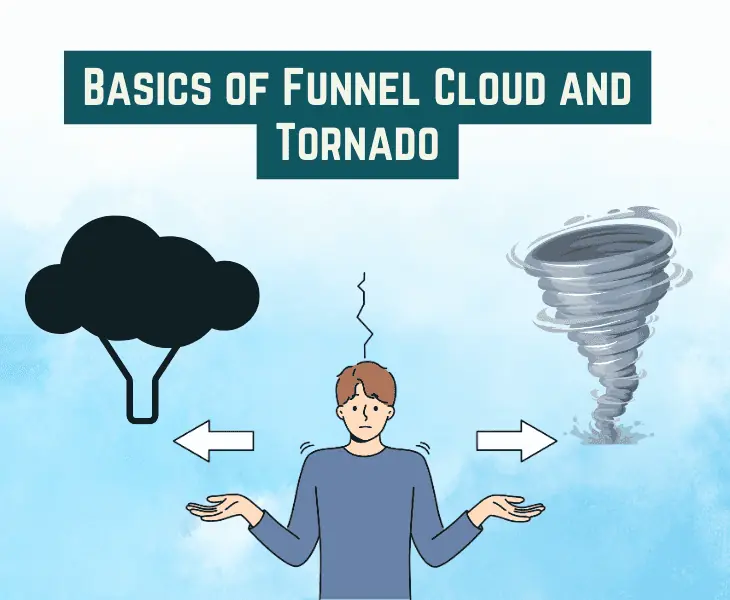
Ever stared at the sky, seen a swirling, ominous cloud, and thought, "Uh oh, is that a tornado coming to steal my picnic basket?" You're not alone! Identifying weather phenomena can be tricky. Especially when it involves swirling, angry clouds.
Let's break down the difference between a harmless-ish funnel cloud and its more troublesome cousin, the tornado.
Funnel Cloud: The Cloud That Dangles, But Doesn't Quite Dance
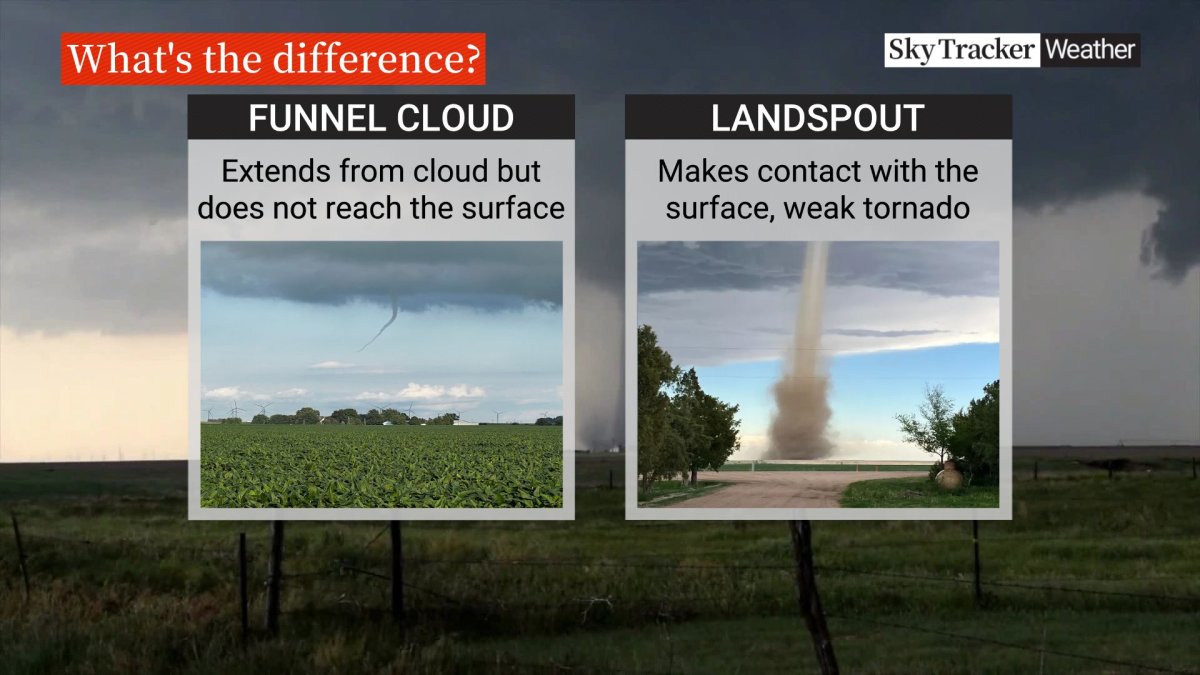
Imagine a playful puppy wagging its tail, but the tail never touches the ground. That's kind of like a funnel cloud! It's a cone-shaped cloud that extends from a larger cloud. Usually a cumulonimbus or towering cumulus cloud.
Must Read
Think of it as a tornado that's "still in training." It's got the swirling motion, the dramatic look, but it hasn't quite committed to touching down.
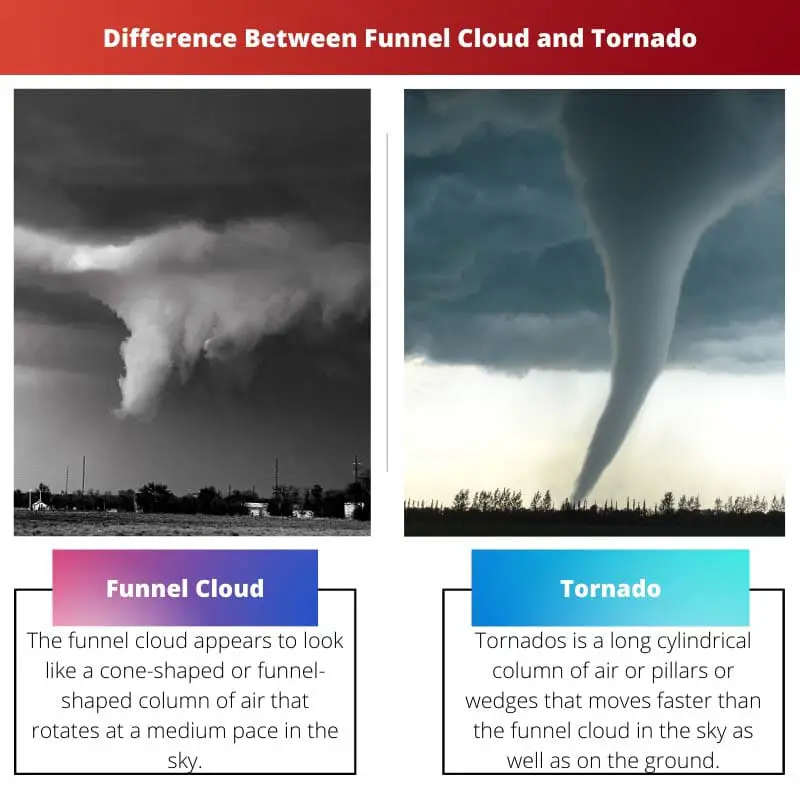
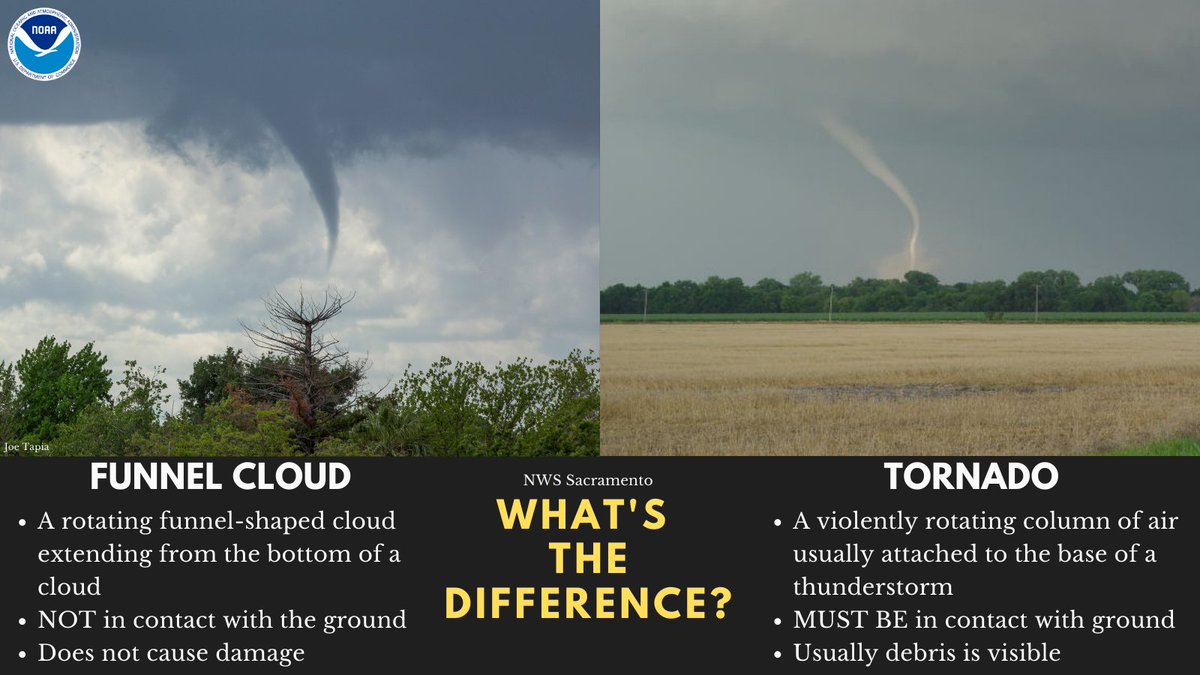
A funnel cloud is essentially a rotating column of air, made visible by cloud droplets. It's connected to a cloud up above, which is important to keep in mind.
Key Characteristics of a Funnel Cloud
So, how can you spot a funnel cloud? Here are a few telltale signs:
It's shaped like a cone, a rope, or even sometimes a wobbly elephant trunk descending from a cloud.
It's visibly rotating. You can often see the swirling motion within the cloud itself.
And here's the big one: It doesn't touch the ground! If it’s not touching the ground, it's just a fun(nel) cloud.
Think of it like a failed high-five. The hand is there, but the connection is missing!
Tornado: When the Cloud Gets Serious
Now, let's talk about the real deal: the tornado. This is where things get a little more… intense. A tornado is a violently rotating column of air. It extends from a cumulonimbus cloud and makes contact with the ground.
Unlike its funnel cloud cousin, the tornado is a ground-dweller. It's touching down and causing all sorts of trouble.
Imagine a mischievous gremlin tap-dancing across your yard, picking up everything in its path. That's a pretty good (and slightly terrifying) visual for a tornado.
Identifying a Tornado: Look for the Touchdown!
So, what makes a tornado a tornado? Here's what to look for:
The most important thing is that it is touching the ground. This is the defining characteristic.
Often, you'll see a visible condensation funnel, which is the swirling cloud of water droplets. But sometimes, the funnel is obscured by rain or debris.
Speaking of debris, look for a debris cloud swirling at the base of the funnel. This is a sure sign that the vortex is interacting with the ground and picking things up.
A loud roaring sound is another sign. People often describe it as sounding like a freight train.
Think of it this way: if you see a swirling cloud monster kicking up dirt and tossing cars around, it's probably a tornado. Time to take cover!
The Crucial Difference: Ground Contact is Key
The difference between a funnel cloud and a tornado is all about the ground. Does it touch? Yes, then it's a tornado. No, then it's just a funnel cloud.
It's like the difference between a handshake and a friendly wave. Both involve a hand gesture, but one involves direct contact, and the other doesn't.
Remember, even though a funnel cloud isn't touching down, it still has the potential to become a tornado. Stay vigilant and aware of your surroundings!
Why This Matters: Staying Safe in Severe Weather
Understanding the difference between a funnel cloud and a tornado is crucial for your safety. Knowing what you're looking at can help you make informed decisions during severe weather events.
If you see a tornado, even a weak one, seek shelter immediately. Head to a basement, storm cellar, or interior room on the lowest floor of a sturdy building.
If you see a funnel cloud, it's still wise to be cautious. Monitor weather updates and be prepared to take shelter if the situation escalates.
Consider it like this: A funnel cloud is like a warning sign. A tornado is the actual hazard.
Funnel Cloud to Tornado: The Transformation
Sometimes, a funnel cloud can transform into a tornado in the blink of an eye! This happens when the rotating column of air strengthens and extends all the way to the ground.
Imagine a rubber band stretching further and further until it finally snaps and hits something. That's kind of like a funnel cloud morphing into a tornado.
The process isn't always predictable, which is why it's so important to stay informed and be prepared.
Myth Busting: Funnel Clouds and Tornadoes
Let's debunk a few common myths about funnel clouds and tornadoes:
Myth: Tornadoes only happen in "Tornado Alley." Fact: Tornadoes can occur in almost any location in the world, although they are more common in certain regions.

Myth: You should open windows during a tornado to equalize the pressure. Fact: This is dangerous and doesn't work. Opening windows allows wind and debris to enter your home.
Myth: Hiding under an overpass is a safe place during a tornado. Fact: Wind speeds can actually be higher under an overpass, and you're exposed to flying debris.
Myth: Tornadoes never hit cities. Fact: Cities can and do get hit by tornadoes. Building density doesn't offer protection.
In Conclusion: Stay Sky-Aware and Weather-Wise
So, the next time you're gazing at the sky and see a swirling cloud, remember the key difference: ground contact! If it's touching the ground, it's a tornado. If not, it's a funnel cloud (for now).
Always stay informed about the weather in your area, and have a plan in place in case of severe weather.
By understanding the difference between these weather phenomena, you can stay safe and maybe even impress your friends with your newfound meteorological knowledge!
And remember, even the scariest weather can be fascinating if you approach it with a little knowledge and a healthy dose of respect. Stay safe out there!