
Diff Between Ferrous And Non Ferrous Minerals
Ever wondered what gives skyscrapers their strength or why your fridge sticks to magnets? The answer, in part, lies in the fascinating world of minerals! And specifically, the difference between ferrous and non-ferrous minerals. Sounds like a dry science lesson, right? Wrong! Understanding these mineral categories unlocks a deeper understanding of the objects around you, from the tools you use to the jewelry you wear. Plus, it’s surprisingly useful knowledge, especially if you're into recycling, crafting, or even just understanding product descriptions.
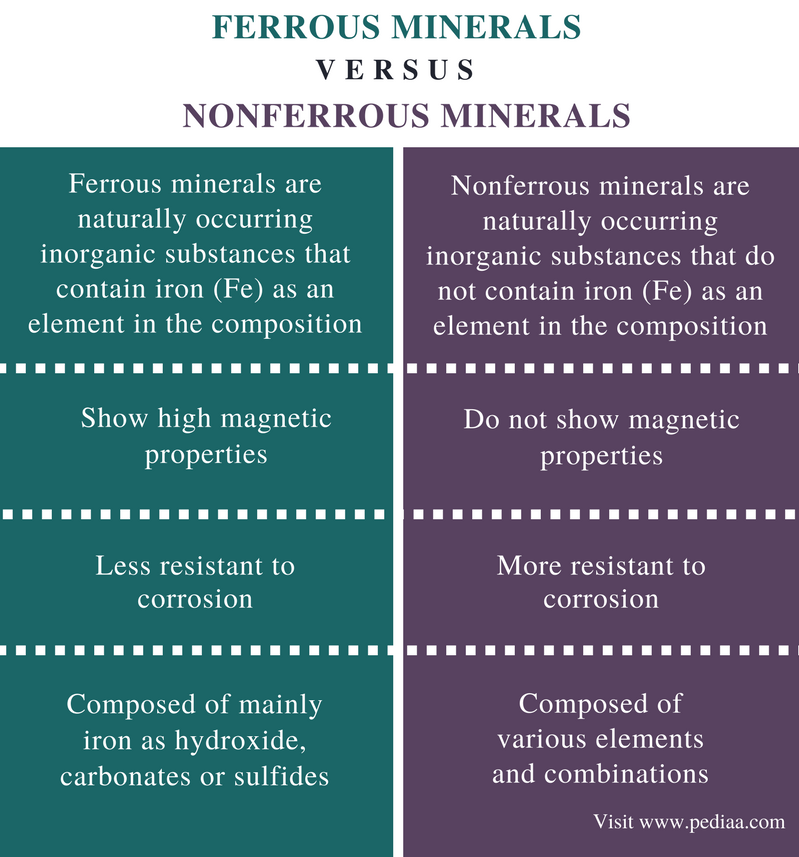
So, what’s the big deal? The defining characteristic is simple: does it contain iron (Fe)? Ferrous minerals do, while non-ferrous minerals don't. This seemingly small difference has a massive impact on their properties and uses.
Let’s start with the heavy hitters: ferrous minerals. Iron is the star of this show, and when combined with other elements, particularly carbon, it creates steel – the backbone of modern construction. Think bridges, skyscrapers, cars, and even your washing machine. Iron ore itself is a ferrous mineral. Because of their iron content, these minerals are typically magnetic and prone to rusting when exposed to moisture and oxygen. This rusting, or oxidation, is a chemical reaction that weakens the material over time, hence the need for rust-proofing measures.
Must Read
Now, let’s move on to the lighter, more colorful side: non-ferrous minerals. This is a diverse group that includes everything from aluminum and copper to gold and silver. Because they lack iron, they are generally not magnetic and are much more resistant to corrosion. This is why copper is used for plumbing pipes and electrical wiring – it won't rust and conducts electricity well. Aluminum, being lightweight and strong, is ideal for airplanes and beverage cans. Gold and silver, of course, are prized for their beauty and resistance to tarnish, making them perfect for jewelry and coinage.

The purpose and benefits of understanding the difference are plentiful. For example, knowing whether a metal is ferrous or non-ferrous can help you identify the best way to recycle it. Ferrous metals are often separated magnetically at recycling centers, while non-ferrous metals require different processing methods. This knowledge is also crucial in manufacturing, where choosing the right material for a specific application is essential for performance and durability. Imagine building a ship out of iron without proper rust protection – it wouldn't last very long!
In short, the distinction between ferrous and non-ferrous minerals is more than just a scientific curiosity. It's a fundamental understanding of the materials that shape our world. So, next time you pick up a magnet or admire a gleaming piece of jewelry, take a moment to appreciate the hidden properties of these fascinating minerals. You'll be surprised at how much more you notice!


