Determining The Coefficient Of Kinetic Friction
Have you ever slid across a freshly waxed floor in your socks, or wondered why your car's tires grip the road differently in the rain? These experiences, seemingly mundane, are all governed by the fascinating force of friction. While often an unseen player, friction is a critical part of our daily lives, and understanding its nuances, like the coefficient of kinetic friction, can be surprisingly enlightening and even useful.
But why bother with something that sounds so technical? Well, understanding friction helps us predict how things will move and interact. It's the silent architect behind everything from the design of non-slip shoes to the engineering of safer braking systems. Consider a figure skater gracefully gliding across the ice. They're minimizing friction. Now think about a car slamming on its brakes. They're maximizing it. The coefficient of kinetic friction, in particular, tells us how much force is needed to keep an object moving once it's already sliding. It's a key ingredient in predicting and controlling motion.
The benefits extend beyond the purely theoretical. Knowing the coefficient of kinetic friction can help us in everyday situations. Imagine you're moving furniture. Understanding the friction between the furniture legs and the floor helps you anticipate how much effort it will take to push each piece. Or, consider a construction worker needing to drag heavy materials across a site. Knowing the coefficient of friction between the materials and the ground allows them to choose the most efficient tools and techniques.
Must Read
So, how is this seemingly complex concept applied? Here are a few common examples:
- Automotive Engineering: Calculating stopping distances, designing effective braking systems, and optimizing tire treads for various road conditions.
- Manufacturing: Choosing appropriate lubricants to reduce wear and tear on machinery and improve efficiency.
- Sports Equipment Design: Creating skis, snowboards, and athletic shoes that offer the ideal balance of grip and glide.
- Robotics: Developing robots capable of navigating complex environments and manipulating objects with precision.
While directly measuring the coefficient of kinetic friction might seem like a task best left to scientists, there are ways to appreciate and understand it more effectively. One simple method is through observation. Pay attention to how different materials interact. How easily does a book slide across a wooden table compared to a carpet? The difference you observe is directly related to the coefficient of kinetic friction.

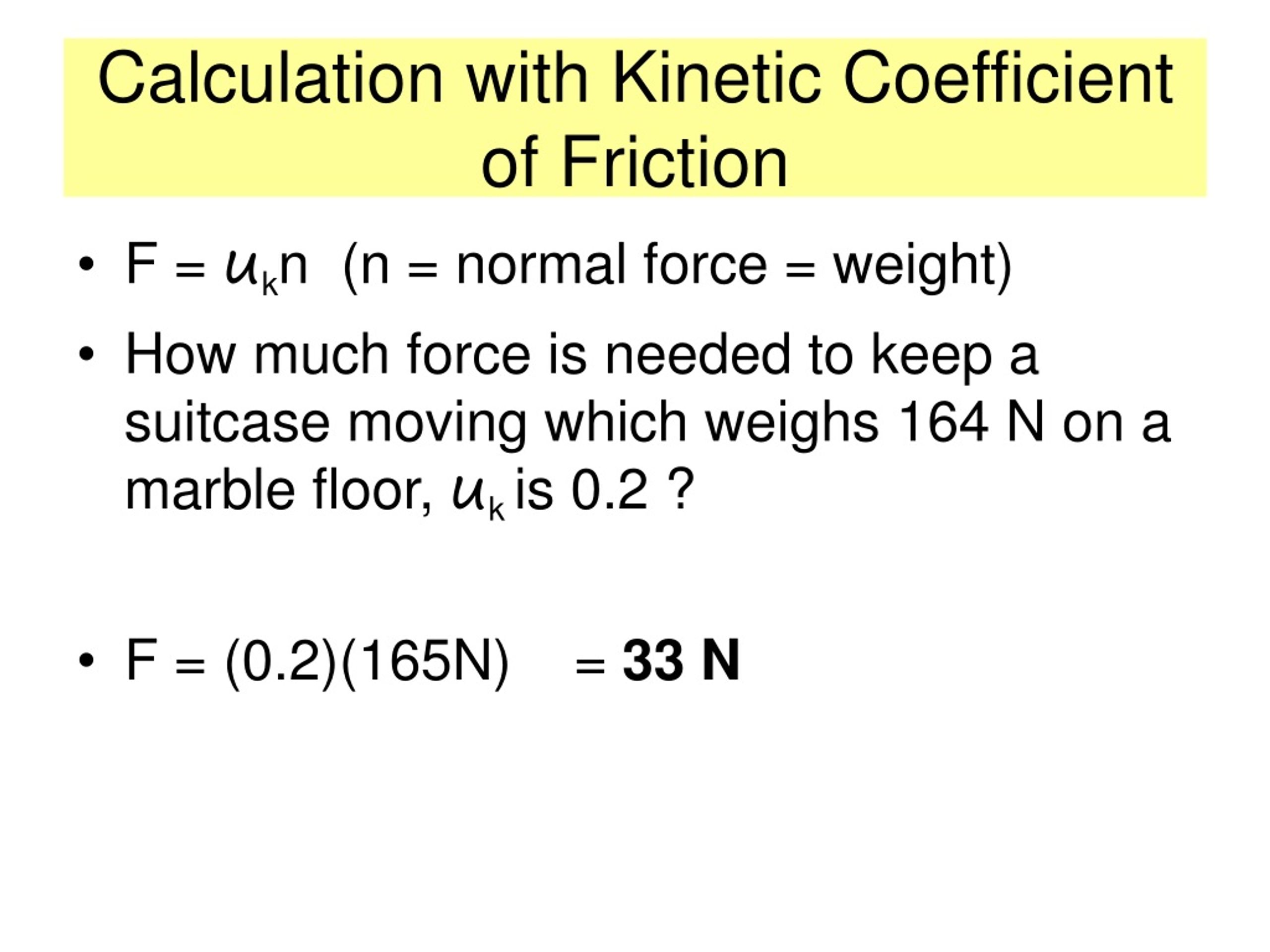
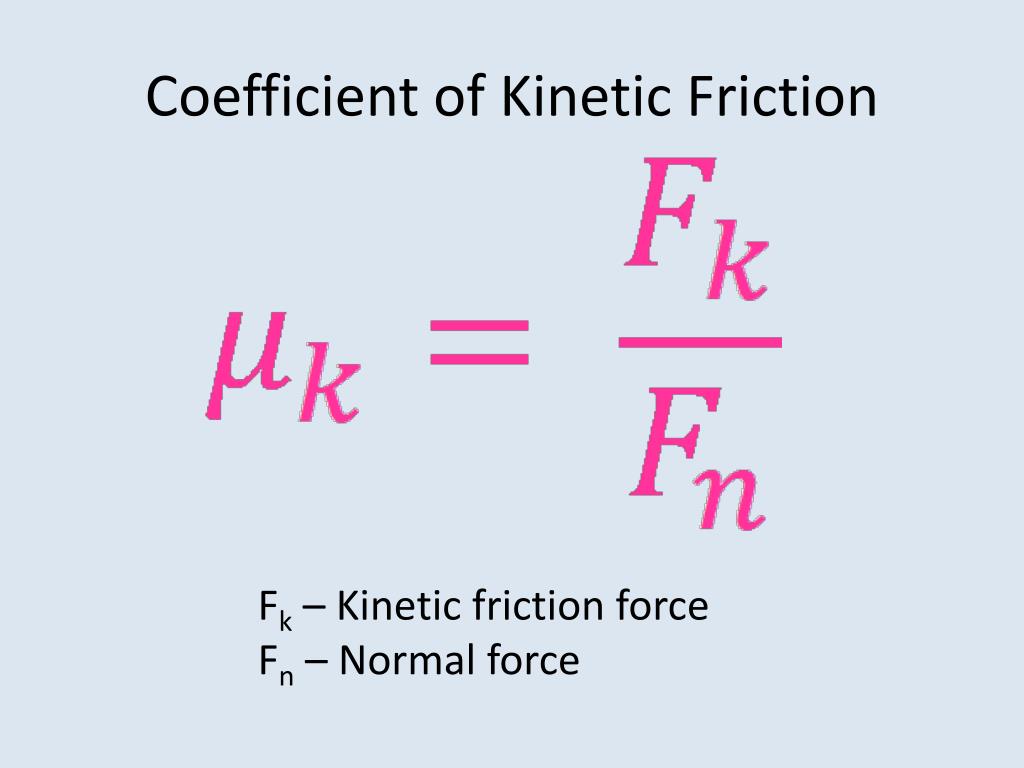
For a more hands-on approach, you can conduct simple experiments. Use a spring scale to pull an object across a surface at a constant speed. By measuring the force required and the object's weight, you can calculate an approximate coefficient of kinetic friction. There are also numerous online resources and simulations that allow you to explore the concept in a virtual environment.
Ultimately, understanding the coefficient of kinetic friction isn't about memorizing formulas, but about developing a deeper appreciation for the physics that govern our world. By observing, experimenting, and asking questions, you can unlock a hidden layer of understanding in the everyday movements and interactions around you. So, next time you're pushing a box across the floor, remember the fascinating world of friction and the power of a simple coefficient.