
Definition Of Renewable And Nonrenewable Resources

Ever wondered where the stuff we use every day comes from? I mean, really comes from, like, deep-down-in-the-Earth comes from? Well, buckle up, buttercup, because we're diving into the wild world of renewable and nonrenewable resources!
The "Never Gonna Run Out (Hopefully)" Club: Renewable Resources
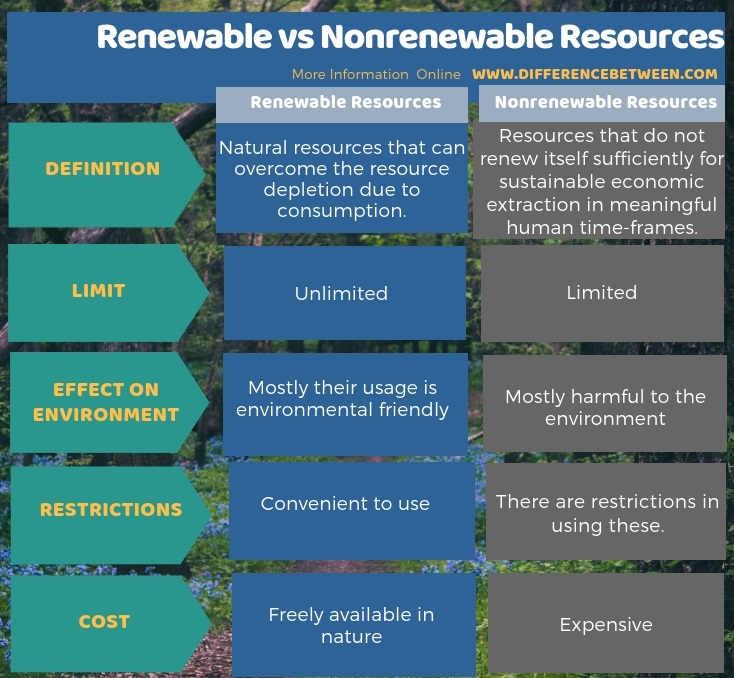
Imagine a magic well that refills itself no matter how much water you take out. That, my friends, is kind of like a renewable resource! These are the goodies that Mother Nature keeps replenishing, either super fast or at least within a human lifetime.
Think sunshine, blowing wind, and flowing water. These natural sources are like the energizer bunnies of the resource world – they just keep going and going!
Must Read
Want to power your house with sunshine? Slap on some solar panels and soak up those rays!
Examples of Renewable Resources (with a dash of silliness)
Let's get specific and maybe a little bit goofy.
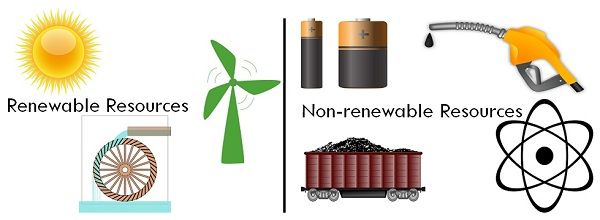
Solar Energy: The sun! That big, bright ball of fire in the sky. It's like nature's giant flashlight, and it’s beaming down free energy every single day. Imagine powering your entire city with just the sun's leftover glow after it's done tanning the lizards!
Seriously, though, solar power is pretty darn awesome.
Wind Energy: Whoosh! Remember that time your kite soared so high it practically tickled the clouds? That same wind can turn massive turbines, generating electricity without polluting the air.
Think of it as harnessing the power of a thousand invisible giants all puffing at once!

Hydropower: Waterfalls are pretty, right? But they're also secretly powerhouses! Dams use the force of rushing water to spin turbines and create electricity.
It’s like nature’s roller coaster, but instead of screaming, you get clean energy.
Geothermal Energy: Deep down in the Earth, things are HOT! Geothermal energy taps into this underground heat to generate electricity or even heat buildings.
It's like having a giant, natural radiator under your house. Cozy!
Biomass Energy: This one's a bit of a mixed bag, but basically, it involves burning organic matter (like wood or crops) for energy. It's renewable as long as we replant what we use!
Think of it as recycling...but with fire! (Please be careful with fire, though.)
The beauty of these resources is that they're constantly being renewed. The sun will keep shining (hopefully!), the wind will keep blowing (unless someone steals all the air), and the water will keep flowing (unless we drink it all!).
The "Use 'Em Wisely, They Won't Last Forever" Crew: Nonrenewable Resources
Now, let's talk about the resources that are like limited-edition comic books. Once they're gone, they're GONE! These are the nonrenewable resources, and they take millions of years to form.
Think of them as buried treasure that we're slowly digging up. But once the treasure chest is empty, that’s it, treasure hunt over!
Examples of Nonrenewable Resources (with a touch of drama)
Get ready for some resource realness!
Fossil Fuels (Coal, Oil, Natural Gas): These are the rock stars of the nonrenewable world, but they're also the biggest culprits when it comes to pollution. They're formed from the remains of ancient plants and animals that got squished and cooked underground for millions of years.
Burning them releases energy, but also a whole bunch of nasty stuff into the atmosphere.
Coal: Imagine a giant pile of squished ferns and dinosaurs that has turned into a black rock. That's coal! We burn it to make electricity, but it creates a lot of air pollution.
It’s like burning ancient history… literally.
Oil (Petroleum): This is the black gold that fuels our cars and makes a gazillion different products. It's formed from the remains of tiny sea creatures that died millions of years ago.
It's basically ancient fish juice... but don't drink it!
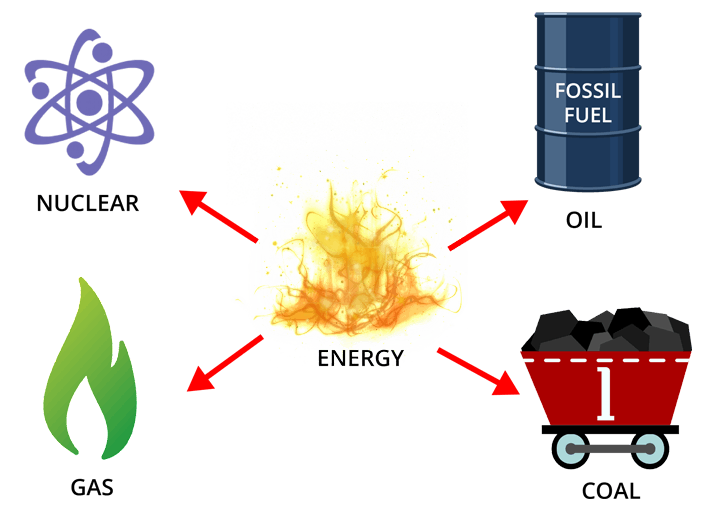
Natural Gas: This is the invisible gas that heats our homes and powers some of our appliances. It's often found alongside oil deposits and is also formed from the remains of ancient organisms.
It's like a ghost fart… but flammable!
Nuclear Energy (Uranium): This one's a bit different, but uranium is a finite resource that we use to create nuclear power. It doesn't burn like fossil fuels, but it does create radioactive waste that needs to be carefully stored.
It's like using a super-powerful battery that eventually runs out and leaves behind some tricky leftovers.
The problem with nonrenewable resources is that they're finite. We're using them up much faster than they can be replenished. So, eventually, they will run out.
Imagine drinking all the soda in the world. Pretty soon, the vending machine will be empty. The end.
The Big Picture: Why It Matters (and Why You Should Care!)
So, why should you care about all this renewable vs. nonrenewable mumbo jumbo? Because the choices we make about energy affect everything!
From the air we breathe to the climate we live in, our resource consumption has a HUGE impact.
By using more renewable resources, we can reduce pollution, protect the environment, and create a more sustainable future. It's like planting a tree instead of chopping one down.
Even small changes can make a big difference. Turn off the lights when you leave a room, recycle your cans and bottles, and consider walking or biking instead of driving.
It's not just about saving the planet (although that's a pretty good reason!), it's also about creating a better world for ourselves and for future generations. It's about being a responsible human being and making choices that benefit everyone.
So, go forth and be a renewable resource champion! The planet (and your future self) will thank you for it.