Definition Of Nuclear Fission And Nuclear Fusion

Ever heard of taking atoms and smashing them together or splitting them apart to create something amazing? No, we're not talking about science fiction! We're diving into the fascinating world of nuclear fission and nuclear fusion. Now, before you run for the hills thinking this is too complex, stick with me! While these terms sound intimidating, understanding the basic principles can unlock a whole new way of looking at the world, and believe it or not, it can even inspire your creative side!
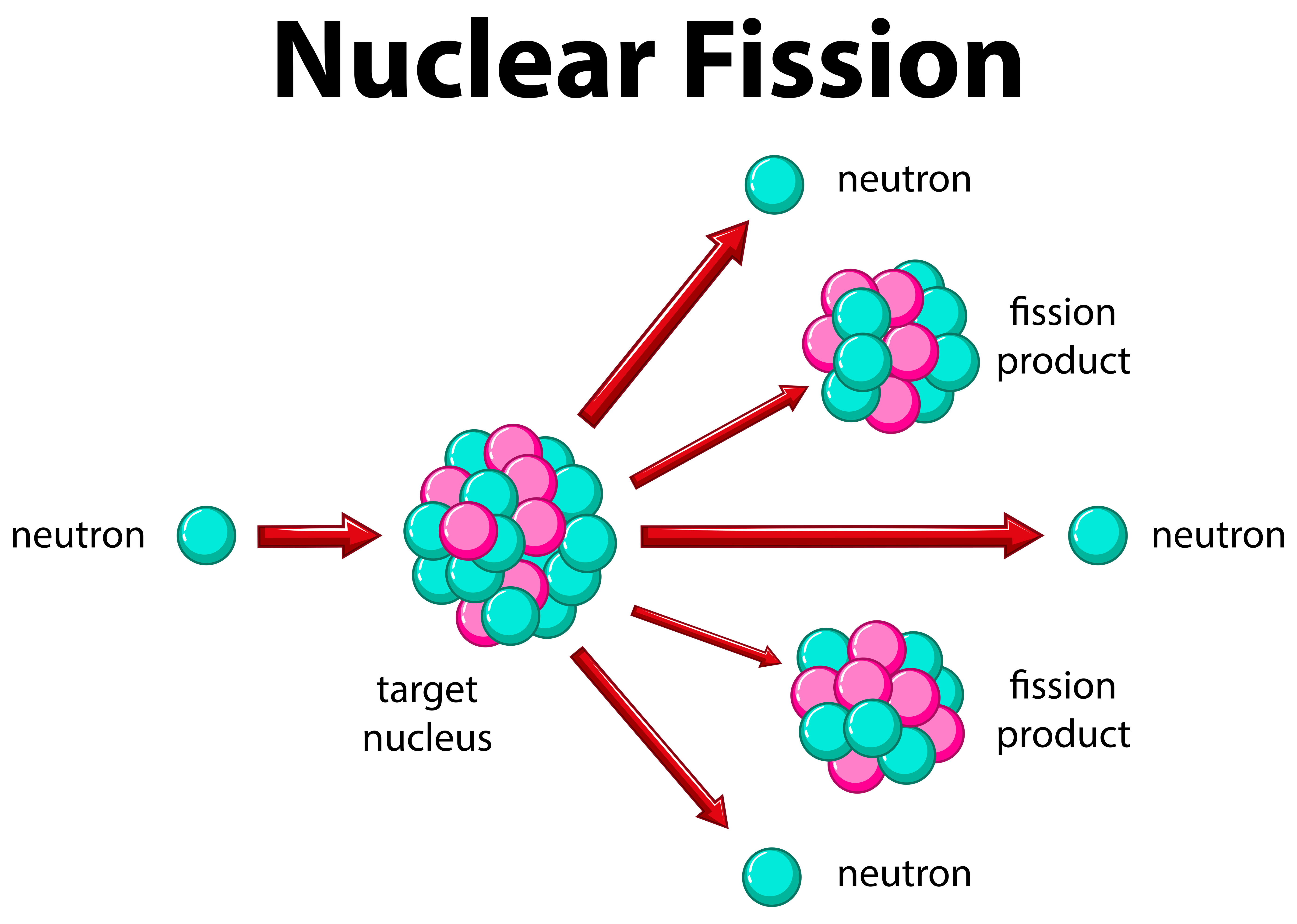
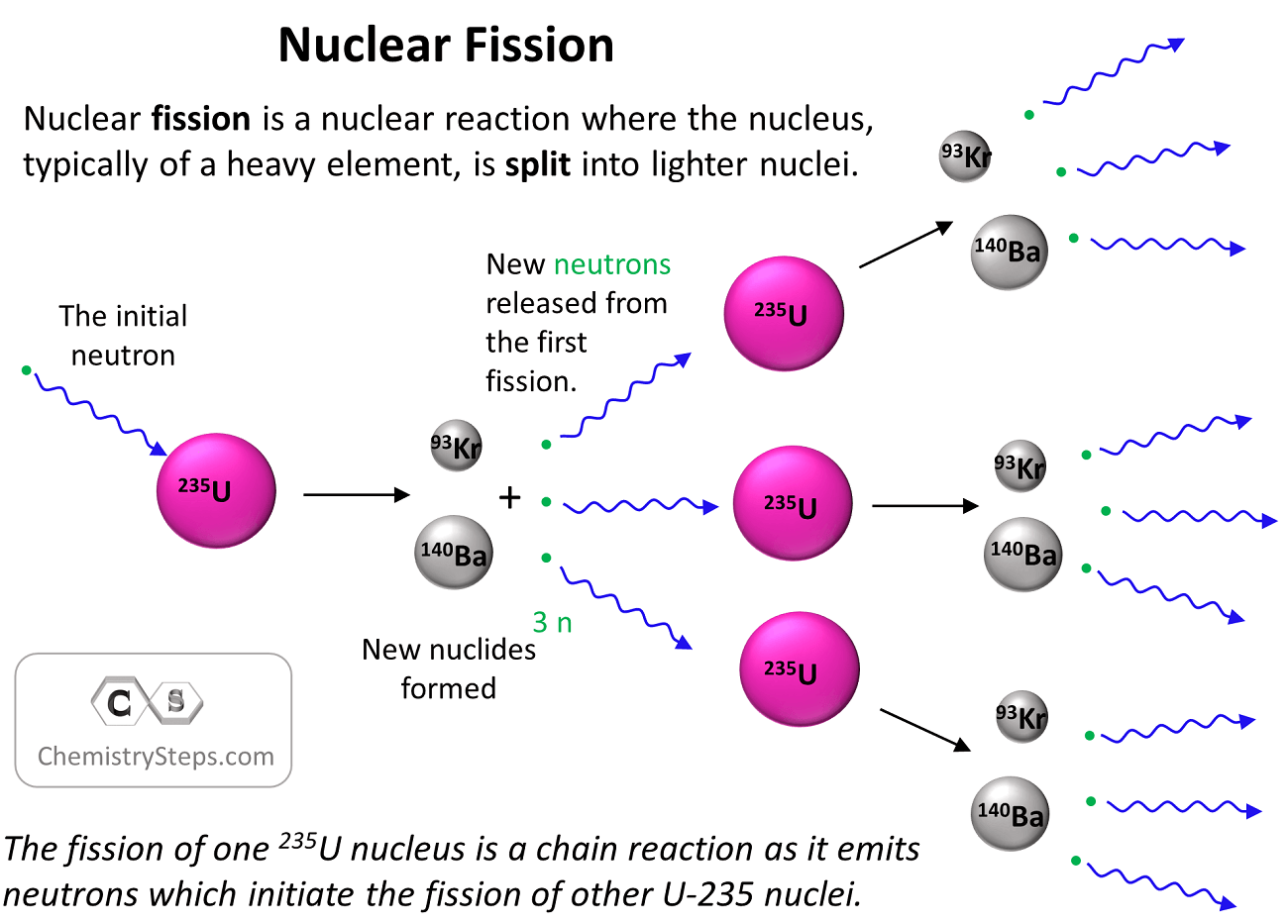
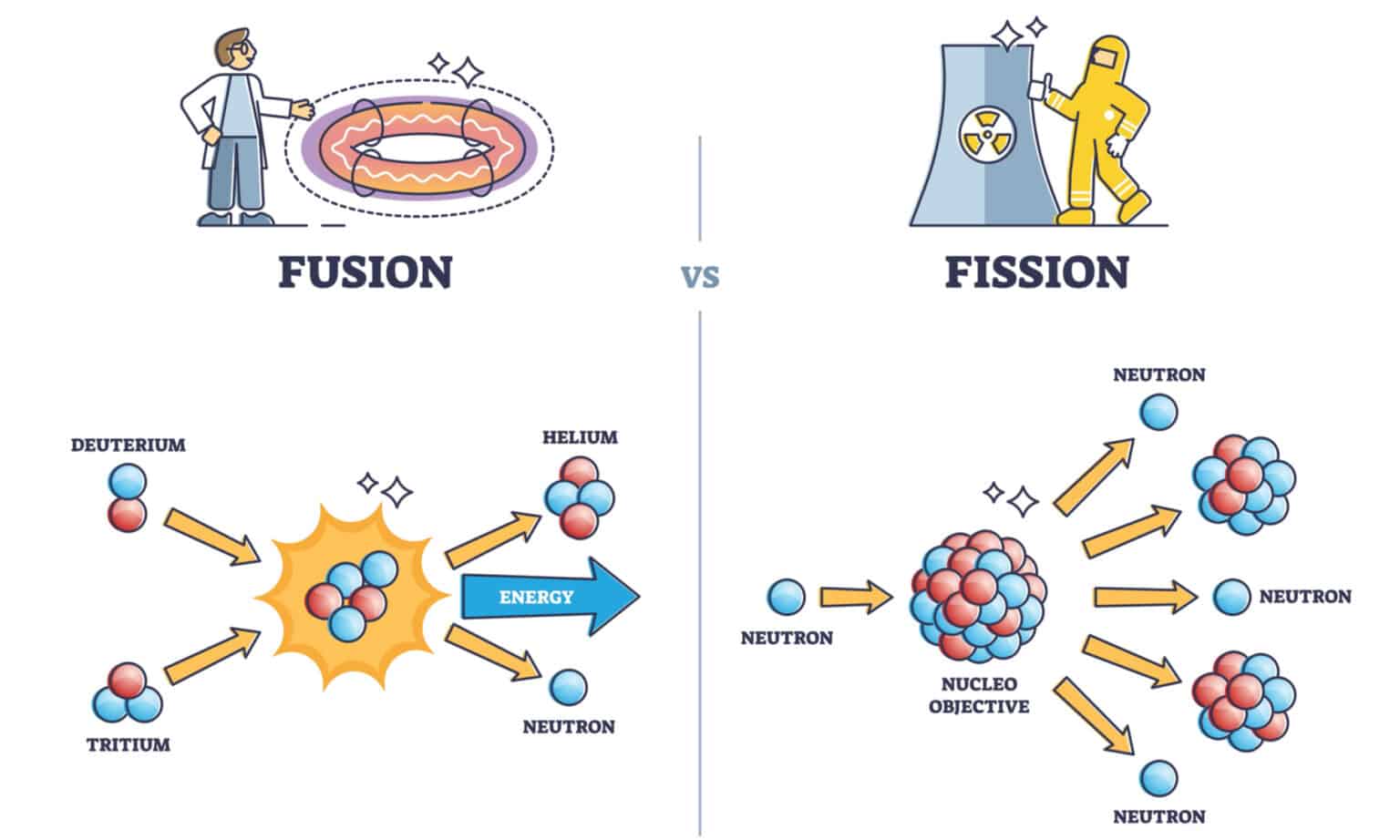
So, what exactly are we talking about? Nuclear fission is essentially the process of splitting a heavy atom, like uranium, into smaller atoms. Think of it like taking a single, large LEGO brick and breaking it down into many smaller ones. This process releases a tremendous amount of energy. Nuclear fusion, on the other hand, is the opposite. It's the process of forcing two light atoms, like hydrogen, to combine and form a heavier atom, like helium. Imagine taking two tiny LEGO bricks and fusing them together to create a slightly bigger one. This also releases an immense amount of energy, and it's what powers the sun!
But how can this be useful for artists, hobbyists, or even just casual learners? Well, consider this: understanding the raw power and underlying principles of fission and fusion can fuel your imagination. For artists, it could inspire stunning visual representations of energy transfer or the sheer magnitude of these reactions. Think about abstract paintings that mimic the chaotic energy release of fission, or sculptures that symbolize the merging and unification of fusion. For writers, it could spark unique science fiction stories exploring the potential (and potential pitfalls) of these technologies. Even for a casual learner, understanding these concepts offers a profound appreciation for the forces that shape our universe. It's like having a backstage pass to the fundamental workings of reality!
Must Read
Examples are all around us, though often unseen. The atomic bomb is a grim example of uncontrolled fission. On the brighter side, nuclear power plants use controlled fission to generate electricity. And the sun's radiant energy is a continuous demonstration of nuclear fusion in action. You can even see less literal interpretations in art: think of the powerful brushstrokes of an Expressionist painting capturing the raw energy of a fission event, or the interlocking shapes of a Cubist artwork representing the fusion of different perspectives.

Okay, so maybe you can't literally try nuclear fission or fusion at home without a laboratory and a team of scientists (please don't try!). But you can explore the concepts through engaging activities! Try building models of atoms using household items, or create a visual representation of a chain reaction with dominoes. Watch documentaries about nuclear physics, or read science fiction novels that explore the possibilities and consequences of these technologies. The key is to engage with the ideas in a creative and accessible way.
Ultimately, understanding nuclear fission and fusion is enjoyable because it connects you to something bigger than yourself. It's a journey into the heart of matter and energy, revealing the astonishing power that resides within the smallest particles. It's about appreciating the fundamental forces that shape our world and the universe beyond. And who knows, maybe it will even inspire your next artistic masterpiece or scientific breakthrough. So, embrace the challenge, explore the possibilities, and let the power of atoms fuel your imagination!