
Daryl Chapin Calvin Fuller And Gerald Pearson

Have you ever thought about where the power in your phone, your solar panels, or even some of the satellites orbiting Earth comes from? Well, buckle up, because it all starts with a story of three guys, a phone company, and a whole lot of sunshine.
Meet Daryl Chapin, Calvin Fuller, and Gerald Pearson. Sounds like the start of a sitcom, right? Maybe “Three Scientists and a Selenium Cell”? But their story is much more important than any comedy, although there were certainly some funny moments along the way.
The Bell Labs Bunch
These three weren’t your stereotypical mad scientists with crazy hair and bubbling beakers (though, okay, maybe a little bit of that happened). They were researchers at Bell Labs, the powerhouse of innovation that brought us things like the transistor and the laser. Think of Bell Labs as the Silicon Valley of its day, except with more slide rules and fewer venture capitalists.
Must Read
Bell Labs was a place where brilliant minds could explore, experiment, and occasionally blow things up (probably). And it's where our trio would stumble upon something world-changing.
Their mission? To find a new way to power the telephone network. Because, back in the day, keeping all those phones ringing took a lot of power. They needed something reliable, cheap, and ideally, not reliant on constantly burning coal.
Chasing the Sun: A Serendipitous Start
Initially, they were messing around with semiconductors, those weird materials that sometimes conduct electricity and sometimes don't. One material in particular, selenium, caught their eye. It had shown promise in converting light into electricity, but it was terribly inefficient.
Imagine trying to power your house with a solar panel the size of a football field! Clearly, they needed to find a way to boost the efficiency.
Pearson, the physicist of the group, was the one tinkering with the selenium. He kept noticing that when light shone on it, a tiny bit of electricity would flow. Tiny, but enough to pique his interest.
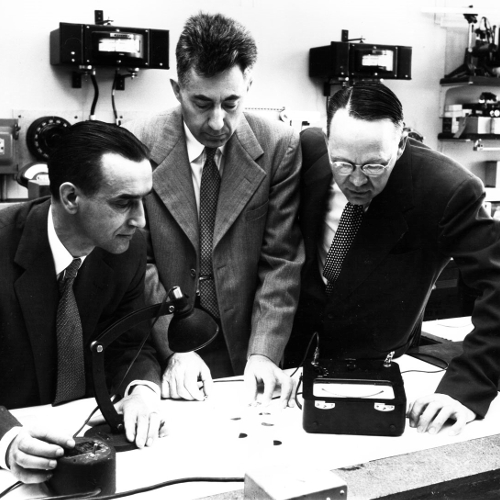
Fuller's Accidental Discovery
This is where things get interesting, and a little bit lucky. Calvin Fuller, the chemist, was working on purifying silicon. Yes, silicon! The very stuff that makes up most solar panels today. He was trying to make it as pure as possible, adding different elements to see what would happen.
One day, he accidentally added the perfect amount of impurities. Pure accident! That's often how the biggest discoveries happen. It's like accidentally adding too much salt to a dish and discovering it makes it taste amazing.
Fuller's "tainted" silicon suddenly became much better at conducting electricity when exposed to light. It was like finding the hidden cheat code to the universe’s energy game.
Chapin's Engineering Expertise
Daryl Chapin, the electrical engineer, was the one who really brought it all together. He saw the potential in Fuller’s silicon and Pearson’s selenium experiments, and he figured out how to turn them into something practical.
He was the bridge between pure science and real-world application. Chapin knew how to build things, how to make them reliable, and how to scale them up. He was the "let's actually make this work" guy.

Chapin experimented tirelessly, refining the design and materials. He understood that a great discovery is useless if you can't actually use it. He was the ultimate problem-solver.
The Big Moment: A Solar Breakthrough
After months of tinkering, testing, and probably a few late nights fueled by coffee (or maybe something stronger – hey, it was the 1950s!), they finally had something that worked.
They created a silicon solar cell that could convert sunlight into electricity with a whopping 6% efficiency. That might not sound like much today, but it was a monumental leap forward. It was enough to power… a telephone!
Imagine the scene: the phone rings, powered entirely by the sun. It was science fiction becoming reality, right there in Bell Labs.
The Sun-Powered Telephone
Bell Labs, never ones to miss a PR opportunity, immediately put their new invention on display. They powered a telephone system using their solar cells. The media went wild.
Newspapers and magazines ran stories about the "sun battery," a device that could potentially power the world. It was a glimpse into a future powered by clean, renewable energy. Pretty cool, huh?
The invention generated so much excitement. People started dreaming about a world free from pollution and dependence on fossil fuels. The reality, of course, would take a bit longer to catch up.
Beyond Telephones: A Legacy of Light
While the sun-powered telephone was a fun demonstration, the real impact of Chapin, Fuller, and Pearson’s work was much broader. Their solar cells were soon used to power satellites in space.
Think about it: satellites are constantly bathed in sunlight. Solar panels were the perfect way to provide them with a reliable, long-lasting power source. Without their invention, space exploration would have been a whole lot harder (and a whole lot more expensive).
Their work paved the way for the development of modern solar panels, which are now becoming increasingly common on rooftops around the world. They didn’t just invent a new technology; they laid the foundation for a sustainable future.
The Unsung Heroes of Solar Power
Chapin, Fuller, and Pearson might not be household names like Edison or Einstein, but their contributions to science and technology are undeniable. They were pioneers who dared to dream of a world powered by the sun.
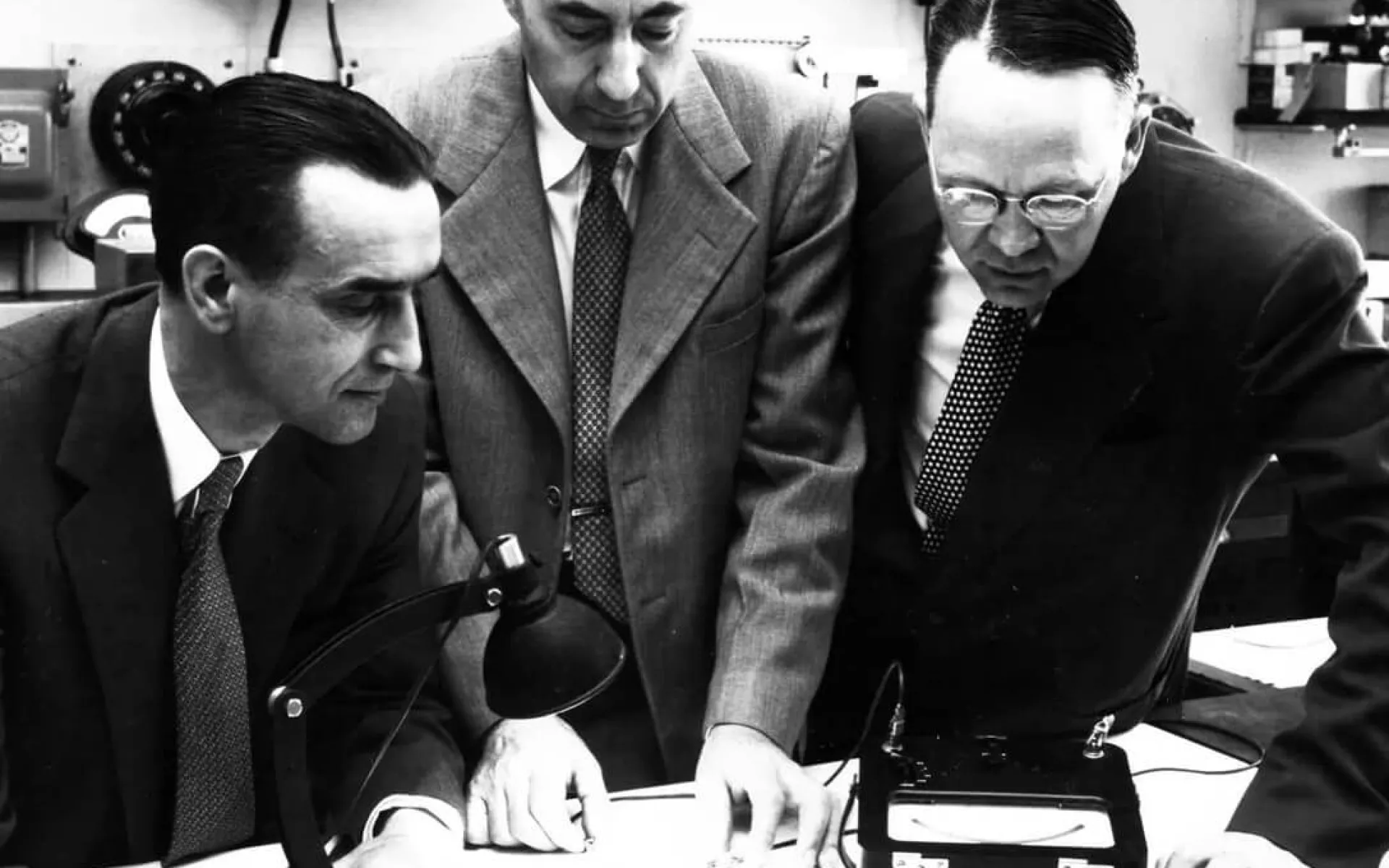
They weren't after fame or fortune. They were driven by curiosity, a desire to solve problems, and a genuine belief in the power of innovation. They exemplify the best of scientific endeavor.
So, the next time you see a solar panel, take a moment to remember Daryl Chapin, Calvin Fuller, and Gerald Pearson. These three scientists helped make the sun a little more accessible for all of us.
A Humble End to a Bright Idea
And, interestingly, their individual stories after the invention are quite grounded. They continued to work at Bell Labs, contributing to other innovations, but never quite reaching the same level of fame as with the solar cell.
This speaks volumes about their dedication to science and their humble approach. They were scientists first, and inventors second.
Their legacy shines brightly, a testament to the power of teamwork, curiosity, and a little bit of sunshine.
"The work of today is the history of tomorrow, and we are its makers." - Daryl Chapin, Calvin Fuller, and Gerald Pearson (probably… ok, maybe I made that up.)
Okay, the quote is fictional. But the sentiment is absolutely true! Their work is still making history, every single sunny day.