
Continental Crust Is Thicker Than Oceanic Crust
Hey everyone! Ever looked at a globe and wondered what secrets lie beneath those beautiful blue oceans and sprawling continents? I know I have! Today, let’s dive into something super cool: the difference in thickness between continental and oceanic crust. Sounds a bit geeky, right? Trust me, it’s way more interesting than it seems!
Continental Crust: The Heavyweight Champion
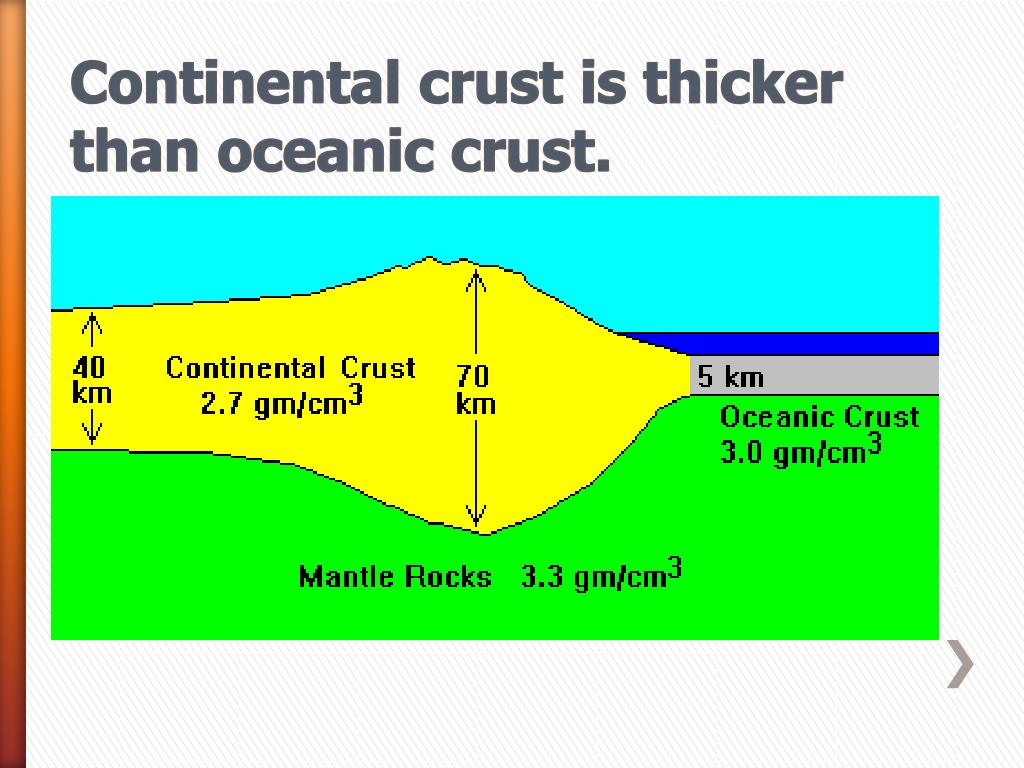
So, what exactly is continental crust? Well, it’s basically the stuff that makes up the continents – Africa, Asia, North America, you name it! It's what we’re standing on right now (probably!). Now, get this: on average, continental crust is about 30 to 50 kilometers thick. Whoa! That's like stacking a whole bunch of Mount Everests on top of each other!
Think of it this way: imagine you're making a cake. The continental crust is like the dense, delicious fruitcake layer – substantial, sturdy, and full of different ingredients.
Must Read
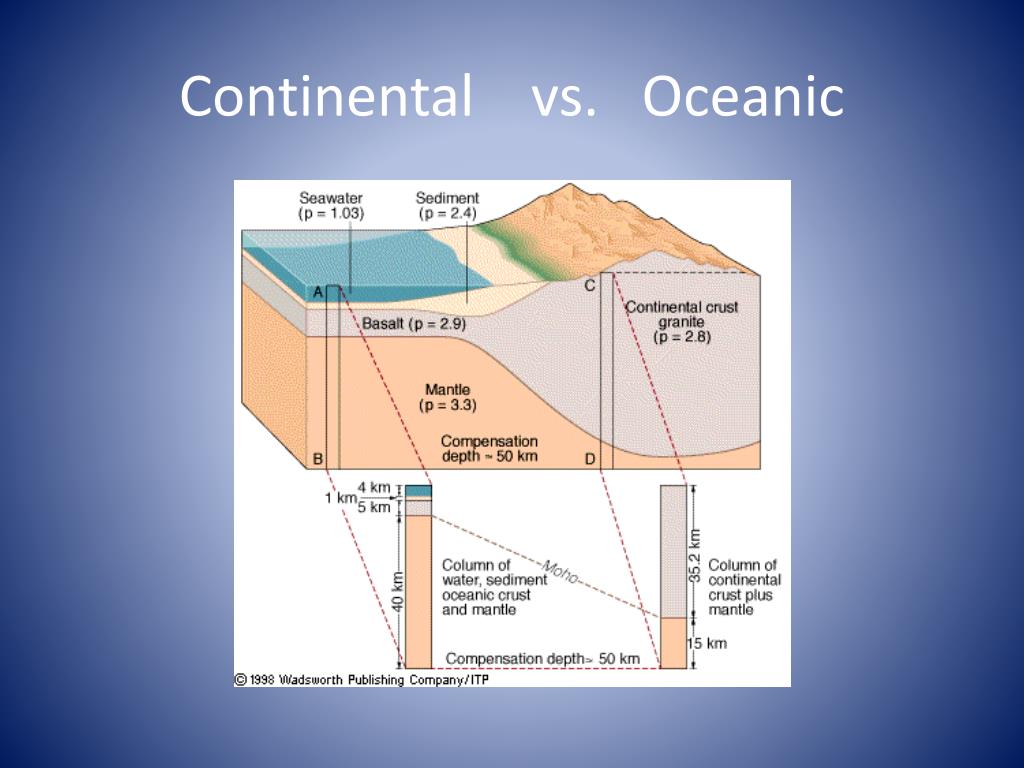
But why is it so thick? Great question! The answer lies in its composition. Continental crust is primarily made of granite, which is less dense than the rock that makes up the oceanic crust. Less dense means it "floats" higher on the Earth's mantle, kind of like a cork in water. Because it's floating higher, it’s also thicker. Makes sense, doesn’t it?
And what's even cooler is that continental crust is ancient. Some of the rocks in continental crust are billions of years old! Seriously, these rocks have seen it all – from the formation of supercontinents to the rise and fall of dinosaurs.
Oceanic Crust: The Speedy Sprinter
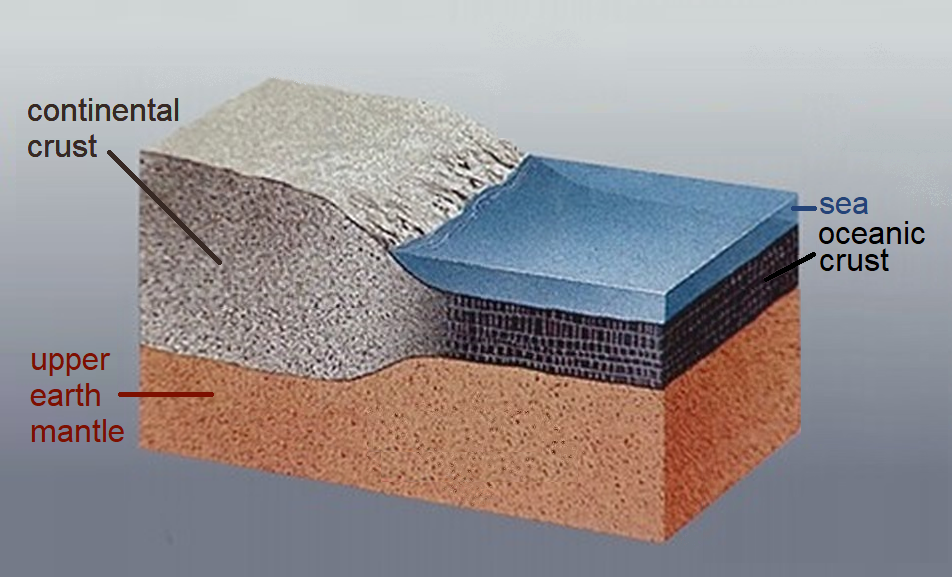
Now let's switch gears and talk about oceanic crust. This is the stuff that makes up the ocean floor – the bedrock beneath the waves! Unlike its continental cousin, oceanic crust is much, much thinner. We’re talking about an average of only 5 to 10 kilometers thick. That’s a huge difference!
Using our cake analogy, oceanic crust is like a thin layer of chocolate ganache – smooth, rich, but definitely not as bulky as the fruitcake layer.
Why the slim profile? Oceanic crust is mainly composed of basalt, a denser and heavier rock than granite. Think of it like this: imagine trying to float a bowling ball versus a beach ball. The beach ball (granite) will float higher and be more buoyant, while the bowling ball (basalt) will sink lower. And because basalt is denser, the oceanic crust is thinner to maintain balance on the Earth's mantle.
Another reason for its thinness is its age. Oceanic crust is younger compared to continental crust. It’s constantly being created at mid-ocean ridges (underwater mountain ranges) and destroyed at subduction zones (where one plate slides under another). This continuous cycle keeps it relatively young and thin.

The Big Picture: Why Does It Matter?
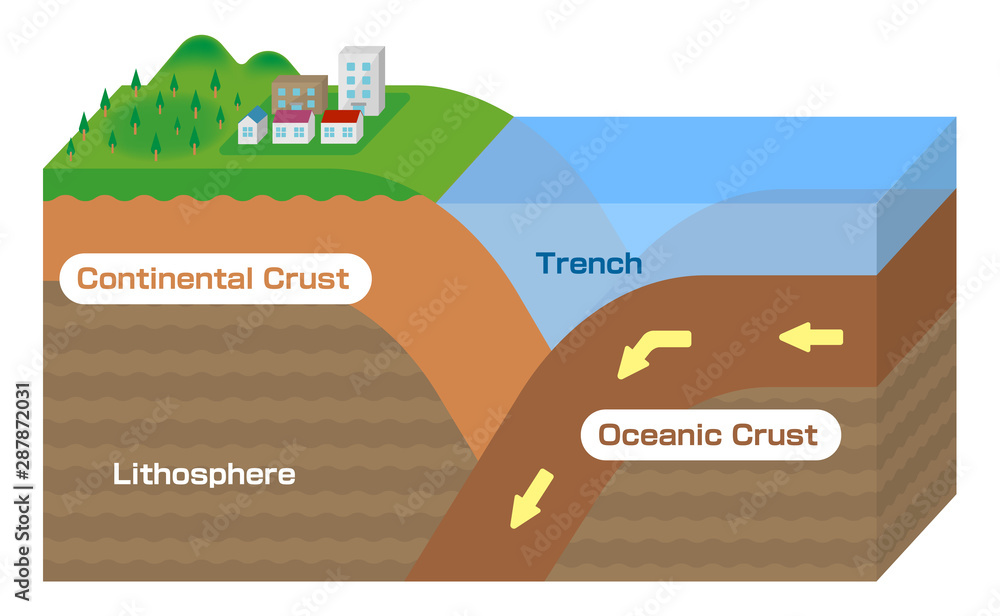
So, why is this thickness difference such a big deal? Well, it has a huge impact on everything from plate tectonics to the distribution of mountains and volcanoes. Plate tectonics, the movement of Earth's plates, is heavily influenced by the density and thickness of the crust. The denser, thinner oceanic crust often subducts (sinks) beneath the thicker, less dense continental crust, leading to the formation of mountain ranges like the Andes or the Himalayas.
Think about it: if both types of crust were the same thickness, the Earth would look totally different! We might not have the towering mountains or deep ocean trenches we see today. The landscapes we know and love are, in part, a result of this thickness difference.
Plus, understanding the differences in crustal thickness helps us understand the Earth’s history and how it’s evolved over billions of years. It’s like piecing together a giant puzzle to understand the story of our planet!
In a Nutshell
So, there you have it! Continental crust is thick, old, and granitic, while oceanic crust is thin, young, and basaltic. These differences in thickness and composition play a vital role in shaping our planet's surface and influencing the processes that make Earth so dynamic. Isn't it amazing how much there is to learn about the world beneath our feet (and under the oceans)? It’s enough to make you want to grab a rock hammer and start exploring! Or maybe just grab a globe and keep on wondering. I know I will!
Keep exploring, everyone!