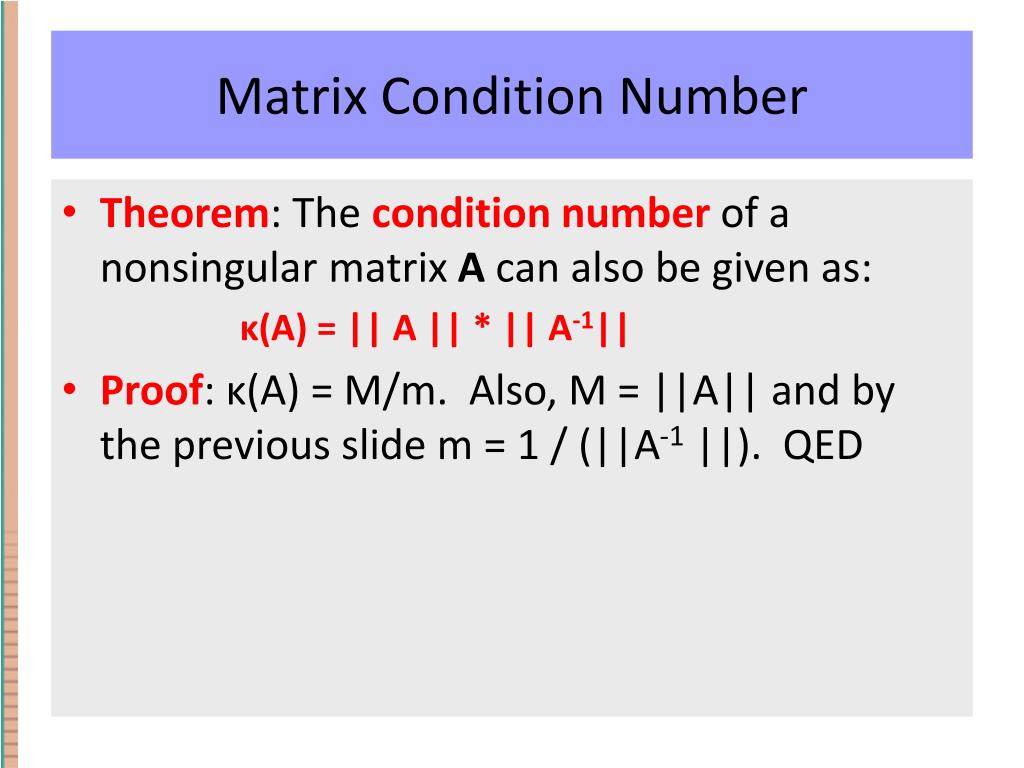
Condition Number Of A Matrix
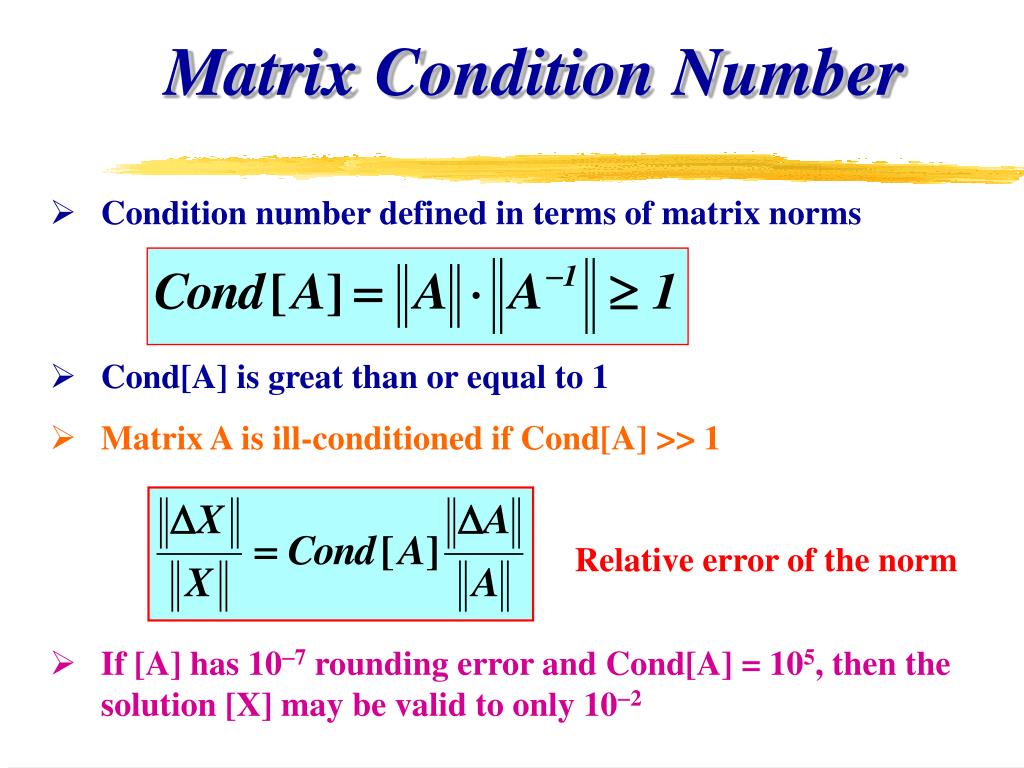
Ever played a game of telephone where the message gets hilariously distorted by the end? Well, matrices have a similar quirk, and the condition number is how we measure just how easily they get confused! It might sound like something out of a math textbook (and it is!), but understanding the condition number can actually be incredibly useful, especially if you're working with anything from image processing to building AI models. Think of it as a measure of a matrix's "sensitivity" – how much the output changes for a small change in the input.
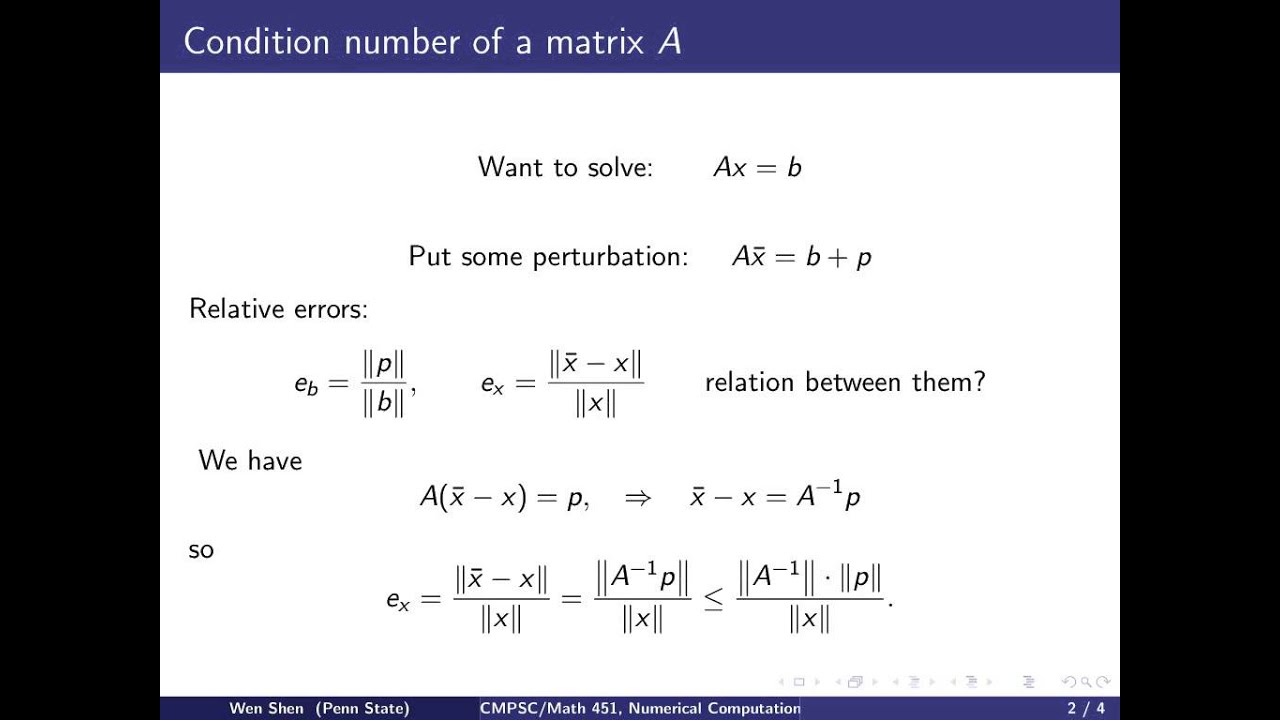
So, what’s the big deal? Why should you care? The purpose of the condition number is to tell you how stable your matrix calculations are. In a perfect world, a small change in the input data would result in a correspondingly small change in the output. However, in the real world, computers use finite precision (they can only store numbers with a limited number of digits). This means that tiny errors can creep in during calculations.
A matrix with a low condition number is like a well-behaved student. Small changes in the problem (your input) lead to small changes in the answer (your output). Great! You can trust your results. These matrices are often referred to as well-conditioned.
Must Read
On the other hand, a matrix with a high condition number is a troublemaker! It’s ill-conditioned. A tiny little error in your input (perhaps due to that limited precision we talked about) can explode into a huge, inaccurate output. This is because ill-conditioned matrices are very close to being singular (non-invertible). Imagine trying to balance a pencil on its tip - a tiny nudge can send it toppling over. Similarly, small perturbations in an ill-conditioned matrix can lead to drastically different solutions.
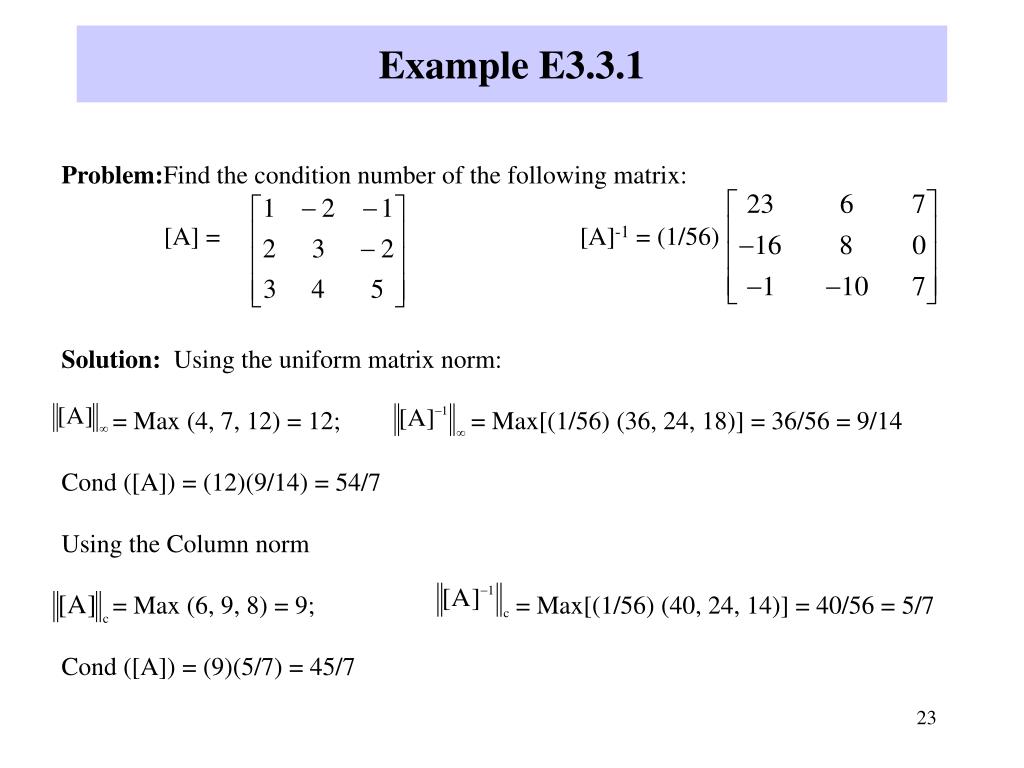
The benefits of understanding the condition number are numerous. First and foremost, it helps you assess the reliability of your calculations. If you're solving a system of equations and the condition number is astronomical, you know to be skeptical of the answer. You might need to use different algorithms, more precise data, or re-formulate your problem.
Secondly, the condition number can guide you in choosing appropriate algorithms. Some algorithms are more robust to ill-conditioning than others. Knowing the condition number can help you select the best tool for the job.
Finally, it aids in data pre-processing. Sometimes, you can improve the condition number of a matrix by scaling or transforming your data. This can significantly improve the accuracy of your calculations.
In short, the condition number of a matrix is a simple, yet powerful tool for understanding and mitigating the effects of numerical errors. It helps you build more reliable and accurate models, and avoids the "telephone game" problem where small input errors become gigantic output inaccuracies. So, next time you are working with matrices, remember to check their "sensitivity" – it could save you a lot of headaches!