
Coefficient Of Friction Of Plastic On Plastic
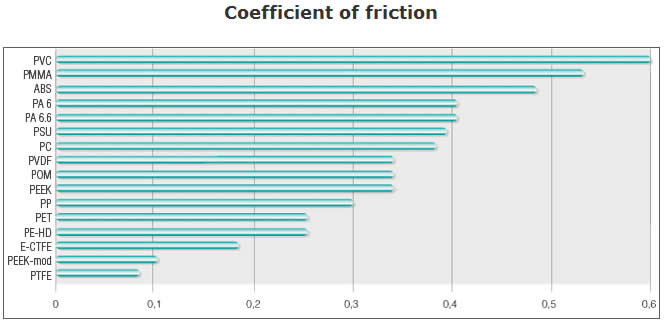
Ever wondered why some toys glide effortlessly while others stubbornly stick? Or why that stack of plastic containers always seems to be on the verge of toppling? The secret, my friends, lies in a rather fascinating, if seemingly obscure, concept: the coefficient of friction of plastic on plastic. Don't let the technical term scare you! It's actually a key player in a surprising number of everyday applications and, more importantly, a source of endless creative possibilities.
For artists, hobbyists, and even the casually curious, understanding this little piece of physics can be a game-changer. Think about it: knowing how different plastics interact allows you to create smoother, more reliable moving parts in sculptures or kinetic art. It empowers you to design interlocking pieces that snap together perfectly, or mechanisms that slide with satisfying precision. Imagine crafting miniature gears that turn with minimal resistance, or building a custom-designed phone stand that won't slip and slide across your desk. The applications are truly limitless.
Consider the possibilities in different styles and subjects. A sculptor could use high-friction plastic for a piece depicting the struggle of climbing, creating a sense of tension and resistance. Conversely, low-friction plastic could be employed in a mobile, allowing it to spin and twirl with the slightest breeze, conveying a sense of lightness and freedom. Think of building a miniature railway system where the trains effortlessly glide along the tracks. Or designing a puzzle box where the pieces slide and interlock with subtle, yet satisfying, resistance. Different plastics, with their varying coefficients of friction, open up a whole new dimension of artistic expression.
Must Read
Want to experiment with the coefficient of friction of plastic on plastic at home? It's easier than you think! Gather various plastic items – food containers, toys, building blocks – and start experimenting. Try stacking them on top of each other and observe which combinations slide easily and which ones grip. You can even try adding a small amount of weight to the top item to see how it affects the friction. To get more scientific, you could use a simple inclined plane (a plank of wood works great) and see at what angle different plastic combinations start to slide. Remember to document your findings! A simple notebook and pen can be surprisingly helpful in keeping track of what works and what doesn't.

A key tip: remember that surface texture plays a huge role. Smooth, polished surfaces will generally have lower friction than rough, textured ones. Also, temperature can affect the coefficient of friction, so keep that in mind when experimenting in different environments. Don’t be afraid to get creative with lubricants! A tiny dab of silicone grease can dramatically reduce friction and open up even more possibilities.
Ultimately, exploring the coefficient of friction of plastic on plastic is enjoyable because it's about discovery. It's about understanding the world around us and finding clever ways to use that knowledge to create something new and exciting. It's a chance to tinker, to experiment, and to learn through hands-on exploration. And who knows? You might just stumble upon the next groundbreaking innovation in the process!


