
Classify Each Element As A Metal Nonmetal Or Semimetal

Hey there, curious minds! Ever feel like the world is just a jumble of…stuff? Well, guess what? It's not entirely random. There's a secret code to understanding pretty much everything around you, and it all starts with something called the Periodic Table! Don't run away screaming just yet! We’re not diving into scary chemistry lectures. Instead, we're going to unlock a fun little trick: classifying elements as metals, nonmetals, or semimetals. Trust me, it’s easier (and way more interesting) than you think!
Metals: The Shiny Superstars!
Okay, so when you hear the word "metal," what pops into your head? Probably something strong, shiny, and maybe even…expensive? (Gold, anyone?) That’s because metals are generally those elements that are good conductors of electricity and heat. Think of copper wiring, the iron in your skillet, or the aluminum foil you use to wrap your leftovers. They're all metals! And they all share similar properties.
Generally, metals are malleable (meaning they can be hammered into thin sheets) and ductile (meaning they can be drawn into wires). So, next time you're bending a paperclip (which, let's be honest, we've all done!), remember you're witnessing the wonders of metallic malleability! See? Learning can be sneaky fun!
Must Read
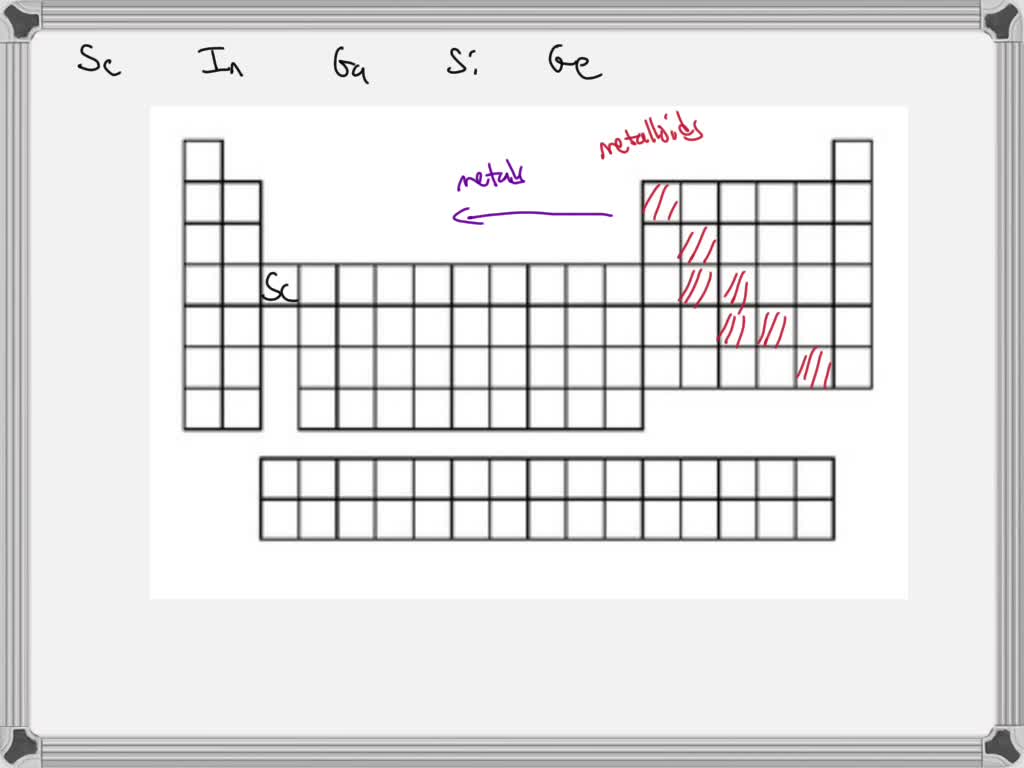
Most elements on the periodic table are metals, residing happily on the left side and in the middle. (It’s like they get the best seats in the house!) They're the reliable workhorses of the elemental world.
Nonmetals: The Versatile Varietals!
Now, let's switch gears and talk about nonmetals. These guys are a bit more…diverse. They're not generally shiny (sorry, no bling here!), and they're not good conductors of electricity or heat. Think of wood, plastic, or even the air you're breathing (mostly nitrogen and oxygen – both nonmetals!).
Nonmetals often have lower melting and boiling points compared to metals, and many exist as gases at room temperature. They're the chameleons of the element world, capable of forming a wide range of compounds and playing essential roles in life as we know it. Essentially, they're the masters of versatility!
Nonmetals hang out on the right side of the periodic table, often forming covalent bonds with each other. And yes, that’s a little chemistry term creeping in, but just remember it as “sharing is caring” between atoms. You’re already leveling up your science game!
Semimetals (Metalloids): The Tricky Transistors!
Now, things get a little more interesting! Enter the semimetals, also known as metalloids. These elements are the in-betweeners, possessing properties of both metals and nonmetals. (Talk about being indecisive!) Think of them as the fence-sitters of the periodic table.
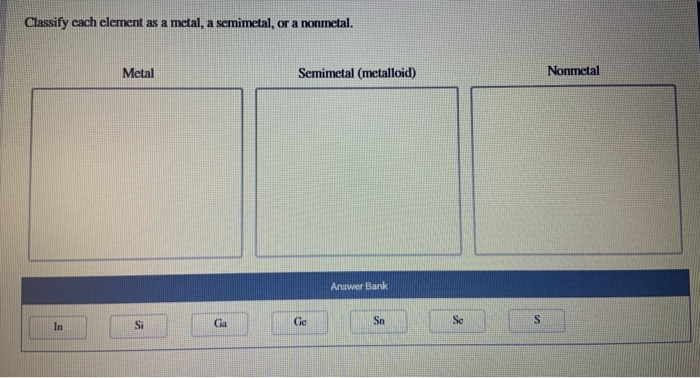
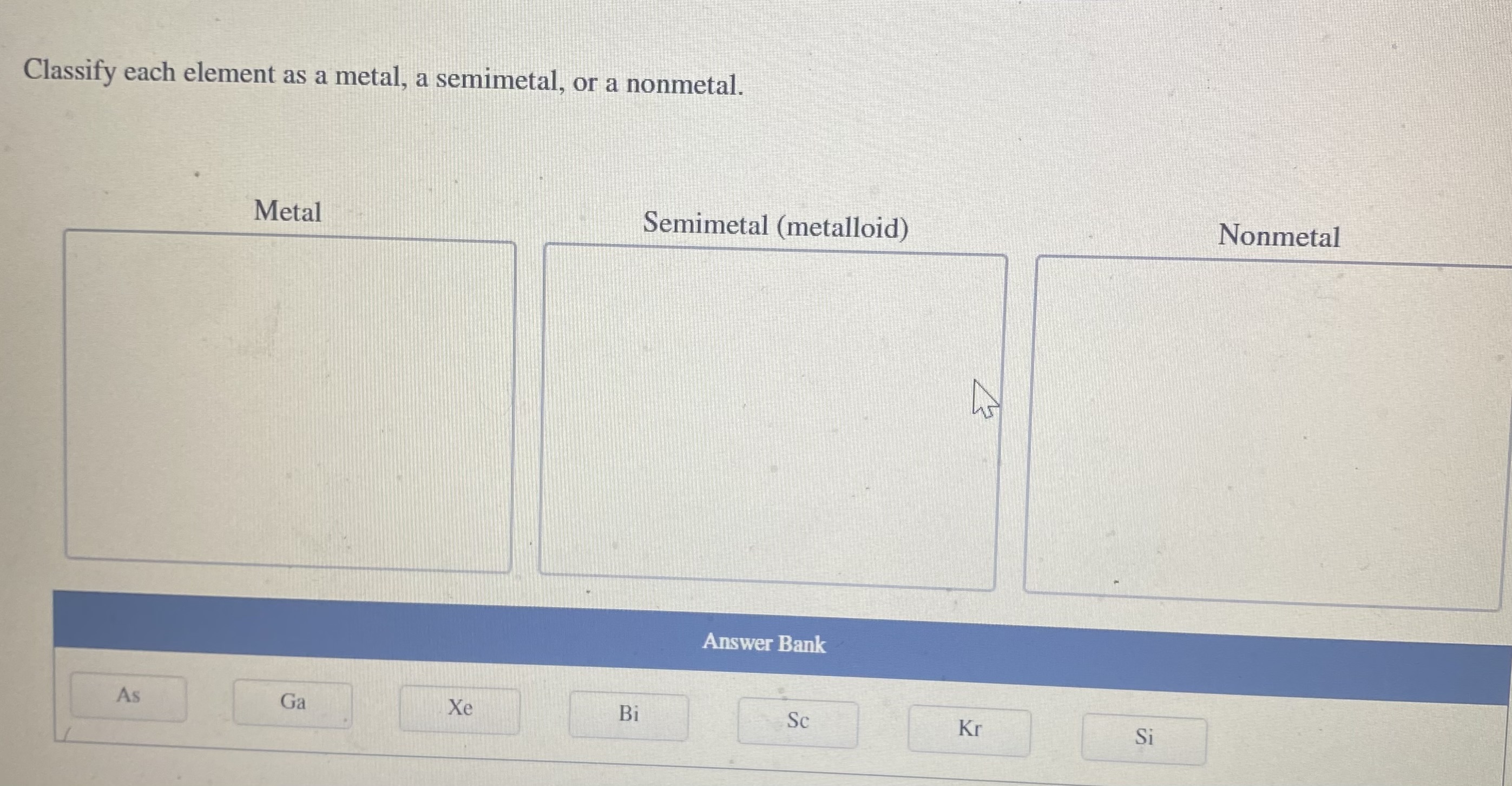
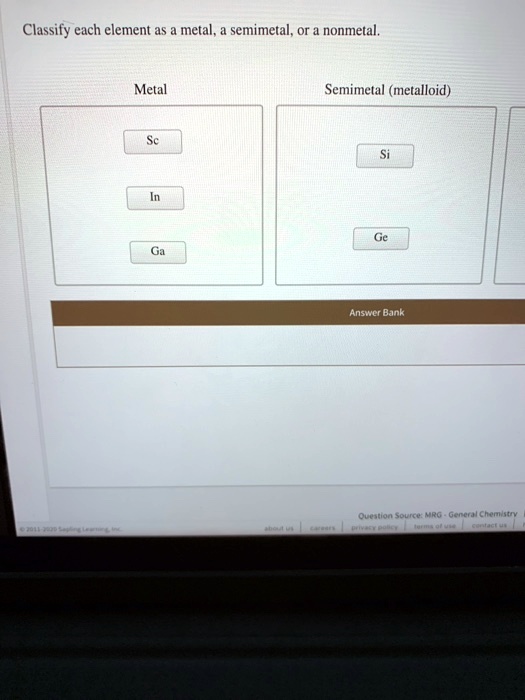
Elements like silicon (Si) and germanium (Ge) are classic examples of semimetals. And they’re absolutely crucial in the world of electronics! Why? Because their conductivity can be controlled, making them perfect for building transistors and other semiconductors. Your computer, your phone, and pretty much every other electronic device you own relies on the unique properties of these semimetals. Mind. Blown.
Semimetals often form a zigzag line on the periodic table, separating the metals from the nonmetals. They're the unsung heroes of the tech world, quietly powering our digital lives. So next time you’re scrolling through social media, give a little shout-out to silicon!
To recap: Metals are shiny conductors, nonmetals are insulators, and semimetals are the switch-hitters of the elemental world.
Why Does Any of This Matter?
Great question! (I knew you were thinking it!) Understanding the properties of elements and how they're classified helps us understand the world around us. It explains why some materials are strong, why others are flexible, and why certain elements are essential for life. It's like unlocking a secret code to the universe!
Plus, it's just plain cool to impress your friends with your newfound knowledge. Next time someone mentions a metal, you can casually drop the fact that it's likely malleable and ductile. Instant science superstar status! (Okay, maybe not instant, but you get the idea.)
Classifying elements is the foundation for understanding chemical reactions, materials science, and even biology. It's the starting point for a whole world of scientific exploration!
So, what are you waiting for? Dive in, explore the Periodic Table, and discover the amazing properties of metals, nonmetals, and semimetals. The world is a fascinating place, and understanding the elements is the first step to unlocking its secrets. Don’t be afraid to ask questions, experiment, and have fun along the way! The journey of scientific discovery is a rewarding one, and it all starts with a little curiosity.