Chemicals Needed To Winterize Inground Pool
Alright, let's talk about something that might sound a little daunting, but is actually super rewarding: winterizing your inground pool! Think of it as tucking your aquatic friend in for a long winter's nap. It's popular because nobody wants a cracked pool, a ruined pump, or a swampy mess come springtime. Proper winterization saves you time, money, and a whole lot of frustration in the long run. And honestly, there's a certain satisfaction in knowing you've prepared your pool for whatever Mother Nature throws its way.
Now, let's get down to the nitty-gritty: the chemicals. Why do we need them? Well, for beginners, think of it as insurance. These chemicals help prevent algae growth, staining, and scaling during the off-season. They balance the water chemistry so it doesn't become corrosive or cause damage to your pool surfaces and equipment. For families, it means less work and a cleaner pool when swimming season rolls around again – more time for fun in the sun, less time scrubbing! And for the hobbyists, the pool perfectionists among us, it’s about maintaining the integrity of your investment and ensuring optimal water clarity year-round.
So, what are these magic potions? Here's a simple rundown:
Must Read
- Algaecide: This is your primary defense against algae. Look for a winter-specific algaecide, as these are formulated to work effectively in colder temperatures. Think of it as setting up an algae-repelling force field.
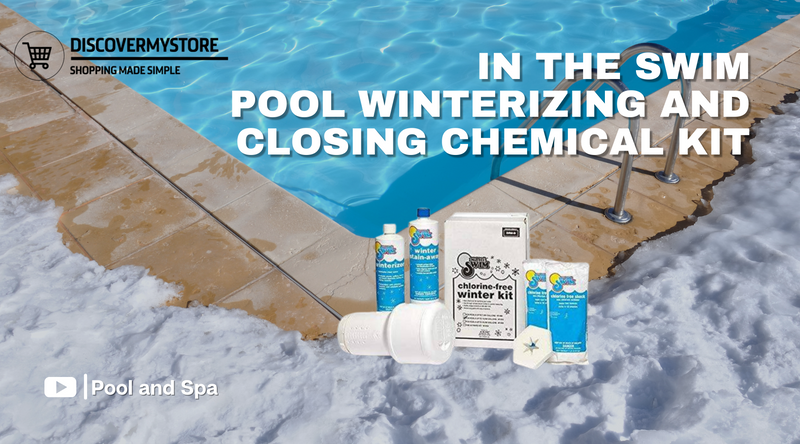
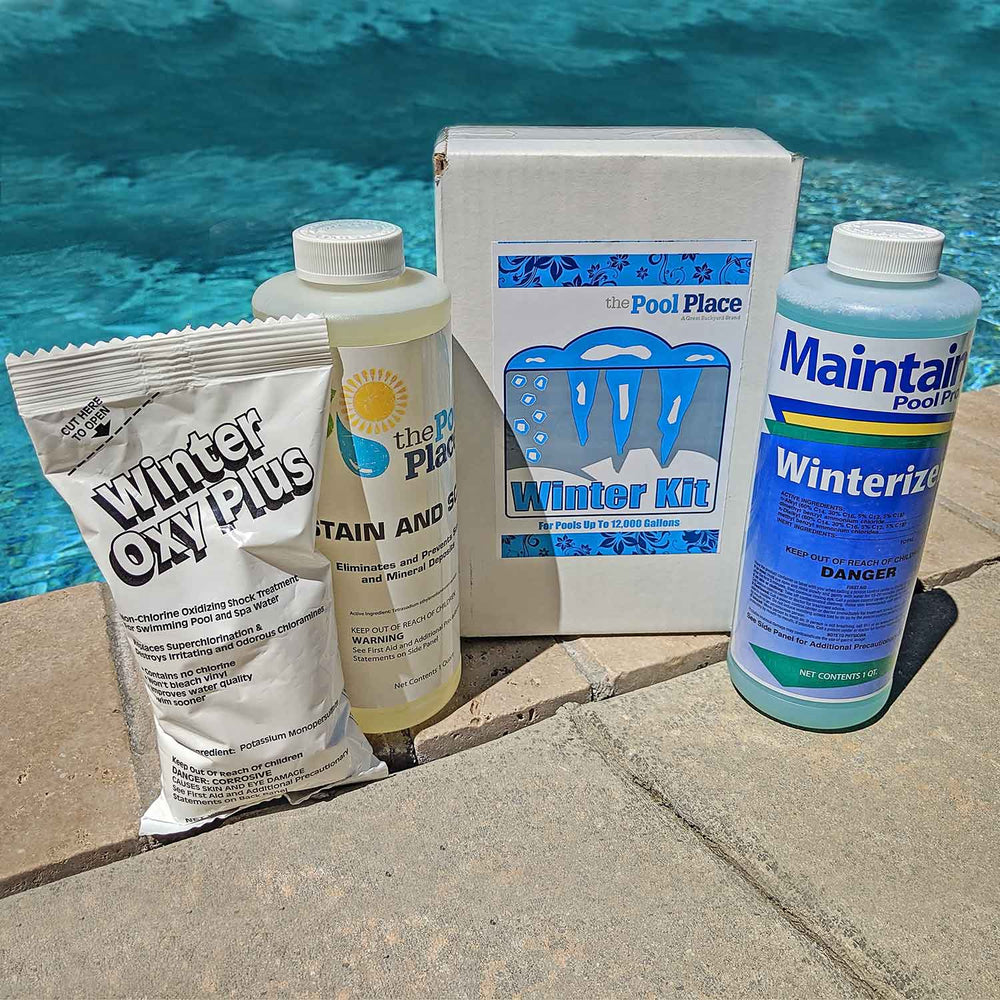
- Winterizing Chemical Kits: These often contain a blend of chemicals including algaecide, stain and scale preventer, and sometimes a shock treatment. They’re a convenient option for those who prefer a one-stop solution.
- Shock (Calcium Hypochlorite or Non-Chlorine): Shocking your pool before closing helps to kill any lingering bacteria or organic contaminants. A high dose of sanitizer is needed to prevent issues during the winter months. Make sure to follow the instructions carefully, as different types of shock require different handling.
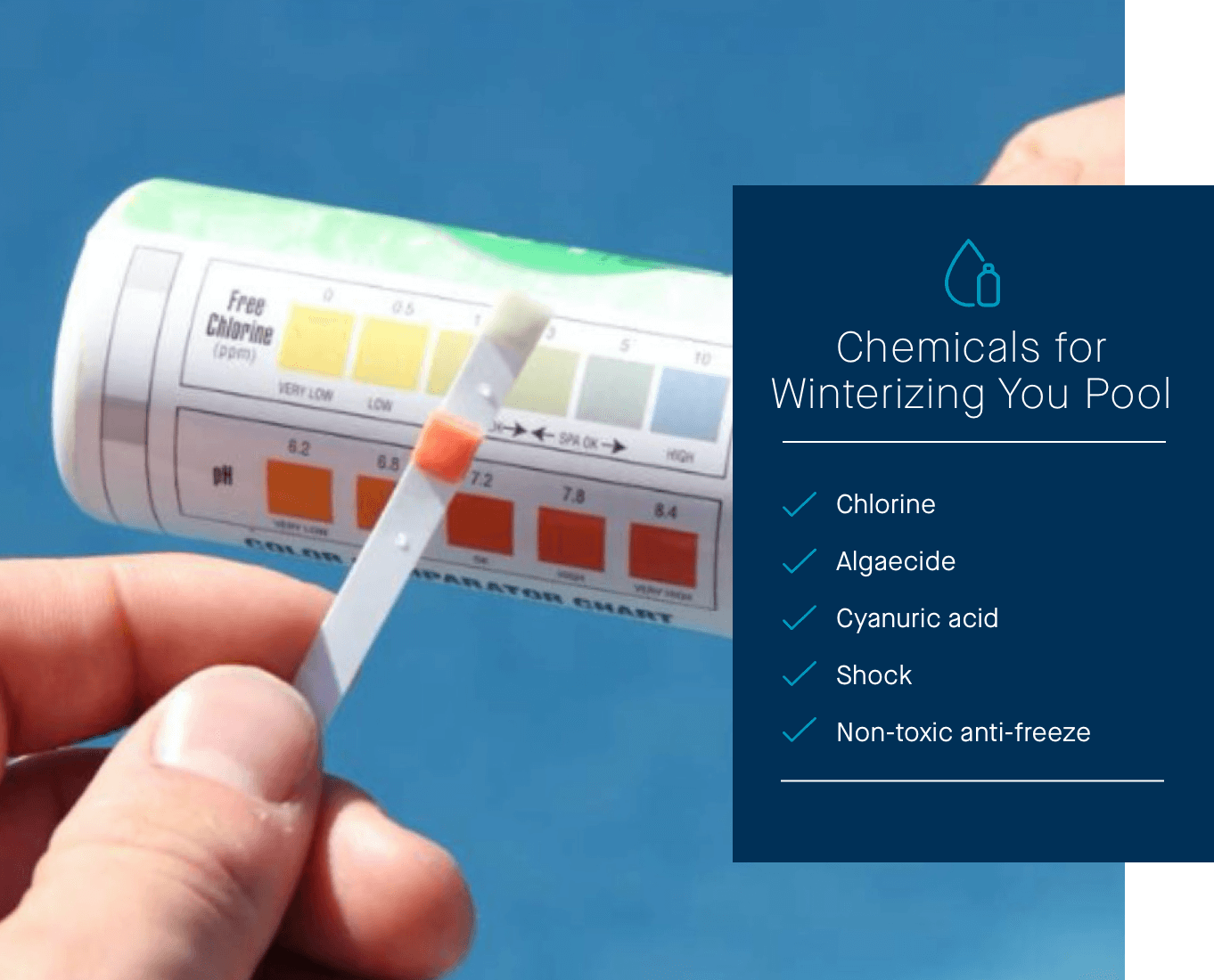
- pH Adjusters (pH Increaser or Decreaser): Maintaining proper pH is crucial. Test your water and adjust the pH to the recommended range (typically 7.2-7.6) before adding other winterizing chemicals. This ensures the other chemicals work effectively.
There are variations depending on your specific pool. For example, if you have a mesh safety cover that allows water to pass through, you might need a slightly higher dose of algaecide. If you live in an area with particularly harsh winters, consider adding an extra dose of shock. If you have a salt water pool, ensure your salt levels are correct before closing.

Here are some simple, practical tips to get started:
- Test your water! This is the most important step. Use a reliable test kit or take a sample to your local pool supply store.
- Read the instructions! Each chemical has specific instructions for dosage and application. Don't guess!
- Balance your water before adding winterizing chemicals. A balanced pool is a happy pool (even in winter!).
- Follow the order! Generally, you'll want to balance the pH, shock the pool, and then add algaecide and stain/scale preventer.
Closing your pool for the winter might seem like a chore, but it's an investment in your future poolside enjoyment. By taking the time to properly winterize with the right chemicals, you'll be setting yourself up for a stress-free spring opening and a summer filled with fun in the sun. So grab those chemicals, put on some tunes, and get ready to tuck your pool in for a long, restful sleep. You'll thank yourself later!