
Characteristics Of The Alkaline Earth Metals
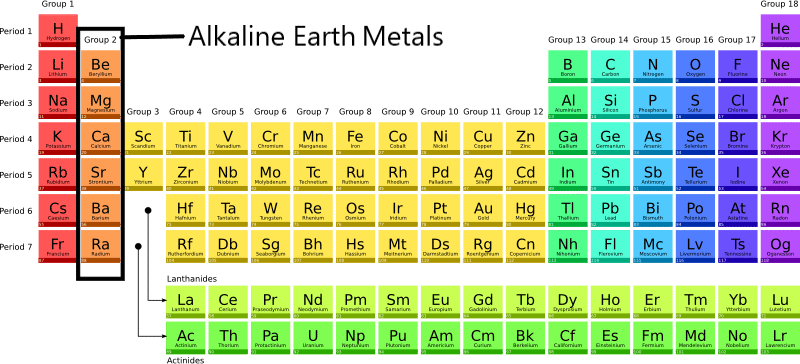
Hey! Grab a coffee, let's chat about something kinda cool: the alkaline earth metals! You might be thinking, "Alkaline what-now?" But trust me, they're more interesting than they sound. (Okay, maybe slightly more interesting.)
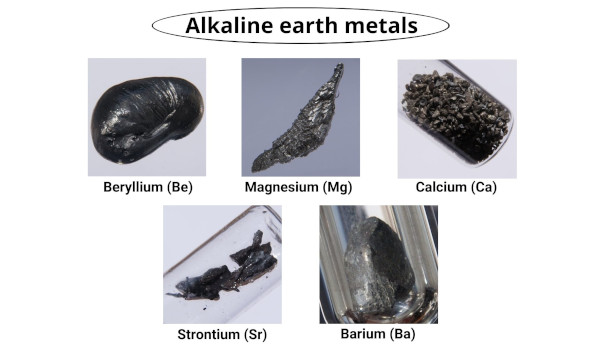
So, what are we even talking about? We're talking about a bunch of elements chilling in the second column of the periodic table. Things like Beryllium (Be), Magnesium (Mg), Calcium (Ca), Strontium (Sr), Barium (Ba), and the radioactive Radium (Ra). Radium's a bit of a wild card, honestly.
Shiny & Happy (Sometimes)
One thing you'll notice right away is that they're generally silvery-white and shiny. Think of them as the magpies of the element world, always attracted to a bit of sparkle. But, sadly, that shininess doesn’t last. They tarnish pretty quickly when exposed to air. Talk about a quick glow-up and glow-down!
Must Read
Why the quick change? Well, they react with oxygen in the air to form oxides. These oxides are what dull their luster. It's like when you leave a cut apple out – boom, brownish disappointment. Same principle, different element.
Reactivity: Party Animals (Sort Of)
Now, let's talk about reactivity. They're not quite as crazy reactive as their neighbors in the first column (the alkali metals – those guys are wild), but they're still pretty enthusiastic about reacting with other stuff. Think of them as the slightly more reserved party animals. They'll dance, but maybe not on the table.

They all react with water (though some more enthusiastically than others) to form hydrogen gas and hydroxides. Calcium, for instance, will react slowly, fizzing a bit. Barium? Much more vigorous. Radium? I wouldn't recommend trying it at home, kids!
And they react with halogens (fluorine, chlorine, bromine, etc.) to form salts. These salts are often quite beautiful. Ever seen barium chloride crystals? They're like little sparkly jewels. Who knew chemistry could be so aesthetically pleasing?
.PNG)
Energetic Personalities (Ionization Energy)
Another key characteristic is their low ionization energies. What's that, you ask? It basically means it doesn't take a whole lot of energy to remove an electron from them. They're like, "Yeah, take it! I've got two anyway!".
This is because they all have two valence electrons (electrons in their outermost shell). Giving those two up makes them much more stable, like finally taking off those uncomfortable shoes after a long day.
Hardness & Density: Not Exactly Feathers
Compared to the alkali metals, alkaline earth metals are generally harder and denser. We're not talking diamond-hard, mind you. But they won't crumble at the slightest touch like sodium would. Think of them as the slightly more muscular cousins.
Their densities also tend to increase as you go down the group (from Beryllium to Radium). Beryllium is relatively light, while Radium is… well, it's radioactive and relatively heavy. Though, you probably wouldn’t want to be holding any significant amount of radium anyway.

Applications: Everywhere You Look!
So, why should you care about these silvery, reactive, slightly-harder-than-alkali-metals elements? Because they're everywhere! Magnesium is used in lightweight alloys for everything from airplanes to bicycle frames. Calcium is essential for strong bones and teeth. Strontium gives fireworks that vibrant red color (bang!). Barium is used in medical imaging. Pretty cool, right?
Even Radium, despite its radioactivity, had its moment in the sun (though a dangerous one). It was once used in watch dials to make them glow in the dark. Let's just say, we've learned a few things since then about the dangers of radiation. Safety first, kids!
So, there you have it! A whirlwind tour of the alkaline earth metals. They're not the flashiest or the most reactive elements, but they're essential to our lives and the world around us. Plus, they’re shiny (at least for a little while!). What's not to love? Now, refill on that coffee?