
Ceiling Fan Directions For Summer And Winter
Ever feel like your house has a mind of its own? Like it’s conspiring with the weather to make you either sweat buckets or shiver uncontrollably? Well, maybe it's not a conspiracy, but you can take control, and it starts with something you probably look at every day without really seeing: your ceiling fan.
Yes, that dusty spinning thing above you. It's not just for show! It's actually a surprisingly effective weapon in the battle against seasonal discomfort.
Think of it like this: Your ceiling fan is like a chameleon, ready to adapt to the needs of your room. But unlike a chameleon, it needs your help to change. And that's where understanding fan direction comes in.
Must Read
Summer Mode: Cool Breeze Bliss
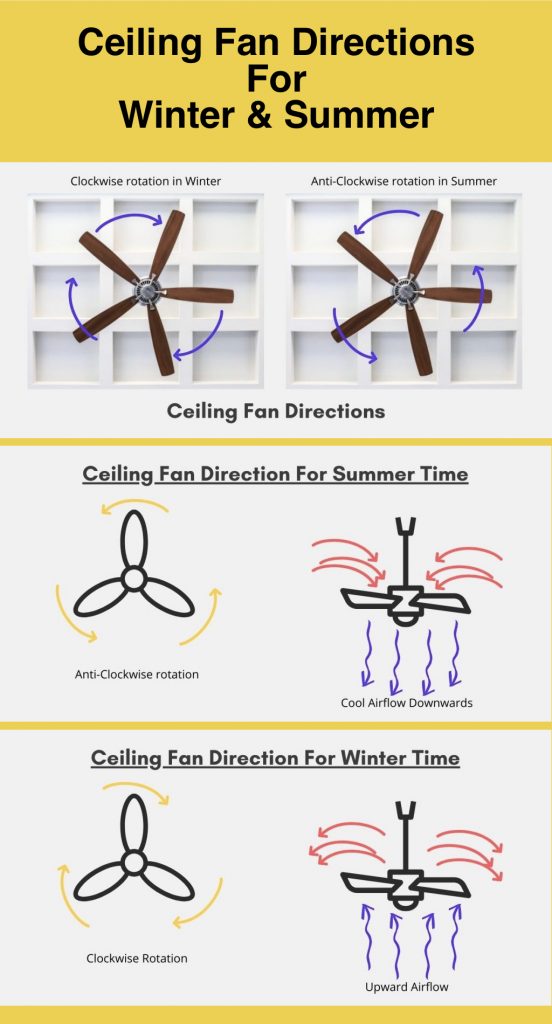
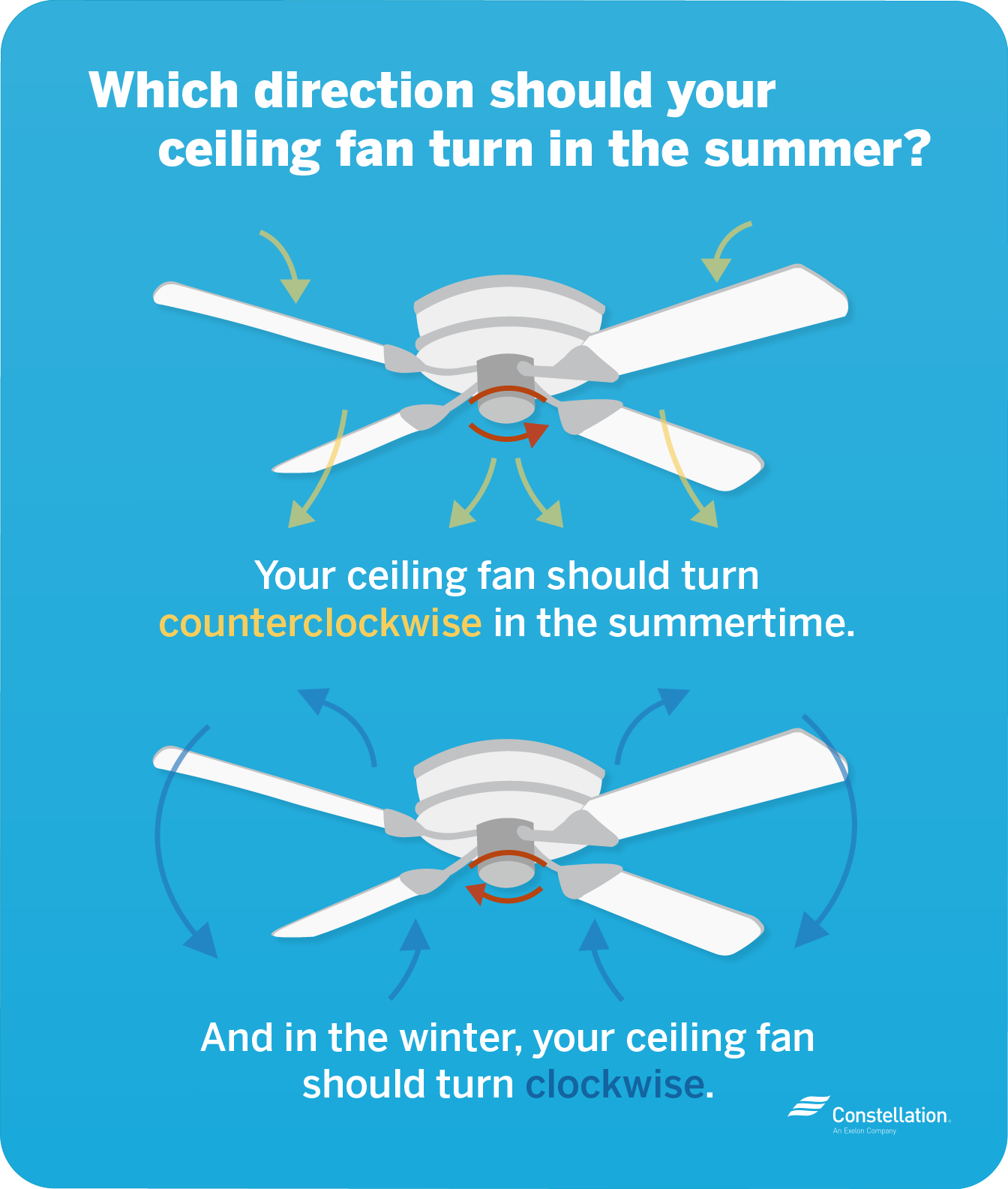
Let’s talk summer. Imagine you're sipping iced tea on your porch, wishing for a gentle breeze. That’s exactly what your ceiling fan can deliver indoors. In summer, you want your fan to spin counter-clockwise (when viewed from below). This pushes the air straight down, creating a refreshing downdraft.
Why does this work? Well, that breeze doesn’t actually cool the air. Instead, it helps evaporate the sweat on your skin, which does cool you down. It's like that feeling of stepping out of a pool on a hot day – that shiver of relief? That's evaporation at work! Your ceiling fan is just helping that process along.

Here’s a relatable scenario: You’re having friends over for a barbecue, and the AC is struggling to keep up with the open door. Switch those fans to counter-clockwise, and suddenly everyone is feeling a little less sticky and a lot more comfortable. Instant party saver!
To easily check the direction: Stand beneath the fan. If you feel a breeze directly on you, chances are it's in summer mode. If not, well, keep reading!
Winter Mode: Cozy Warmth Reimagined
Now, let’s flip the script – literally. Winter is all about trapping that precious heat near the ceiling. Hot air rises, you know, so all that expensive warmth from your furnace ends up clinging to the ceiling like a lovesick teenager.
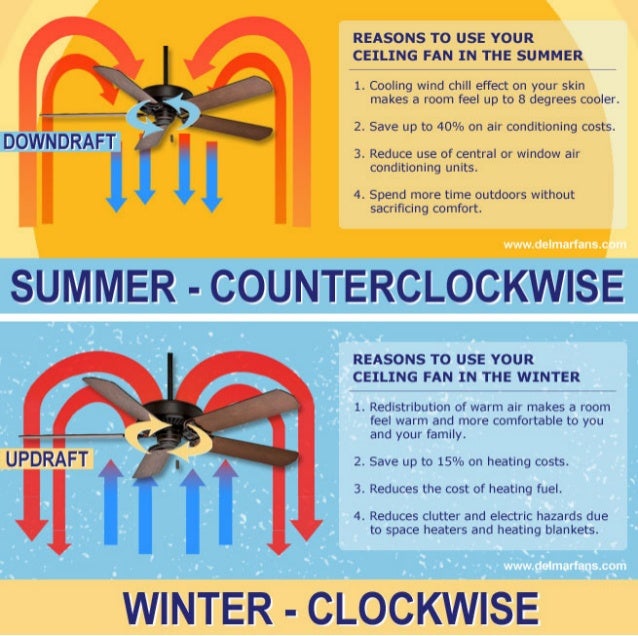
This is where your ceiling fan, set to clockwise rotation (again, viewed from below), comes to the rescue. Clockwise rotation pulls the air up, gently pushing the warm air that's accumulated at the ceiling down along the walls. Think of it like gently stirring a pot of soup – you're distributing the heat evenly.
Why is this important? Because otherwise, your feet are freezing while your head is toasty, and your furnace is working overtime to compensate. It’s like wearing a hat and gloves but forgetting your socks! Inefficient and uncomfortable.
Consider this: You’re snuggled up on the couch with a good book and a cup of hot cocoa, but you can see your breath. A quick switch of the fan direction to clockwise can make a surprising difference, allowing you to turn down the thermostat a degree or two and save some money on your heating bill. Win-win!
Important note: In winter, you typically want the fan on a low speed. The goal isn't to create a noticeable breeze, but simply to circulate the air. Think of it as a gentle nudge rather than a gust of wind.
The Button Nobody Understands (Until Now!)
So, how do you actually change the direction? Most ceiling fans have a small switch located on the motor housing. It’s usually a little slider that's easily overlooked, but it's your key to seasonal comfort. Refer to your fan's manual if you're not sure where it is or how it works.
It might seem like a small thing, but changing your ceiling fan direction is one of those simple household adjustments that can make a big difference. It's like remembering to unplug your chargers when you're not using them – a small act that adds up over time.
![Ceiling Fan Directions for Summer vs Winter [Infographic]](https://airflowacademy.com/wp-content/uploads/2021/06/Ceiling-fan-direction.jpg)
Why Bother? The Benefits Are Real!
Okay, so why should you care about all this? Besides being a fun party trick ("Hey, watch me control the weather!"), changing your ceiling fan direction can actually save you money and improve your comfort:
- Lower energy bills: By circulating air more efficiently, you can reduce your reliance on your AC and furnace.
- Improved comfort: No more hot spots or cold spots!
- Extended lifespan of your HVAC system: Less strain on your AC and furnace means they’ll last longer.
So, next time you look up at that spinning thing on your ceiling, remember it’s more than just a decoration. It’s a tool, a partner in the fight against the elements. And with a simple flip of a switch, you can harness its power to create a more comfortable and energy-efficient home.
Go on, give it a try. Your house (and your wallet) will thank you!