
Cctv Camera Field Of View
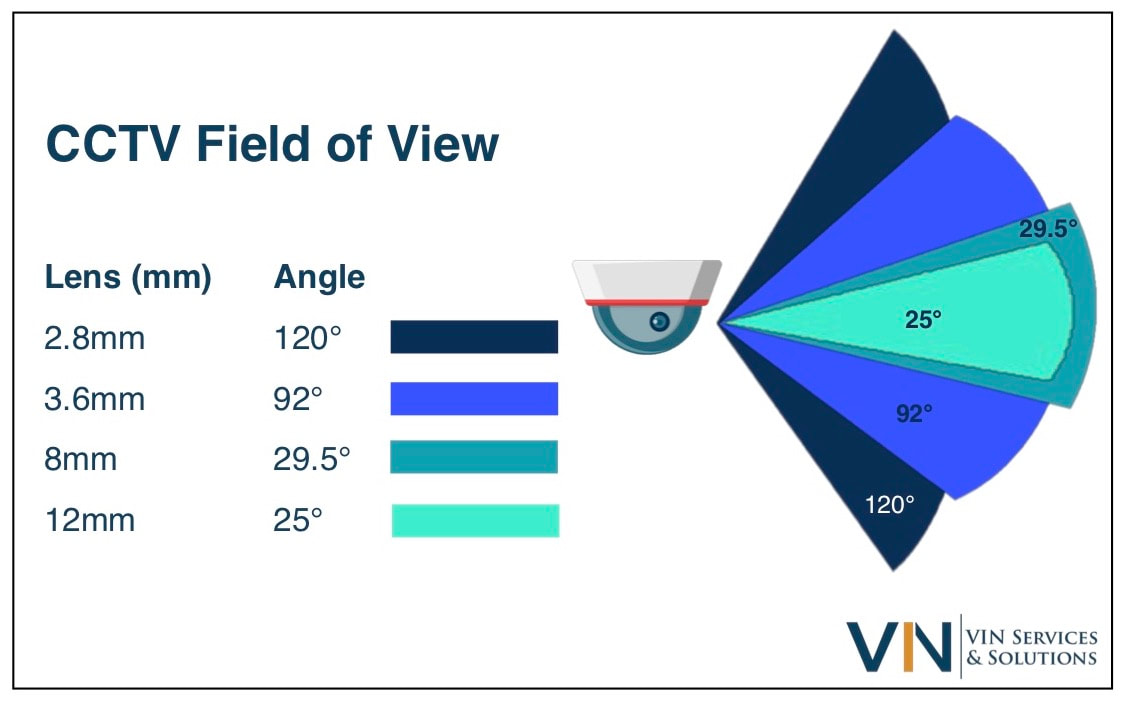
Ever walked into a store, or even just down the street, and felt that subtle nudge? That tiny thought: "Someone's watching"? Well, you're not wrong! CCTV cameras are like silent sentinels, perched high, keeping an eye on things. But have you ever stopped to wonder, what do they actually see?
It's not just "everything," trust me. This is where the fascinating world of Field of View (or FOV, for short, because we're friends now) comes in. Think of it as the camera's personal superpower, its unique way of looking at the world. It’s the specific, often peculiar, slice of reality that a camera sensor can capture. Not too shabby, right?
What Exactly Is This "FOV" Magic?
Simply put, Field of View is the entire area that a camera can see at any given moment. Imagine you're wearing really specific glasses. Some might be like binoculars, zooming way in on a tiny spot. Others might be super wide, letting you see almost behind your ears! That's FOV in a nutshell. Each camera has its own "eyesight," and it's quite the personality.
Must Read
Why should we even care about this techy stuff? Well, it's not just for security nerds! Understanding FOV is like getting a peek behind the curtain of modern life. It helps us grasp why that camera on the corner might miss your spectacular triple-axel skateboard trick, or why another one caught your friend trying to secretly snatch the last donut from the office kitchen. (Busted!)
The Quirky Cast of FOV Characters
Not all fields of view are created equal. Oh no. They're a diverse, often hilarious, bunch! Let's meet some of the stars of the show:
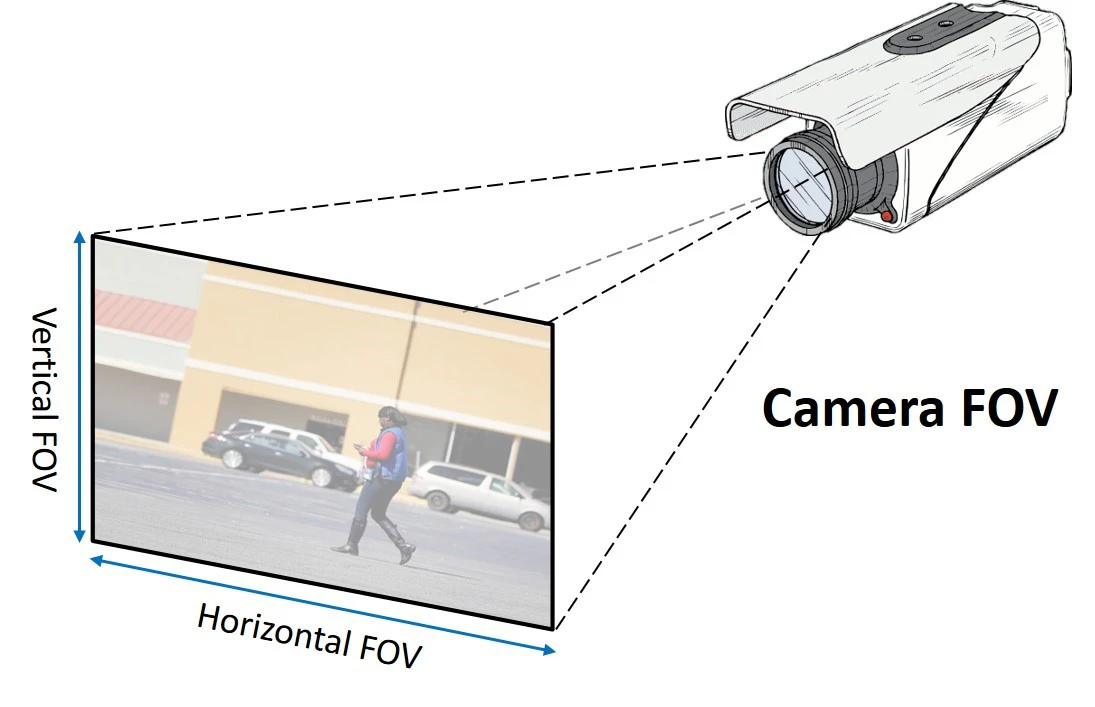
First up, we have the Narrow Field of View. This guy is the super sleuth. It's like looking through a telescope. You get incredible detail, but only of a very small area. Think of a camera trying to read a license plate across a parking lot, or catching the subtle twitch of a suspect's eyebrow. It’s all about pinpoint focus. If you're trying to identify a specific face in a crowd, this is your go-to. But don't expect it to see the entire crowd!
Then there's the much more social Wide Field of View. This is the party animal, seeing everything at once! It's great for big spaces like warehouses, public squares, or your entire living room (if you’re into that). It captures a lot of context. However, with all that breadth, individual details can get a bit... fuzzy. Objects appear smaller, and sometimes, things at the very edges might look a little stretched or distorted, like funhouse mirrors. "Did that lamppost just get skinnier?" Probably just a wide FOV playing tricks!
And for the truly wild and wacky, there’s the Fisheye Field of View. This one is unmistakable. It gives you that signature curved, almost spherical look, like you're peeking through a peephole. It’s ultra-wide, often capturing a full 180 or even 360 degrees if it’s clever. You've seen these in shops, or maybe in cool drone footage. Everything looks like it's inside a glass ball, sometimes making for some hilarious perspectives. "Honey, I shrunk the kids... and curved the kitchen island!"
The Secret Sauce: Lenses and Placement
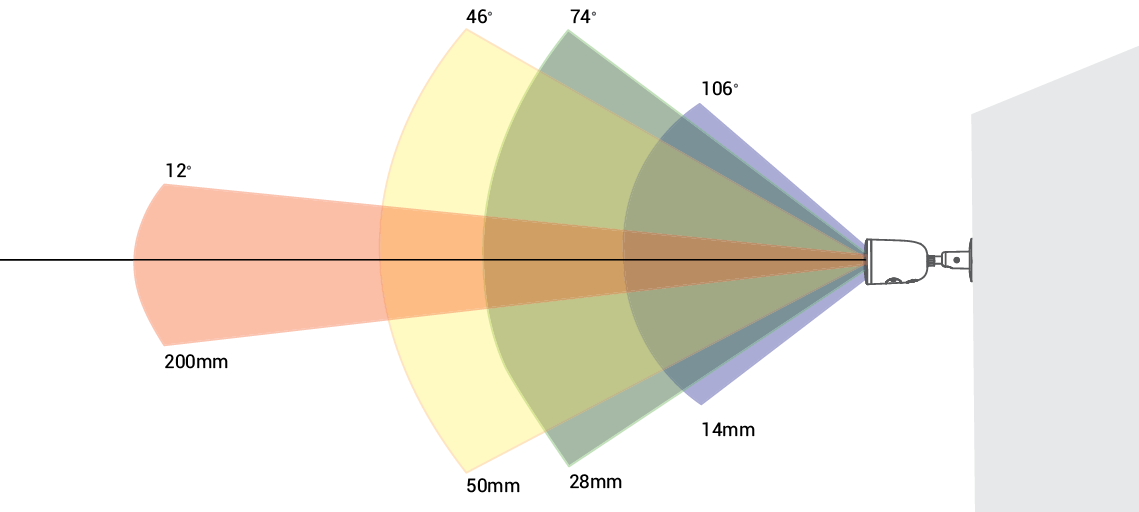
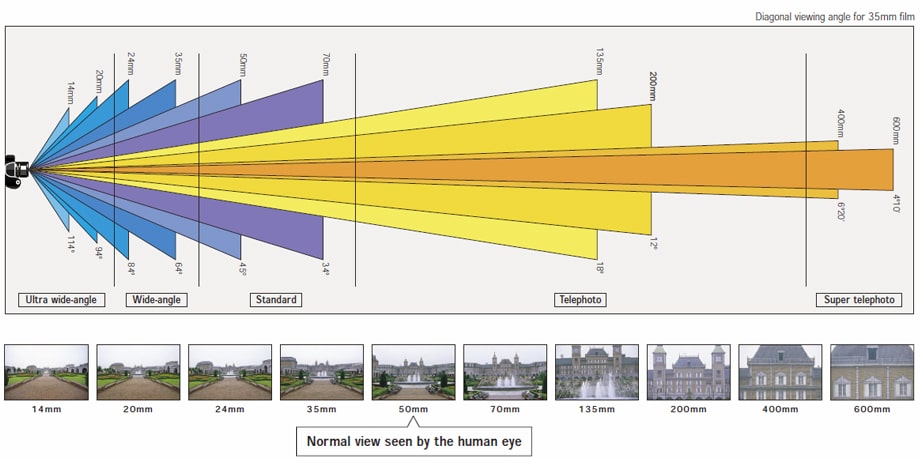
So, what dictates these varied "eyesights"? It’s mostly down to the camera’s lens. Lenses are the true wizards here. A shorter focal length lens gives you a wider FOV, while a longer focal length lens narrows it right down. It’s like magic, but with glass and physics!
Some cameras have fixed lenses – they see one way, and that's it. Dependable, but not flexible. Others boast varifocal lenses, which let you manually adjust the zoom, changing the FOV on the fly. And then there are the fancy PTZ cameras (Pan-Tilt-Zoom). These are the rockstars! They can literally pan left and right, tilt up and down, and zoom in and out, giving them a dynamic, ever-changing FOV. They're like robotic chameleons, constantly adapting their gaze.
But lenses aren't the only players. Placement is king! A camera with an amazing wide FOV is useless if it's pointing straight at a wall, admiring concrete. Height, angle, and what obstructions are nearby all play a huge role. Imagine putting your wide-view glasses on, but standing behind a giant plant. You’re only going to see... plant. The same goes for cameras. They have their own digital blind spots, areas they just can't reach, no matter how wide their gaze.
Fun Facts and Quirky Insights!
- Did you know that sometimes, cameras "stitch" together multiple images from different FOVs to create a super-panoramic view? Think Google Street View! That's some serious digital wizardry.
- FOV isn't just about width; it's also about depth. A narrow FOV might show you a tiny area, but with incredible clarity for things far away. A wide FOV might see everything up close, but lose detail in the distance. It’s a trade-off!
- Ever notice how people on camera sometimes look different than in real life? FOV can contribute to that distortion! A very wide lens can make faces look a bit bulging, while a telephoto (narrow FOV) can "flatten" features. It's like a subtle digital facelift (or defacement!).
- Even nature has its own FOVs! An owl has amazing narrow, focused vision, while a fly has super wide, compound vision. It's all about survival!
Embrace the Camera's Eye!
So, the next time you spot a camera, don't just see a piece of tech. Think about its superpower. What's its Field of View? Is it a narrow-eyed detective? A wide-angle party-goer? Or a quirky fisheye comedian? What could it be seeing? More importantly, what could it be missing?
Understanding FOV is a fun way to peek into the secret lives of these watchful eyes. It makes you think about perspective, not just for cameras, but for everything. It's a playful reminder that not everything is as it seems, and what one eye sees, another might completely overlook. Go forth and observe! (But maybe don't try to snatch that last donut.)
