
Carbon Monoxide Detector Placement Height
Hey there, comfort seeker! Ever curled up on the couch on a chilly evening, maybe with a cup of tea or cocoa, feeling perfectly safe and sound in your cozy home? Of course, you have! It's one of life's little pleasures. But there's a tiny, invisible detail often overlooked that can make all the difference in keeping that comfort truly safe: your carbon monoxide (CO) detector.
Now, I know what you might be thinking: "Carbon Monoxide? Isn't that the super serious stuff they talk about with furnaces and stuff?" Yes, it is! But don't let the serious name fool you into thinking it's too complicated to understand. Think of CO not as a big, scary monster, but as a really, really rude invisible guest who crashes your party without an invitation and then tries to subtly make everyone sick. Not cool, CO, not cool at all!
Why We Need to Chat About This Invisible Guest
The thing about this sneaky intruder is that it’s completely odorless, colorless, and tasteless. You can't see it, you can't smell it, you can't taste it. It's like a ninja, but instead of cool sword moves, it just quietly replaces the oxygen in your blood. Yikes! That's why those little CO detectors are so incredibly important – they’re our silent guardians, our personal ninja-spotters.
Must Read
But here's a little secret many folks don't realize: just having a detector isn't quite enough. Where you put it really, really matters. It's like trying to listen for your favorite song with the speaker pointed at the wall – you might get some muffled vibes, but you're missing the full experience!
The Great CO Myth Buster: Does It Float Up or Sink Down?
Let's clear up a common misconception, shall we? When we think of smoke, we naturally picture it rising to the ceiling, right? That’s why smoke detectors are up high. And some folks mistakenly think carbon monoxide behaves the same way. Others think, "Oh, it's a gas, it must be heavy and sink to the floor!"
.jpg)
Well, surprise! CO is actually slightly lighter than air, but here's the kicker: it mixes pretty darn evenly with the air around it. Imagine stirring sugar into your coffee – it doesn't all float to the top or sink to the bottom (unless you have a really weird coffee!). It just blends in. That's CO for you.
So, unlike our smoky friends who love high ceilings, or those heavy gases that hug the floorboards, CO is more of a middle-of-the-road kind of guy. It's basically everywhere in the room once it starts to build up.
The Sweet Spot: Where to Place Your CO Detector
Because CO mixes so well with the air, your detector isn't playing hide-and-seek; it's trying to get the best "sniff" possible. This means we're looking for a height that represents the air you and your loved ones are actually breathing. Picture your family sitting on the couch, playing on the floor, or sleeping in bed. Where are their noses? That's your sweet spot!

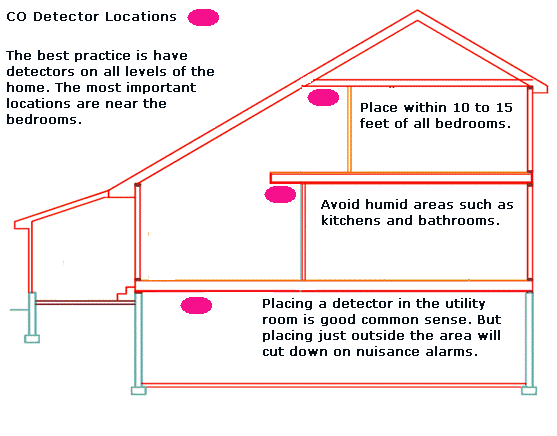
Generally speaking, the ideal placement for a CO detector is somewhere between your knee-height and eye-level. Think 1 to 5 feet from the floor. Some manufacturers even recommend placing them on the wall about five feet from the floor, or even on a nightstand if it’s an outlet-based model.
Why this range? Because that's the breathing zone for most people, whether they're sprawled out watching a movie, reading in bed, or chasing after the cat. It's about putting the detector where it can best detect the invisible guest before it becomes a big problem for you and your family.

But Wait, There's More! Where in the Room?
It's not just about height! Think about the critical areas:
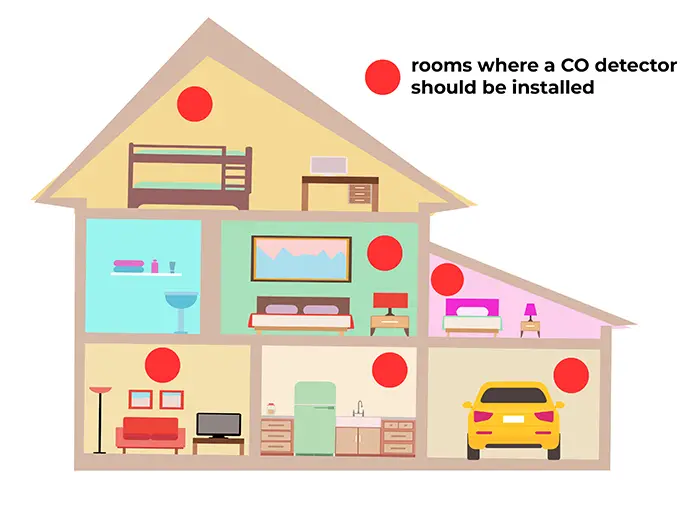
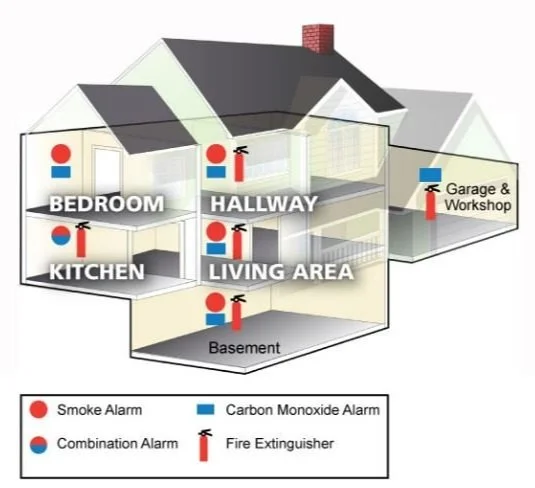
- Near bedrooms: Definitely put one outside each sleeping area. If CO comes knocking, you want to be woken up!
- Near fuel-burning appliances: Furnaces, water heaters, fireplaces, gas stoves – these are the usual suspects for CO production. Keep a detector in the vicinity, but not directly next to them where nuisance alarms might occur.
- On every level of your home: If you have multiple floors, each one needs a guardian.
Avoid placing them right next to windows or doors (drafts can mess with readings), or in direct sunlight, or where they might be easily damaged. Think of it as finding the perfect comfy, yet strategic, spot for your little guardian to stand watch.
Why Should You Care? (Besides the Obvious!)
Okay, so we've talked about the sneaky CO and where to put its watchful eye. But beyond the serious health stuff (which, let's be honest, is reason enough!), why should you take a few minutes to check your detectors?
It's about peace of mind. It's about knowing that when you tuck your kids into bed, or when you drift off to sleep yourself, there’s an invisible safety net in place. It's about not having to worry about that silent, odorless threat. It’s like having a superhero on duty 24/7, without the capes and cool gadgets, but with an equally important job!
Imagine if you found out your favorite fluffy blanket had a tiny tear that could snag and unravel. You'd fix it, right? This is similar, but for something far more important than a blanket. It's a small adjustment that offers enormous protection and comfort.
So, next time you're enjoying that perfectly cozy moment at home, take a quick peek at your CO detectors. Are they in the right spot? Are they active? A little adjustment today could mean a lot of safe and sound tomorrows. Stay cozy, stay safe!