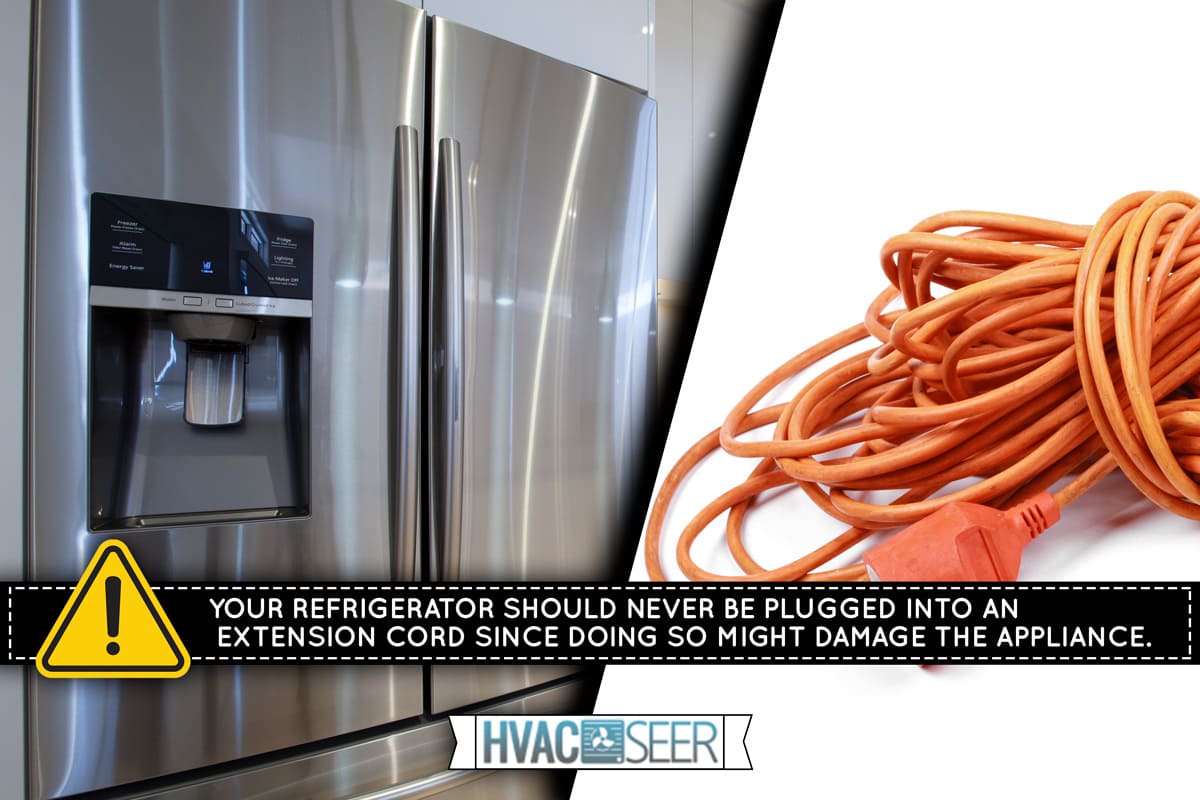
Can You Use Extension Cord With Refrigerator

Let's talk refrigerators and extension cords! It might sound a bit dull at first, but trust me, knowing the do's and don'ts of this combo can save you from potential headaches (or worse, a fridge full of spoiled food!). This is a super practical topic because, let's face it, we've all been there: a new fridge arrives, and the outlet is… just not where you need it to be.
So, can you use an extension cord with your refrigerator? The short answer is, ideally, no. But life isn't always ideal, is it? Let's break down why and explore some safer alternatives.
For Beginners: Think of your fridge like a thirsty elephant. It needs a lot of power to keep your food cold. A standard extension cord is like a skinny straw; it can't deliver enough juice to keep the elephant happy (or your fridge running efficiently). Using the wrong extension cord can lead to the fridge not working properly, overheating the cord, and potentially causing a fire. It's much safer to have a dedicated outlet for your refrigerator.
Must Read
For Families: A faulty fridge can mean spoiled milk, melted ice cream, and a lot of wasted money. More importantly, it could pose a safety hazard to your loved ones. If you absolutely must use an extension cord, ensure it's a heavy-duty, appliance-grade cord specifically designed for refrigerators. Check the amperage rating on both your fridge and the extension cord; the cord's rating must be equal to or higher than the fridge's. And always plug the cord directly into the wall outlet, avoiding power strips or other extension cords.

For Hobbyists (the DIY-ers): If you're comfortable with basic electrical work, consider installing a new outlet closer to your refrigerator's location. This is the safest and most reliable long-term solution. You could also investigate having an electrician install a dedicated circuit for your refrigerator, ensuring it has all the power it needs without overloading other circuits in your home. This is particularly important if you have an older home with potentially outdated wiring.
Examples and Variations:

- "I only need it temporarily": Even for short-term use, a heavy-duty cord is essential. Think moving the fridge slightly to clean behind it.
- "My fridge is energy-efficient": While newer models are more efficient, they still require a significant amount of power during start-up and operation. Don't underestimate their needs!
- "I'm using a surge protector extension cord": Surge protection is great, but it doesn't solve the fundamental problem of the cord's amperage capacity. Still needs to be heavy duty.
Simple, Practical Tips:
- Check the Amperage: Find the amperage rating on your refrigerator (usually on a sticker on the back or inside). Match or exceed this with your extension cord's rating.
- Use a Heavy-Duty Cord: Look for cords specifically labeled for appliances or refrigerators. They're thicker and can handle the higher power demands.
- Inspect the Cord Regularly: Check for any signs of damage, such as frays, cuts, or melted plastic. Replace it immediately if you find any.
- Avoid Overloading: Don't plug other appliances into the same extension cord as your refrigerator.
- Ideally: Avoid extension cords altogether.
Ultimately, while it's possible to use an extension cord with a refrigerator under specific circumstances, it's always best to prioritize safety and a dedicated power source. Taking a little extra time to ensure your refrigerator is properly powered will give you peace of mind and help keep your food (and your family) safe. Plus, knowing you've handled it correctly is a small victory – and who doesn't love a little victory?