Can People See Your Location On Airplane Mode

Ever been mid-flight, scrolling through memes (downloaded beforehand, of course – airplane mode is a sacred space!), and a nagging thought pops into your head: "Can anyone actually see where I am right now?" It's a valid question in our hyper-connected world, where even our refrigerators seem to know our deepest cravings.
Let's break it down, shall we? The short answer regarding airplane mode: No, people generally cannot see your precise location when your device is in airplane mode. Airplane mode is designed to sever all wireless connections. Think of it as digitally pulling the plug. That means no cellular data, no Wi-Fi, and no Bluetooth signals are being transmitted.
The Airplane Mode Lowdown
Airplane mode essentially puts your device into a communication coma. It's like when Neo dodges bullets in The Matrix – all communication signals are skillfully avoided. Here's a more detailed breakdown of what happens:
Must Read
- Cellular Connection: Gone. No more calls, texts, or data downloads.
- Wi-Fi: Disabled. You won’t be auto-connecting to any inflight Wi-Fi (unless you manually turn it back on after enabling airplane mode).
- Bluetooth: Off. Your wireless headphones will be silent until you reconnect them.
Now, the fun fact! Did you know the original purpose of airplane mode was actually to prevent interference with the aircraft's sensitive navigational equipment? While modern planes are much more robust, the regulation stuck, encouraging responsible digital behavior during flights.
The "But What About..." Scenarios
Okay, so airplane mode should make you invisible to location tracking. However, let's address some common "what ifs":
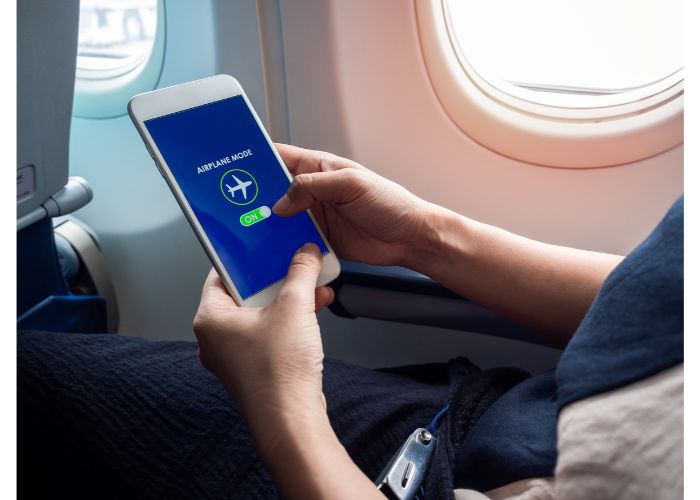
- Inflight Wi-Fi: If you decide to pay for and connect to the inflight Wi-Fi after enabling airplane mode, then yes, your activity can potentially be tracked like it can on any other public Wi-Fi network. Airlines or third-party providers can see the websites you visit, the apps you use, and even your general location based on the Wi-Fi access point. Remember those targeted ads that pop up the moment you land? That’s (usually) Wi-Fi tracking at work!
- Location Services (GPS): Even with airplane mode on, your device's GPS receiver can still function. This is because GPS relies on receiving signals from satellites, not transmitting signals from your device. However, without a data connection (cellular or Wi-Fi), your GPS location data won’t be actively shared with apps or contacts. You can still use offline maps, though! Pro tip: download maps of your destination before your flight!
- Emergency Services: In a true emergency, some devices are designed to attempt to connect to cellular networks, even in airplane mode, to transmit your location to emergency services. This is a safety feature and generally only activates under very specific circumstances.
Privacy Considerations Beyond the Clouds
While airplane mode provides a good level of location privacy in the air, it's important to remember that your online activities are always subject to some degree of tracking, especially when connected to the internet. Consider using a VPN (Virtual Private Network) when using public Wi-Fi to encrypt your data and mask your IP address. Think of it as a digital cloak of invisibility, just like Harry Potter's!
Always review the privacy settings of your apps. Many apps request location access, even when it's not strictly necessary. Limiting these permissions can significantly reduce the amount of location data you share.

Another important thing to consider is whether or not you have Find My (iPhone) or Find My Device (Android) enabled. While these services are great for locating a lost or stolen device, they do rely on transmitting location data when the device is connected to a network. When airplane mode is activated, the tracking is disabled.
Reflecting on Our Connected World
Ultimately, the question of whether people can see your location in airplane mode boils down to understanding how technology interacts with our privacy. Airplane mode offers a digital respite, a chance to disconnect and be present. It's a reminder that we have the power to control our digital footprint, even in small ways.
Just as Marie Kondo encourages us to declutter our physical spaces, perhaps we should also periodically declutter our digital lives. Checking privacy settings, limiting app permissions, and embracing the occasional "digital detox" are all ways to cultivate a more mindful and intentional relationship with technology. So, the next time you’re soaring through the sky, embrace the silence of airplane mode and enjoy the view – knowing that you're in control of your digital privacy.
![[2025 Update] Does Airplane Mode Turn Off GPS Location?](https://www.fonegeek.com/uploads/location/airplane-mode.webp)