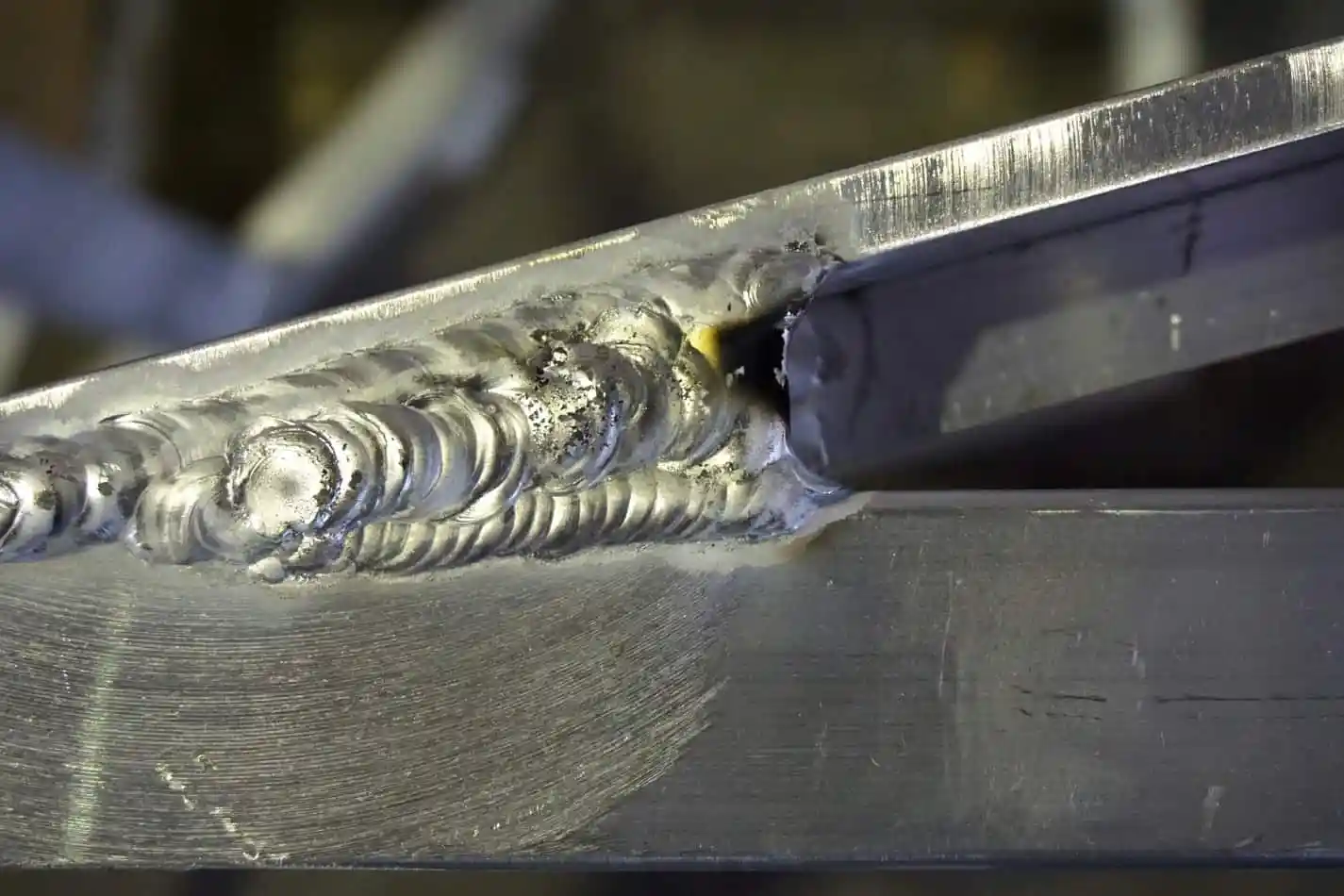
Can I Weld Aluminum To Steel

Alright, so you’ve got that brilliant idea bubbling, right? You're looking at a piece of shiny aluminum, then a sturdy hunk of steel, and thinking, "Hey, wouldn't it be awesome if I could just… weld these two bad boys together?" The dream is real! Maybe you're building a super-light frame with a strong base, or perhaps you just like pushing the boundaries of what’s possible in your garage. I get it. We’ve all been there, staring at two different materials and picturing some kind of metal-melding magic.
But let's grab another coffee, lean in, and have a little chat about whether that particular dream is more of a delightful fantasy or a potential reality. Because, my friend, when it comes to welding aluminum to steel, things get a tad… complicated. Like trying to teach a cat to fetch, complicated. Or trying to mix oil and water and hoping they become besties. Spoiler alert: they probably won't.
Why It's a Head-Scratcher (or a Headache!)
So, why isn't it as simple as just firing up your welder and laying down a bead? Oh, if only! The universe, in its infinite wisdom, made aluminum and steel incredibly different. We're talking night and day differences here. Think of them as two completely distinct personalities at a party, one super chill and easygoing (aluminum, melting at a relatively low temp), and the other, well, a bit more stoic and needs a lot more heat to loosen up (steel, needing way more heat).
Must Read
Here’s the lowdown on the main troublemakers:
- Melting Points: Aluminum says, "I'm out!" at around 1220°F (660°C). Steel, on the other hand, is still warming up the crowd at that temperature, needing closer to 2700°F (1500°C) to really get molten. Trying to weld them means one is a puddle while the other is barely blushing.
- Thermal Expansion: They don't expand or contract at the same rate when heated and cooled. This is like trying to make two different-sized rubber bands stretch and shrink in perfect sync. The result? Internal stresses. Cracks, my friend, cracks are coming to that joint faster than you can say "uh oh."
- Chemical Composition: This is the big one. Aluminum is, well, aluminum. Steel is mostly iron with carbon and other stuff. When you try to mix these two molten metals, they don't play nice. They form brittle intermetallic compounds. Imagine trying to make a sturdy brick wall with super crumbly, chalky mortar. That's essentially what happens to your weld joint. It becomes incredibly fragile and weak. You could practically snap it with a stern look!
So, Can You Do It In Your Garage?
Short answer? For most of us with a standard MIG or TIG setup in the garage, trying to directly weld aluminum to steel is a recipe for disappointment, frustration, and probably a good amount of head-scratching. It's really not practical or effective. You'll likely end up with a mess, a weak joint that fails spectacularly, and a feeling that you just wasted a good afternoon. Save yourself the heartache and those precious welding rods, okay?

It's not that you can't technically put some filler wire between them and make something stick for a second. But will it be strong? Will it last? Will it be anything more than a glorified, incredibly brittle glue? Nope. You're better off trying to glue two angry squirrels together. (Don't do that, by the way.)
How Do the Pros Do It (If They Really, Really Have To)?
Ah, now this is where it gets interesting, but also where we leave the realm of your average DIY project. The really clever folks in specialized industries do join these materials, but it’s usually with some seriously high-tech, mind-bending processes:

- Explosion Welding: Yes, you read that right. They literally use explosives to force the two metals together at super-high pressures. It's like a superhero version of welding, creating a metallurgical bond without significant melting. Definitely not a weekend project!
- Friction Stir Welding: This is another solid-state process where a non-consumable tool stirs the metals together, generating heat and a plasticized region that forms the joint. Super cool, super precise, super expensive equipment.
- Cladding: Sometimes, they'll bond thin sheets of aluminum to steel (or vice-versa) using rolling or other pressure-based methods before they even get to the welding stage. Then you’re essentially welding aluminum to aluminum, or steel to steel, on the surface.
- Brazing/Soldering: This isn't true welding (where the base metals melt and fuse), but it's a way to join them. You use a different, lower-melting-point filler metal (often a zinc-aluminum alloy) that acts as a bridge. It can work for some applications, but it’s generally not as strong as a true weld, and surface prep is absolutely critical.
So, What's the Smart Play for Your Project?
Okay, so direct welding is mostly a no-go for us regular folks. But don't despair! There are perfectly fantastic, reliable ways to join aluminum and steel that don't involve risking a galactic level of welding failure. My advice? Keep it simple, keep it strong.
- Mechanical Fasteners: Bolts, rivets, screws! These are your best friends. Drill some holes, add some fasteners, and you've got a joint that's strong, reliable, and easily disassembled if needed. Plus, you can use insulation (like a nylon washer) between the metals to prevent galvanic corrosion, which is a whole other can of worms we won't open today!
- Structural Adhesives: Modern epoxies and structural adhesives are incredibly strong. For many applications, a properly bonded joint can be just as strong, if not stronger, than a weld. Plus, they distribute stress over a larger area, which is a bonus.
So, next time that thought pops into your head, "Can I weld aluminum to steel?", remember our little coffee chat. While the idea is tantalizing, for most of us, it's best to embrace the differences between these two fantastic metals and join them in ways that make them both shine, without trying to force them into a relationship they're just not built for. Happy building, my friend!