
Btu In 1 Ton Air Conditioner

Alright, gather 'round, because I've got a little story for you. Picture this: it's the peak of summer, the kind where the air itself feels like a warm, wet blanket trying to give you a permanent hug. My buddy, let's call him Alex, decided this was the year he was finally going to conquer the heat beast in his living room. He’d done his "research" (read: asked his uncle once), marched down to the big box store, and came back beaming with a shiny new portable air conditioner.
"It's a one-ton unit!" he declared, proudly gesturing to the box as if it were a newly discovered ancient artifact. "Should cool this place right down, no problem."
Fast forward two weeks, and Alex's living room felt less like an arctic wonderland and more like... well, still a very hot living room, just with a noisy machine humming in the corner. He was bewildered. "I don't get it," he'd groan, "it's a ton! That's, like, a really heavy amount of cooling, right?"
Must Read
And that, my friends, is where our little journey begins. Because Alex, bless his sweaty heart, had stumbled upon one of the most wonderfully confusing and utterly non-intuitive terms in the world of air conditioning.
Cracking the Btu Code: What Even IS It?
Before we tackle the mysterious "ton," let's talk about its partner in crime: the Btu. Now, don't let the fancy acronym fool you. Btu stands for British Thermal Unit. Sounds very official, doesn't it?
In super simple terms, a Btu is a measure of heat energy. Think of it like calories for food, but instead of measuring the energy in food, we're talking about the energy of heat. Specifically, one Btu is the amount of energy it takes to raise the temperature of one pound of water by one degree Fahrenheit.

But here's the kicker for air conditioning: an AC unit's job isn't to create cold; it's to remove heat. So, when you see an AC unit rated for, say, 10,000 Btu, it means it can remove 10,000 Btu of heat from a space in one hour. Got it? The higher the Btu number, the more heat-extracting power your AC has. Pretty straightforward, right? Now, for the curveball...
The Curious Case of the "Ton"
Okay, so if Btu measures heat removal, what in the world is a "ton" doing in the conversation? Is it about how much the AC unit weighs? Is it a unit of measure for the size of the compressor? Nope, nope, and absolutely nope. (Though, trust me, I've heard those guesses before!)
The term "ton" in air conditioning is a glorious relic from the days before mechanical refrigeration, when ice was king for cooling. Seriously!
Imagine this: back in the day, if you wanted to cool a space, you'd bring in a big block of ice. A "ton" of cooling capacity was literally derived from the amount of heat absorbed by one ton (2,000 pounds) of ice melting completely over a 24-hour period.

Now, without getting too bogged down in the thermal physics (because, honestly, who has time for that on a hot day?), it takes a specific amount of heat energy to melt ice. Specifically, it takes 144 Btu to melt just one pound of ice.
So, if we have 2,000 pounds of ice, and each pound needs 144 Btu to melt, that's 2,000 lbs * 144 Btu/lb = 288,000 Btu.
Since this whole process was historically measured over 24 hours, we divide that total by 24 to get the hourly cooling capacity:

288,000 Btu / 24 hours = 12,000 Btu per hour.
Voila! There it is. The big reveal.
A "one-ton" air conditioner means it has the capacity to remove 12,000 Btu of heat from your home every hour.
So, when Alex's uncle told him to get a "one-ton" unit, he was implicitly telling him to get an AC unit with 12,000 Btu/h of cooling power. It's just a shorthand, albeit a wonderfully confusing one, for a very specific Btu rating.
So, Why Does This Even Matter to YOU?
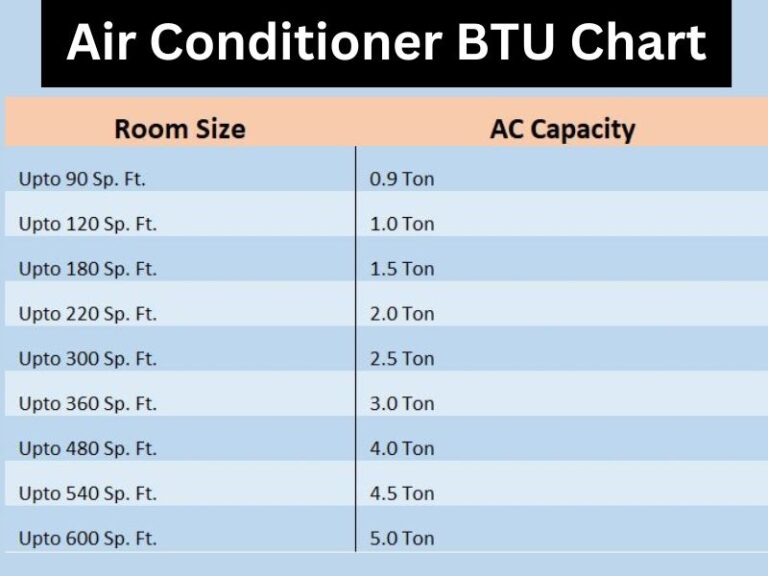
Understanding this little nugget of information is actually super practical. When you're buying an AC, you'll see units rated in either tons (1 ton, 1.5 ton, 2 ton, etc.) or directly in Btu (12,000 Btu, 18,000 Btu, 24,000 Btu, you get the drift).
Knowing that 1 Ton = 12,000 Btu/h helps you quickly compare apples to apples, or rather, BTUs to BTUs.
- A 1.5-ton unit? That's 1.5 * 12,000 = 18,000 Btu/h.
- A 2-ton unit? That's 2 * 12,000 = 24,000 Btu/h.
Choosing the right size is crucial, by the way. Too small, and your AC will run constantly, never quite cooling your space, like Alex's situation. Too big, and it'll "short cycle" – turning on and off too frequently, which wastes energy and, ironically, doesn't dehumidify your space properly, leaving you feeling clammy even if it's cool. Gross.
Next time you're talking about air conditioners, you can confidently explain that a "ton" isn't about weight but about a powerful 12,000 Btu/h of heat-busting capability. And Alex? He eventually got a bigger unit (a 2-ton, actually, for his oversized living room), and his place is now comfortably chill. The more you know, right? Stay cool out there!