Imagine, for a moment, the world of metal. Sparks fly, grinders whir, and powerful machines hum with a purpose. It might seem like a place of raw strength and brute force, but tucked away within all that might, there’s a surprisingly delicate dance happening, a subtle ballet of precision and feeling.
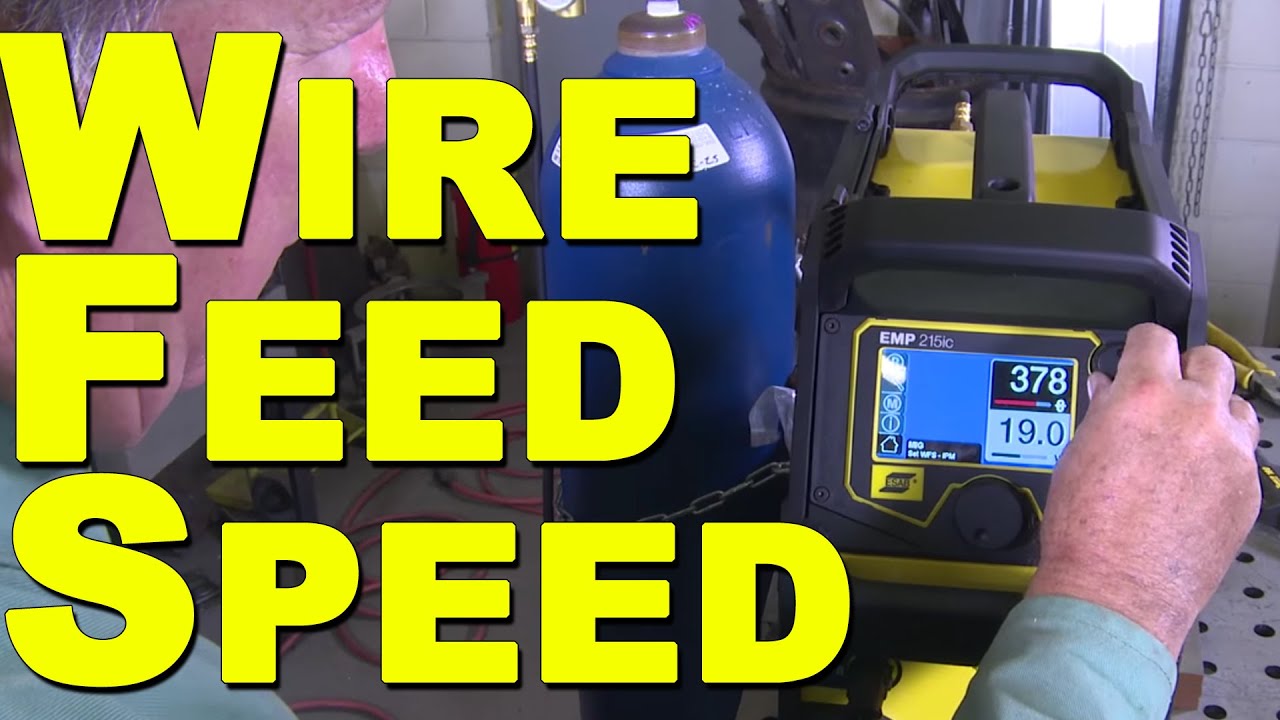
We’re talking about MIG welding, specifically about one of its secret ingredients: something called Wire Feed Speed. Now, don't let the technical name scare you off. Think of it less like a complicated engineering term and more like the secret sauce in your grandmother's famous recipe.
The Rhythm of the Reel
What exactly is Wire Feed Speed? Picture this: a tiny, continuous wire, almost like a super-strong fishing line, is fed through the welding torch. This wire is the material that melts and joins two pieces of metal together, creating that incredibly strong bond we see in everything from cars to garden gates.
The "speed" part refers to how quickly this wire is pushed out. It’s not just a steady push; it's a carefully calibrated flow. Too much, and you're in for a soggy mess; too little, and you're barely making a connection.
The Goldilocks Principle of Welding
This is where our story gets really interesting. The perfect Wire Feed Speed is like finding the "just right" porridge for Goldilocks. It's an intuitive sweet spot, a feeling that experienced welders learn to detect almost by magic.
Let's consider what happens when it’s not quite right. Imagine a clumsy barista trying to make latte art. If the milk pours out too slowly, it just blobs, never forming that elegant fern leaf. That’s a bit like a slow wire feed speed in welding.
The arc, the brilliant spark that melts the wire, struggles to find enough material to burn. It sputters, it struggles, and the result is often a weak, bumpy weld that looks more like a trail of ant hills than a smooth, strong seam. It’s frustrating for the welder and certainly won't hold much together.
On the flip side, what if our barista got a little too enthusiastic with the milk jug? A deluge, a milky tsunami overflowing the cup. This is akin to a fast wire feed speed.
The wire rushes out faster than the arc can melt it. It ends up literally "stubbing" into the metal, creating a frantic, spluttering sound and showering sparks everywhere. You get an unsightly, uneven bead that piles up too high, refusing to blend smoothly with the parent metal.
"The wire feed speed isn't just a number on a dial; it's the heartbeat of the weld. Get it right, and the metal sings."
The Sweet Spot Symphony
But then, there's that glorious moment when it's just right. The Wire Feed Speed matches the voltage, the welder's hand moves with a steady rhythm, and the arc hums a beautiful, consistent tune.
The molten metal flows like liquid honey, creating a smooth, even bead that fuses perfectly between the two pieces. It's strong, it's beautiful, and it's a testament to the welder's skill and the subtle magic of this precise setting.
Think of a professional chef seasoning a dish. They don't measure every pinch of salt; they feel it, they taste it, they know exactly how much is "just right" for that perfect balance of flavors. The welder, too, develops an almost innate sense for the correct speed.
The Unexpected Joy of Control
For many, welding is more than just a job; it's a passion, a craft. And the control over something as seemingly small as Wire Feed Speed can bring immense satisfaction. It's about taming raw power with finesse.
Imagine a hobbyist welder, perhaps in their garage, painstakingly repairing a beloved old garden bench. Getting that speed just right means the difference between a wobbly fix and a strong, lasting repair that will stand for years.
There's a quiet triumph in hearing that perfect, steady crackle of the arc, seeing the molten puddle spread out smoothly, and knowing you’ve achieved it. It’s a small victory, yes, but it’s a tangible one.
This precision isn't just for structural integrity. Artists who weld metal sculptures often manipulate these settings to achieve different textures and finishes. A slightly slower speed might create a more pronounced ripple, while a faster one could lead to a smoother flow.
More Than Just Metal
So, the next time you see a metal railing, a sturdy bridge, or even a whimsical metal sculpture, take a moment. Beyond the brute strength and the dazzling sparks, remember the quiet hero: Wire Feed Speed.
It’s a reminder that even in the toughest of trades, there's an art to the subtle adjustments, a feeling for the rhythm, and a deep satisfaction in finding that "just right" balance.
It’s not just about melting metal; it's about crafting connections, building strength, and sometimes, even creating beauty, all thanks to the delicate dance of a tiny wire and the welder's practiced hand.
Who knew such a technical term could hold so much charm and quiet artistry? It goes to show that even in the world of grit and sparks, there's always a hidden story of precision and passion waiting to be discovered.