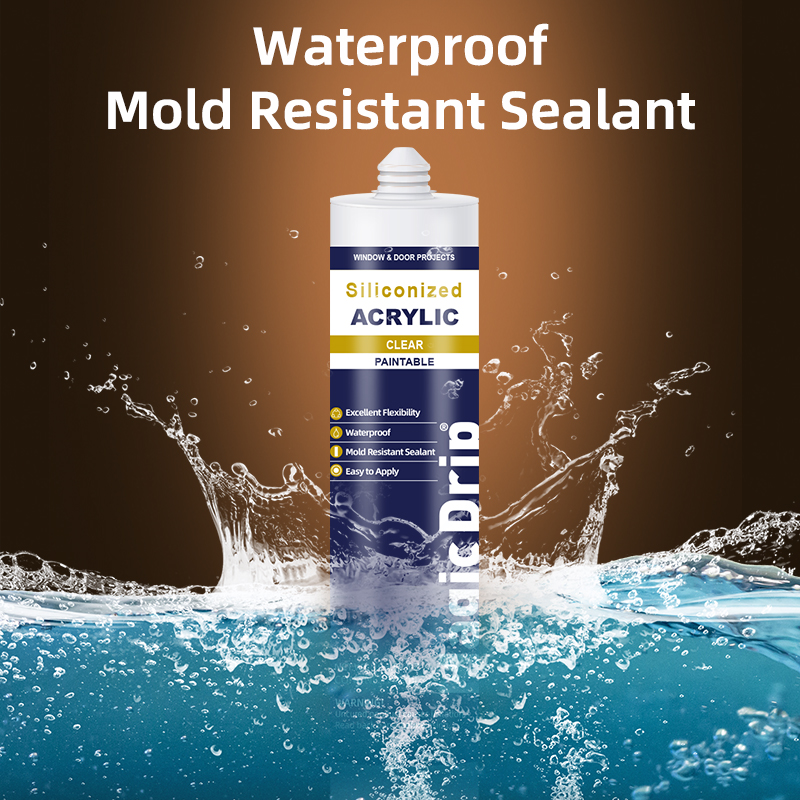
Ever noticed that funky dark staining around your bathtub or kitchen sink? Chances are, that's mold, and it's probably having a party in your sealant. Sealant, that unassuming, flexible stuff, is actually a silent hero in our homes. It keeps water out, prevents drafts, and generally makes our lives more comfortable. But when mold moves in, our hero needs a little help. That's why we're diving into the fascinating, and surprisingly practical, question: Which sealant – polyurethane or silicone – is more resistant to mold?
Sealants, in general, are designed to create a watertight or airtight barrier. They fill gaps and joints, preventing water, air, dust, and even pesky insects from infiltrating spaces they shouldn't. Think about the edges of your windows, the seam between your countertop and backsplash, or the space around your toilet. Without sealant, these areas would be vulnerable to leaks, drafts, and all sorts of undesirable consequences. They're beneficial because they extend the life of building materials by protecting them from the elements, improve energy efficiency by preventing air leaks, and maintain hygiene by preventing mold and mildew growth. It's all about a more comfortable, durable, and healthier living environment!
Consider these everyday examples. In schools, sealants are critical in bathrooms, around water fountains, and in science labs to prevent water damage and maintain sanitation. At home, you see them everywhere! From sealing the grout lines in your shower to preventing water from seeping under your kitchen appliances. My daughter's elementary school used colored silicone sealant around the edges of a large mosaic art project they created, not just to keep the pieces together, but also to protect the substrate from moisture and potential mold growth in the humid climate.
So, which sealant wins the mold resistance battle? The answer, like most things, is a bit nuanced, but generally, silicone sealants tend to be more inherently mold-resistant than polyurethane sealants. This is because silicone is an inorganic material, meaning it doesn't provide a food source for mold. Polyurethane, on the other hand, is an organic material, which means mold *can* feed on it, although specialized formulations with added biocides can significantly improve their mold resistance.
However, it's not quite that simple. The *quality* of the sealant and the *application* also play huge roles. A cheap silicone sealant might not be as effective as a high-quality polyurethane sealant with added mold inhibitors. Furthermore, even the best sealant will fail if applied improperly. Think about it: any tiny gap or air pocket provides a perfect breeding ground for mold. Proper surface preparation – cleaning and drying the area thoroughly before applying the sealant – is crucial. Also, ensure you're using a sealant specifically designed for wet environments if you are applying it in a bathroom or kitchen.
Want to explore this further? A simple experiment is to purchase small tubes of both silicone and polyurethane sealant (look for those labeled with mold-resistant or mold-inhibiting properties). Apply a small bead of each onto a non-porous surface like a tile. Then, place the tile in a humid environment (like a sealed container with a damp sponge) for a few weeks, and observe which sealant shows signs of mold growth first. Remember to wear gloves and eye protection when working with sealants. While this isn't a scientific experiment, it can provide a tangible understanding of the differences between the two. Ultimately, choosing the right sealant comes down to considering the specific application, the environment, and reading those product labels carefully. Keep that bathroom sparkling!