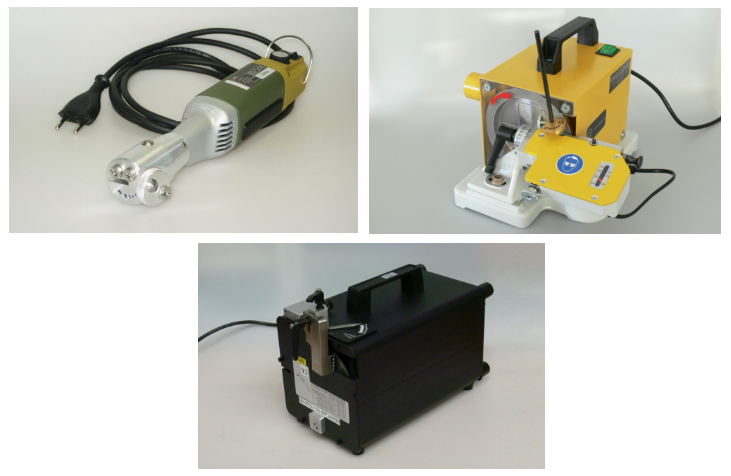
Hey there, welding wizards and metal maestros! Ever stared intensely at a tungsten electrode, wondering what secrets it holds? You're not alone!
We're diving headfirst into the wild world of grinding these little sparks of joy. Forget the complicated jargon. We're making this fun!
Tungsten Tales: Fact or Fiction?
So, what's *really* true about grinding tungsten electrodes? Let's debunk some myths and uncover the fascinating facts. Prepare for some sparks – intellectual ones, of course!
Think about it: you're holding a tiny rod that's about to unleash some serious heat. Doesn't it deserve a little respect? A little...sharpening?
Question: Which of the following is true of grinding tungsten electrodes?
Time to get down and dirty with some pointy details!
Is it okay to use the same grinding wheel for tungsten as you do for other metals? Absolutely not! Contamination is the enemy. You want pure, unadulterated tungsten goodness.
Why? Imagine baking a cake with a spatula you just used to flip burgers. Yuck! Same principle applies here. Keep it clean, folks.
Does the grinding angle even matter? Oh, you bet it does! It's not just about making a pointy end. The angle affects the arc shape, weld penetration, and overall weld quality. It's like choosing the right wand for a wizard – crucial!
A sharper angle? Think precise, narrow welds. A shallower angle? Think wider, more forgiving welds. It's all about control.
Can you grind tungsten freehand? Sure, you *can*. Should you? Probably not, unless you're aiming for a career in abstract metal sculpture. Precision is key, and a proper grinder with a guide will be your best friend. Say goodbye to wobbly points!
Plus, safety first! Those tiny tungsten particles are not something you want to inhale. Wear a respirator. Protect your lungs. Be a responsible welder!
Grinding Grooves: More Than Just Aesthetics
Here's a quirky detail: the direction you grind in matters. You want to grind *longitudinally* – that is, along the length of the electrode, not around it. Why?
Think of it like sharpening a knife. You wouldn't drag the blade sideways across the stone, would you? Longitudinal grinding creates tiny, parallel grooves that help stabilize the arc. It's like giving the electricity a little runway to take off from.
Those little grooves are more than just pretty; they're functional! They guide the electrons, preventing them from going rogue and causing arc wander. Nobody wants a wandering arc!
Imagine: You're trying to weld a delicate piece of art, and your arc is dancing around like a toddler on a sugar rush. Not ideal! Proper grinding helps keep things under control.
And what about the type of grinding wheel? You need a diamond or CBN (Cubic Boron Nitride) wheel specifically designed for tungsten. These wheels are hard enough to grind tungsten effectively without contaminating it. Don't skimp on this! It's an investment in your weld quality and your sanity.
Also, don’t press too hard! Let the wheel do the work. Forcing it can overheat the tungsten, leading to cracks and imperfections. Be gentle, be patient, and let the magic happen.
Color Me Impressed (or Not): Tungsten Types
Did you know that tungsten electrodes come in different flavors, each with its own color code? Red for thoriated, green for pure, blue for lanthanated... It's like a rainbow of welding possibilities!
Each type has different properties and is suited for different applications. Thoriated tungsten, for example, used to be super popular, but now it's being phased out in some places due to health concerns. Lanthanated and ceriated tungsten are generally considered safer alternatives.
So, when you're grinding, it's a good idea to know what type of tungsten you're working with. This can affect the grinding angle and technique you use.
The point is, knowing your tungsten is like knowing your spices in the kitchen. It allows you to create culinary, or rather, welding masterpieces!
The Grinding Truth: Final Thoughts
So, which of the following *is* true of grinding tungsten electrodes? Hopefully, now you have a much better idea! Grinding tungsten is a crucial step in achieving high-quality welds. It's not just about making a pointy tip; it's about precision, control, and understanding the properties of the material.
It's about respecting the process and paying attention to the details.
So, go forth and grind with confidence! Remember to be safe, be precise, and have fun with it. Welding is an art, and grinding tungsten is just one small, but important, brushstroke in that art.
Now go make some sparks – the good kind!