Alright, buckle up buttercups, because we're diving headfirst into the slightly-less-scary-than-a-shark-infested-pool world of nuclear power! We're talking about the one environmental hazard that's like that slightly annoying cousin who always shows up to family gatherings: directly related, but not always as terrible as everyone makes them out to be. So, what is it? Drumroll, please…
Radioactive Waste: The Leftovers Nobody Wants
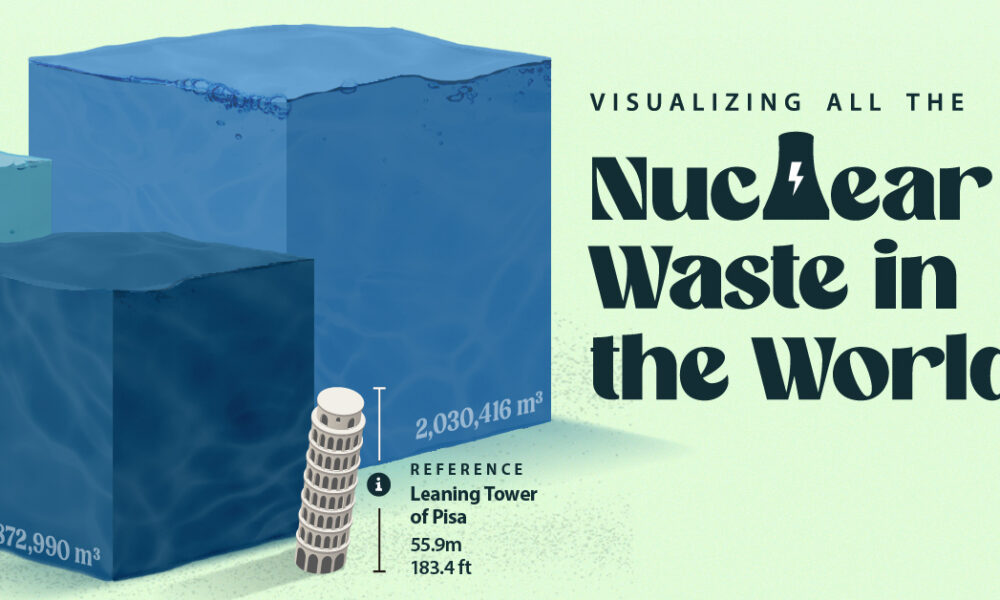
Yep, you guessed it (or you cheated and read ahead, I'm not judging!). The environmental hazard most directly linked to nuclear power production is radioactive waste. Now, before you imagine mutant turtles and glowing-green goo seeping into your garden, let’s break it down.
Think of it like this: nuclear power plants are like giant atomic ovens, baking up electricity with uranium "fuel." But just like baking a cake, you’re left with… well, the cake pan. And in this case, the "cake pan" is the leftover uranium fuel that's still got some radioactive zing to it. This waste emits radiation, and too much radiation exposure is…well, let’s just say you wouldn’t want to sunbathe in it. Imagine getting a sunburn, but instead of aloe vera, you need a Geiger counter!
The Problem With Pizza and Plutonium
Now, the big challenge isn’t just that this waste is radioactive, it’s that it stays radioactive for a looooong time. Some of it, like plutonium, can take tens of thousands of years to decay to safe levels! That's longer than the existence of pizza! Imagine trying to decide where to store a leftover slice for the next 10,000 years. You wouldn’t just leave it on the counter, right? (Okay, maybe some of you would... but you shouldn’t!).
So, the question becomes: what do we do with these radioactive "pizza crusts"?
Storage Solutions: Burying Our Problems (Carefully!)
Currently, the most common solution is storing the waste deep underground in specially designed geological repositories. Think of it as a super-secure, impenetrable underground bunker for radioactive leftovers. The idea is to isolate the waste from the environment for, you know, the next several millennia.
These repositories are carefully chosen to be in stable geological locations, like deep rock formations, that are unlikely to experience earthquakes or groundwater contamination. It’s like choosing the perfect spot to hide your emergency stash of chocolate: far from prying eyes (or leaky pipes) and well-protected from hungry monsters (or curious squirrels).
However, finding suitable long-term storage sites is a political and social hot potato. Nobody wants a radioactive waste dump in their backyard, even if it's the most scientifically sound solution. It's the "not in my backyard" (NIMBY) phenomenon in full radioactive swing!
But Wait, There's More! (The Good News)
Now, before you start building a lead-lined bunker in your basement, let’s remember that nuclear power plants don’t release huge plumes of radioactive smoke into the atmosphere on a daily basis. In fact, modern nuclear power plants have multiple safety systems to prevent accidents. And while accidents do happen, they are relatively rare.
Plus, scientists and engineers are constantly working on new and improved methods for managing and even reducing radioactive waste. From reprocessing spent fuel to developing advanced reactor designs that produce less waste, there's a whole army of brainy people tackling this challenge head-on. They're like the Jedi knights of nuclear waste management, wielding science instead of lightsabers!
"The key to solving the radioactive waste problem is innovation and a commitment to responsible management." - Said by someone smart, probably.
Ultimately, the challenge of radioactive waste is a real and important one, but it’s also a manageable one. We need to keep researching better storage solutions, developing cleaner nuclear technologies, and having open and honest conversations about the risks and benefits of nuclear power. It’s not about pretending the problem doesn’t exist, it’s about facing it head-on with knowledge, innovation, and a healthy dose of optimism.
So, the next time you hear about nuclear power, remember the radioactive waste "pizza crusts," but also remember the scientists and engineers who are working hard to clean up the kitchen. Because let’s face it, we all want clean energy, and sometimes, that means dealing with a few atomic leftovers!