Ever found yourself staring at your gas stove, a tiny blue flame dancing merrily, and thought, "Where on earth did that come from?" Maybe you pictured a plucky little gas miner, deep underground, whistling a jaunty tune while chipping away at a lump of pure BTU. Or perhaps, more ambitiously, you considered setting up a natural gas trap in your backyard, hoping to snare some wild, free-range energy.
Well, buckle up, buttercup, because the answer is a lot less DIY bucket-and-net, and a lot more ancient geology meets mind-boggling engineering. Let's embark on a surprisingly hilarious journey to understand where you can "get" natural gas.
It All Starts with Really, Really Old Dead Things
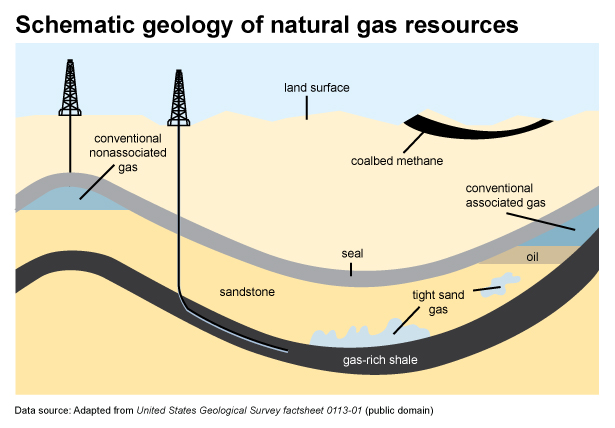
First off, forget about catching natural gas in a jar. It's not like fireflies. Natural gas, in its rawest form, is a fossil fuel. This means it comes from the decomposition of organic matter – think microscopic plants and animals, not T-Rexes, although the idea of dinosaur farts collecting underground for millions of years is undeniably funnier. Over millions of years, under immense heat and pressure deep beneath the Earth's surface, these organic bits transformed into what we now affectionately call natural gas.
So, where can you get it? The short answer: Deep underground, tucked away in porous rock formations. It's essentially the Earth's super-secret energy stash, hidden from plain sight.
The Great Escape: How We Dig It Up (Not with a Spoon)
Since we can't just send a miniature submarine down there to collect it, we have to employ some serious technology. This usually involves:
1. Drilling, Baby, Drilling!
Imagine drilling a hole several miles straight down, and then often turning horizontally for another few miles. It’s like trying to thread a needle from the top of the Empire State Building, while blindfolded, during an earthquake. Modern drilling is incredibly precise, allowing engineers to target these gas-rich rock layers with astonishing accuracy. It’s a far cry from the old wildcatters who just poked holes in the ground and hoped for the best!
Once they hit the jackpot, the gas, being lighter than rock and water, often wants to escape. It rushes up the wellbore, eager to join the party topside.
2. Sometimes, a Little "Fracking" is Needed
Now, sometimes natural gas is a bit shy, trapped in tight rock formations that don't want to give it up easily. That's where a technique called hydraulic fracturing, or "fracking" to its friends, comes in. Think of it like giving the earth a really intense, high-pressure massage to loosen things up. Water, sand, and some chemicals are pumped down the well to create tiny fractures in the rock, allowing the gas to flow more freely to the wellbore.
It's a complex process, and definitely not something you can replicate with your garden hose and a spade.
The Invisible Journey: From Earth to Your Home
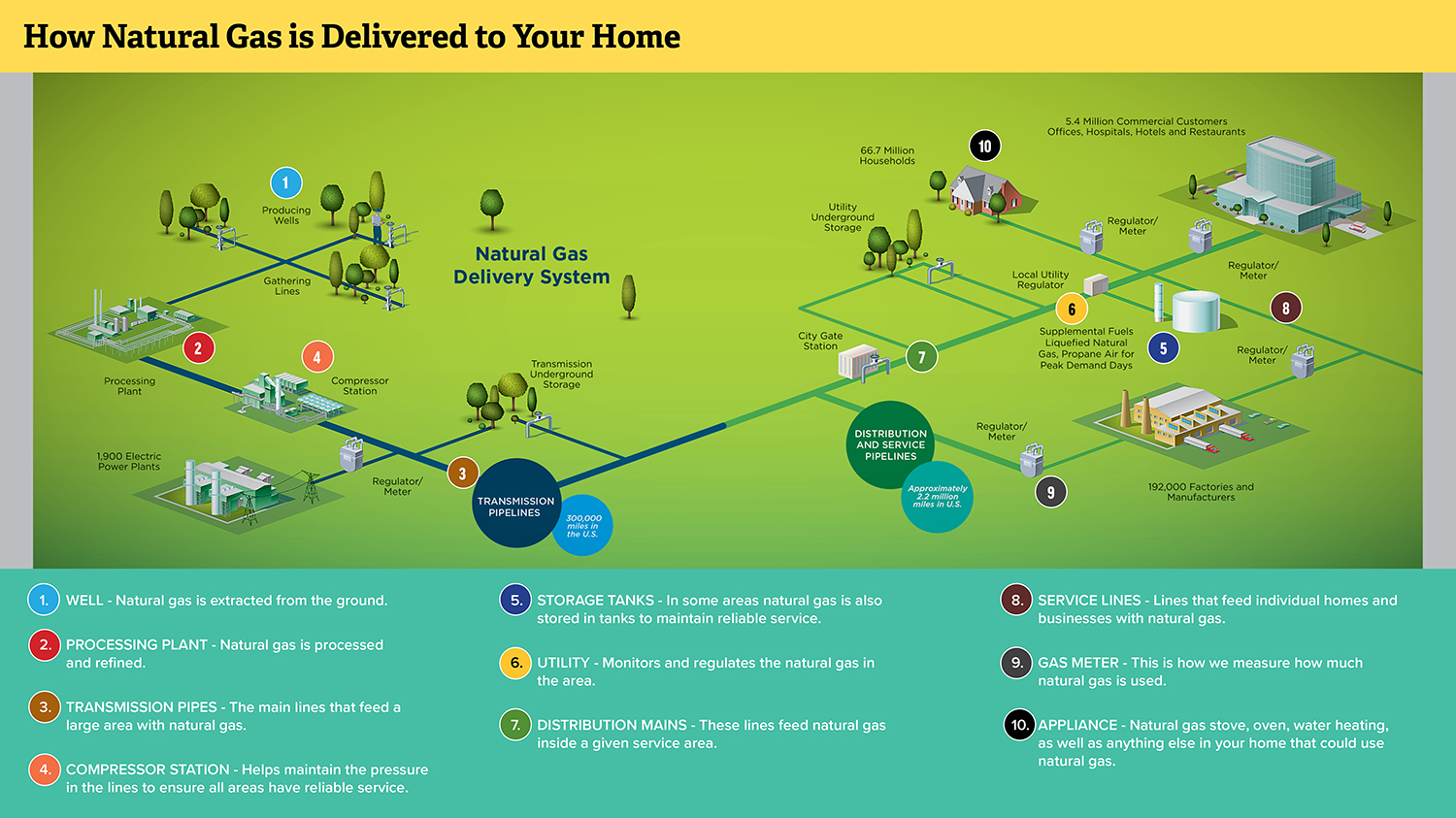
Once the natural gas is coaxed from its subterranean slumber, it's not quite ready for its starring role in your grilled cheese sandwich. It's often mixed with other gasses and impurities, so it heads to a processing plant.
The Spa Day: Processing Plants
Here, it gets cleaned up, stripped of its unwanted companions (like water vapor and other hydrocarbons), and purified into pipeline-quality natural gas, which is mostly methane. This is where it loses its native "earthy" smell because, naturally, pure natural gas is odorless and colorless.
Wait, odorless? Then why does a gas leak smell like rotten eggs?
The Stinky Truth: They Add the Smell!
Ah, that's where the unsung hero, mercaptan, comes in! Because natural gas is undetectable by human senses, a harmless chemical with a powerful, distinctive rotten-egg smell is added to it. This is a crucial safety measure, ensuring that if there's a leak, you're not unknowingly breathing in an explosive gas. So, thank your lucky stars for the stink!
The Superhighway: Pipelines Galore
From the processing plant, the now squeaky-clean natural gas enters a vast, intricate network of pipelines. We're talking millions of miles of underground pipes crisscrossing continents, silently delivering energy. It's like the internet, but for gas, and without the cat videos (probably). These transmission pipelines move massive volumes of gas at high pressure.
Eventually, this massive pipeline system connects to smaller, local distribution pipelines, which are the ones running under your streets, leading directly to your home or business.
How You "Get" It: The Final Mile (and Your Bill)
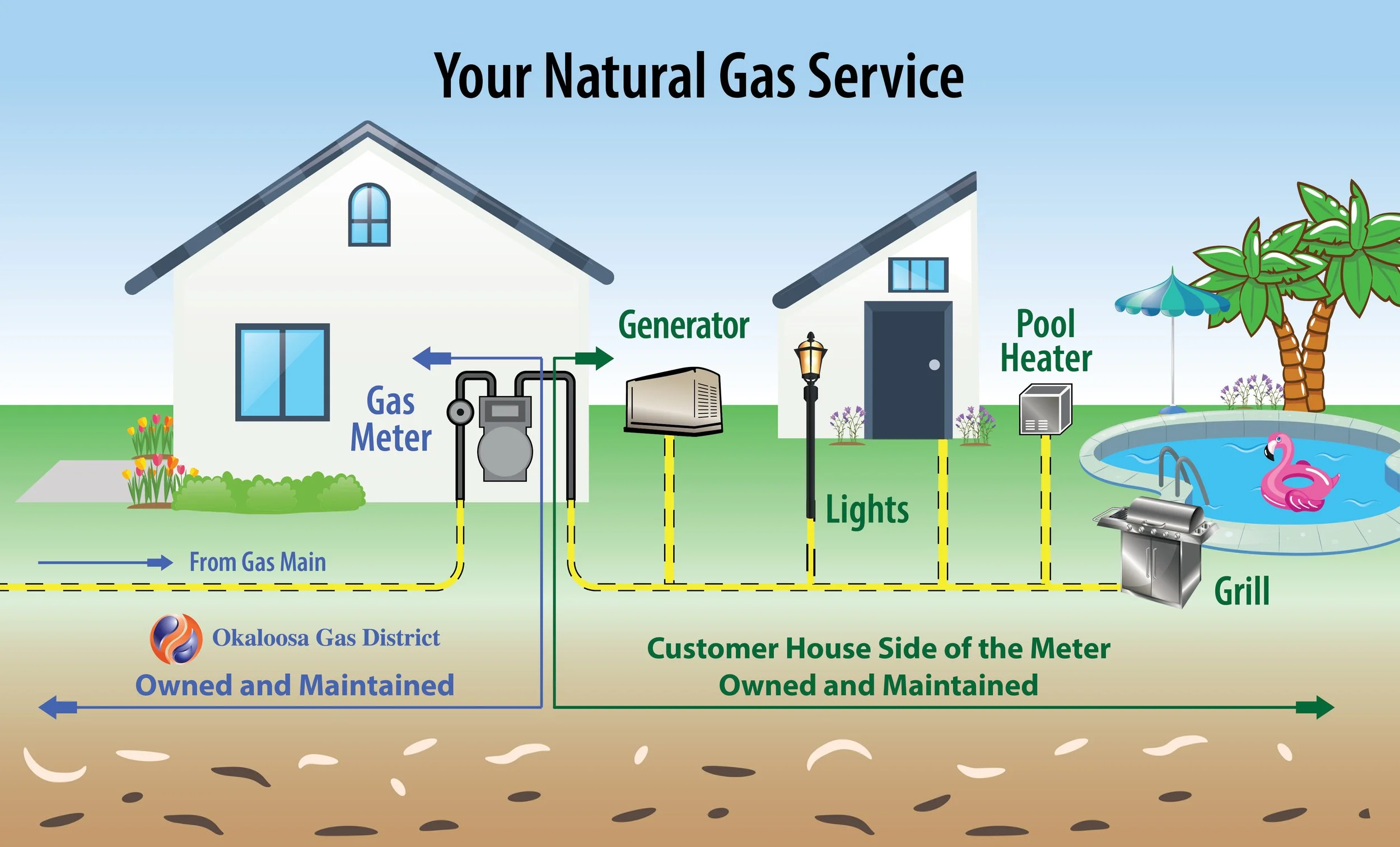
So, where can you get natural gas? You can't just walk into a store and buy a gallon of it. You "get" natural gas by being connected to your local natural gas utility company's distribution network. They deliver it right to your doorstep (or, more accurately, to your gas meter). That meter diligently measures every cubic foot you use, and then, like magic, a bill appears!
In essence, you're not "getting" natural gas yourself. You're simply tapping into an incredibly complex, highly regulated, and utterly invisible system that brings this ancient, processed, and intentionally-stinky fuel directly into your home for heating, cooking, and generating electricity.
So, the next time you fire up your stove, give a little nod to the incredible journey that gas took – from ancient sea creatures and plants, through miles of rock, past colossal drilling rigs, through processing plants, along vast pipelines, and finally, into your humble kitchen. And maybe, just maybe, be glad you don't have to try and trap it yourself in a bucket.