Ever found yourself gazing up at your ceiling fan, mid-swirl, and suddenly thought, "Is it… doing it right?" You're not alone! It's one of those common household mysteries, like what that rattling noise in the dryer is, or why the remote always disappears under the couch. But fear not, fellow comfort-seeker, because deciphering your fan's spin direction is a surprisingly simple secret to unlocking optimal comfort and, dare we say, a touch of home zen.
The Summer Breeze: Downward Draft for Instant Chill
When the mercury rises and the sun beats down, your fan's mission is clear: to make you feel cooler. For this, you want your fan to create a direct breeze, pushing air straight down onto you. This isn't about actually lowering the room's temperature (that's your AC's job!), but rather creating a delightful wind-chill effect on your skin.
Think of it like stepping out on a breezy day – even if the air temperature is warm, the movement of air against your skin helps evaporate sweat, making you feel much cooler. Your fan is essentially bringing that outdoor magic indoors.
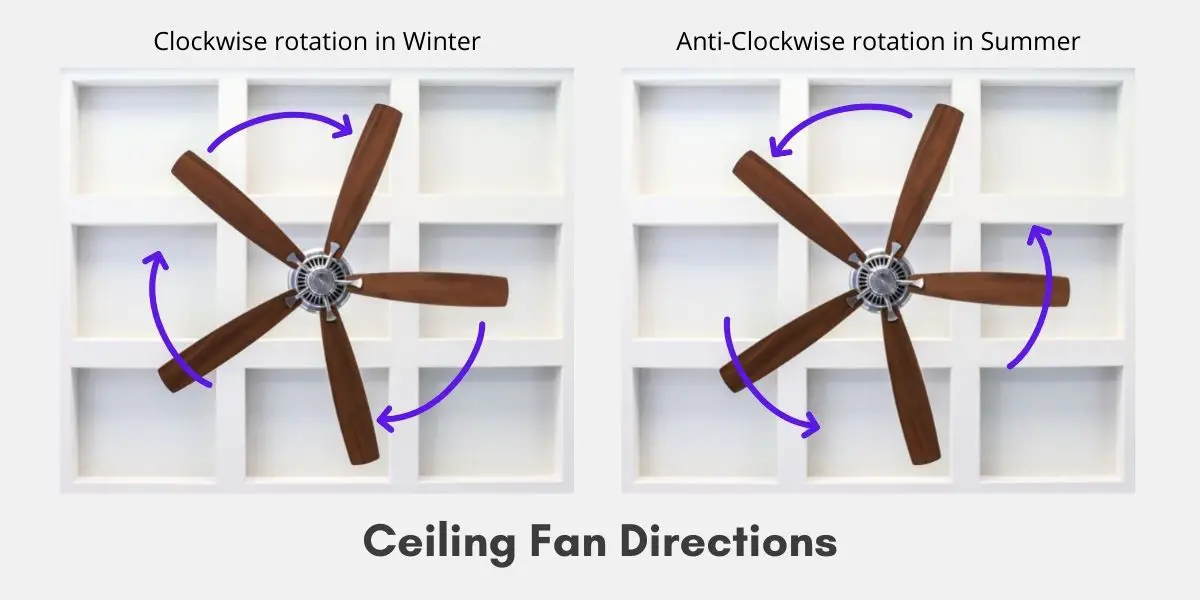
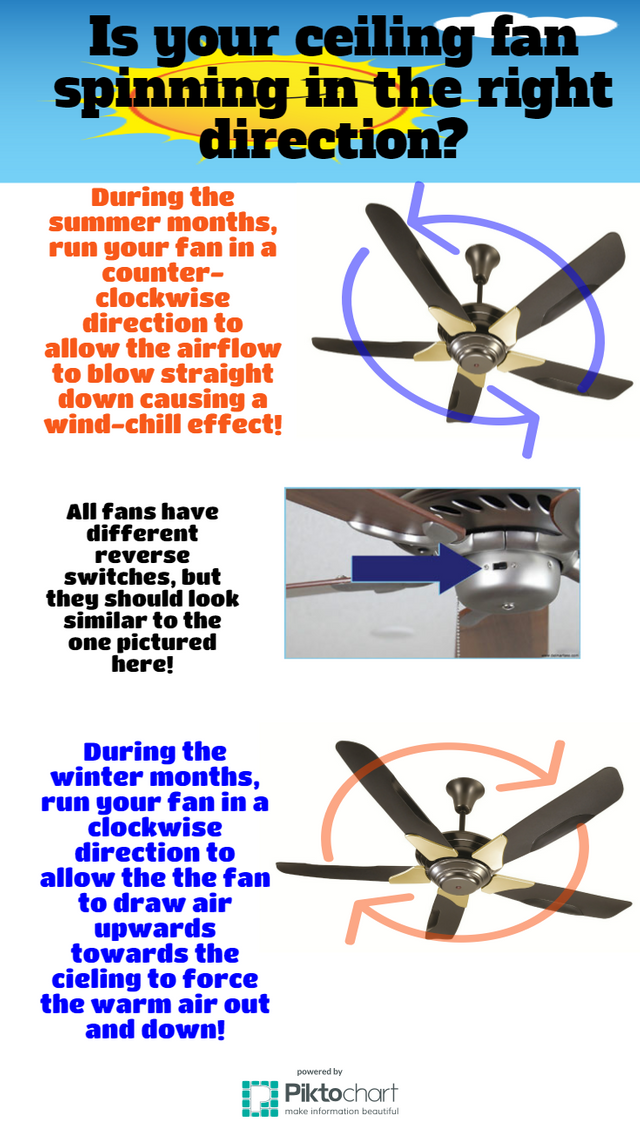
To achieve this blissful downward draft, your fan blades should be spinning in a counter-clockwise direction. If you're standing directly underneath and looking up, the blades should appear to be moving to your left. This creates a cone of cool air that presses down, giving you that lovely, refreshing sensation.
Practical Tip: Stand under your fan. If you feel a distinct breeze, you're probably in the sweet spot. If not, it's time for a quick flip!
Winter Warmth: Upward Push for Cozy Circulation
Now, let's fast forward to those cozy, colder months. When you're trying to keep warm, the last thing you want is a chilly breeze. But that doesn't mean your fan needs to sit idle! In winter, your fan becomes a silent, energy-saving hero, working to redistribute warm air.
Heat, as we know, rises. This means that during winter, a lot of your precious warm air from the heater or fireplace tends to hang out near the ceiling, leaving you feeling a bit nippy at floor level. Your fan can fix this.
For winter operation, you want your fan to spin in a clockwise direction. If you're looking up from below, the blades should appear to be moving to your right. This gentle upward motion pulls the cooler air from below, pushes it up towards the ceiling, and in doing so, gently forces the warm air that's accumulated up there to drift back down along the walls.
The key here is that you shouldn't feel a direct breeze. If you do, your fan speed might be too high. The goal is subtle circulation, not a direct chilling effect. Many recommend running your fan on its lowest setting in winter for optimal, draft-free warmth.
Fun Fact: This trick can actually allow you to lower your thermostat by a few degrees without sacrificing comfort, leading to tangible savings on your heating bill! Who knew your fan was a budget wizard?
How to Change Direction: The Magic Switch
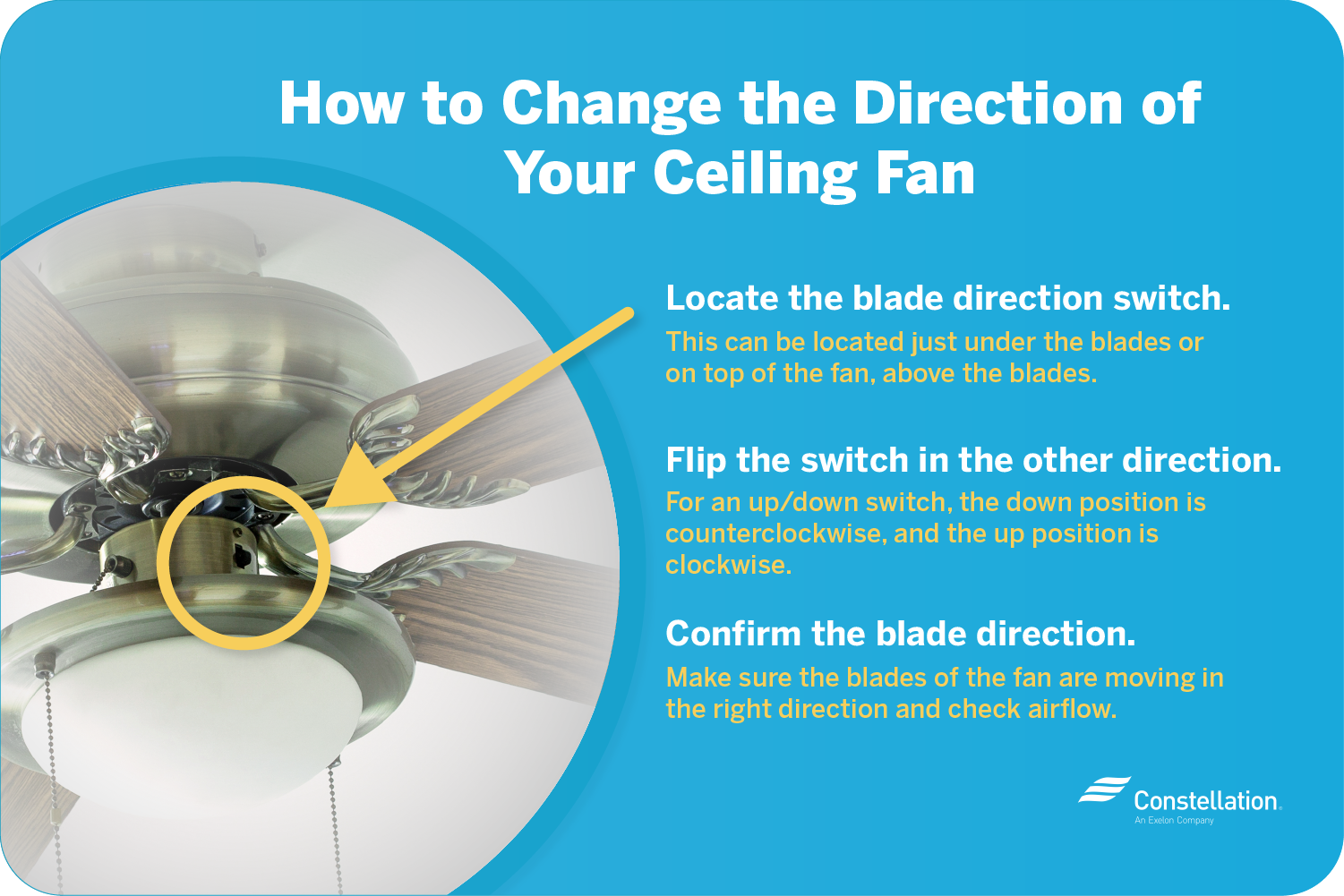
So, how do you make this magical seasonal switch? Most ceiling fans come equipped with a small toggle switch located on the motor housing itself, usually just above the blades. It's often discreet, a tiny slider that says "forward" and "reverse" or simply has two directional arrows.
Important Safety Note: Always turn off your fan completely before attempting to flip this switch. Wait for the blades to come to a full stop. Safety first, always!
Once you've located it, simply slide the switch to the desired direction, turn the fan back on, and observe. You should notice the change in blade rotation and, more importantly, the difference in airflow. Some modern smart fans might even allow you to change direction via a remote control or a smart home app – talk about living in the future!
Beyond the Spin: A Little Fan Love
While we're on the subject, a quick word on fan maintenance: a dirty fan is an inefficient fan. Over time, dust and grime can accumulate on the blades, reducing their effectiveness and even causing a wobbling noise. Give your blades a good wipe-down every now and then. It’s a small effort for a big payoff in performance and air quality.
Think of your fan as a hardworking, silent partner in your home comfort quest. Adjusting its spin direction seasonally is a simple, yet incredibly effective way to enhance your living environment, save a little energy, and feel more connected to the rhythms of your home.
The Reflective Breeze
In a world that often feels complex and overwhelming, it's nice to know that some of life's little puzzles have straightforward answers. The direction your fan spins might seem like a minor detail, but mastering it is a small victory for comfort and efficiency. It’s a gentle reminder that sometimes, the simplest adjustments can make the biggest difference in our daily lives – whether it's the perfect fan spin, a perfectly fluffed pillow, or just taking a moment to breathe deeply. So go ahead, check your fan, and revel in the simple satisfaction of a perfectly optimized breeze.
:max_bytes(150000):strip_icc()/ceiling-fan-rotate-direction-1907533-v4-5ba94e6346e0fb002576cebf.png)