Ever feel a refreshing breeze on a warm day, or marvel at the majestic sight of towering wind turbines dotting the landscape? Wind is a force of nature we often take for granted, but it’s a surprisingly powerful and endlessly fascinating resource. In our quest for a greener, more sustainable future, understanding how wind works and what kind of energy it represents is not just useful, it's absolutely essential and pretty darn cool! It's at the heart of how we're powering homes and industries with a gentle giant of the natural world.
So, let's get down to business: what type of energy is wind? The simple, direct answer is that wind is primarily a form of kinetic energy. Think back to your physics classes or just observe the world around you. Kinetic energy is the energy an object possesses due to its motion. A rolling ball has kinetic energy, a flowing river has kinetic energy, and indeed, moving air – which is what wind is – also has kinetic energy.
But where does this moving air come from? To truly appreciate wind energy, we need to zoom out a bit. The ultimate source of wind on Earth is actually the sun. When the sun's rays hit our planet, they don't heat every surface evenly. Land heats up faster than water, and different parts of the Earth receive varying amounts of solar radiation. This uneven heating creates differences in air pressure.
Warm air is lighter and rises, creating areas of lower pressure. Cooler air is denser and sinks, leading to areas of higher pressure. Nature, always seeking balance, tries to equalize these pressure differences, causing air to flow from high-pressure areas to low-pressure areas. And just like that, you have wind! So, while wind itself is kinetic energy, its grand orchestrator is our very own star, making wind an indirect form of solar energy.
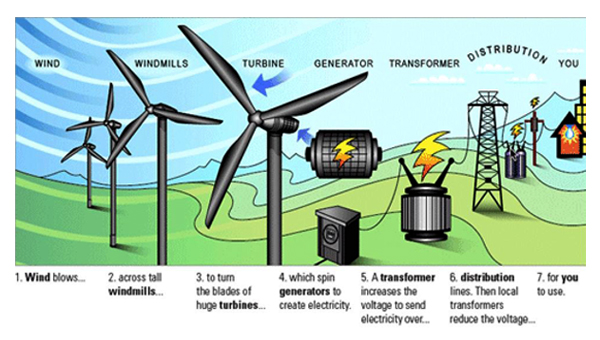
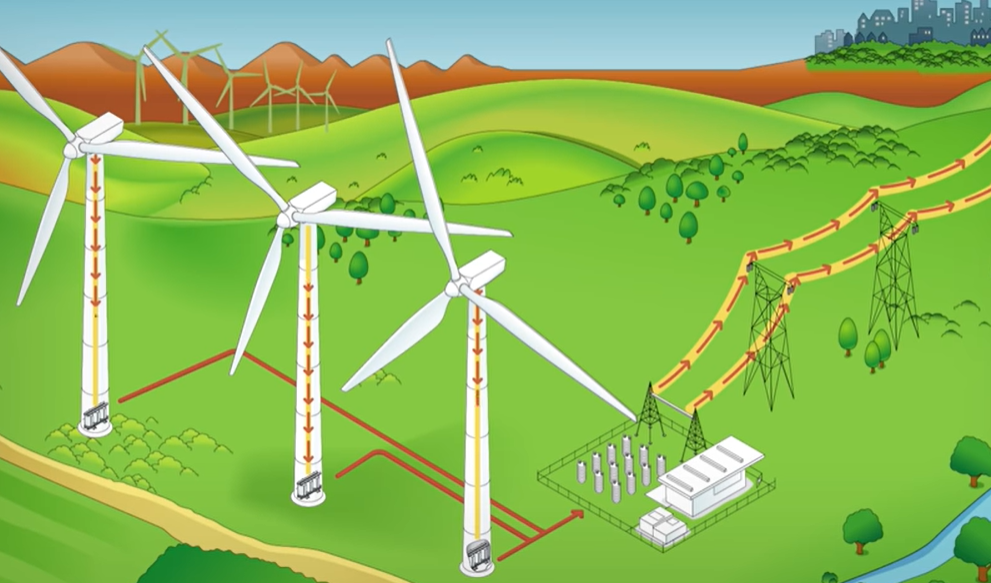
Now, how do we harness this invisible force? This is where those incredible wind turbines come into play. When wind blows, its kinetic energy pushes against the blades of a wind turbine. These blades are ingeniously designed to capture as much of this motion as possible, causing them to rotate. As the blades spin, they turn a shaft connected to a generator. Inside the generator, this mechanical energy is then converted into electrical energy – the kind that powers your lights, charges your phone, and keeps your fridge running.
The beauty of wind energy lies in its renewability. As long as the sun shines and heats the Earth unevenly, there will be wind. It’s a clean source of power, meaning it produces no greenhouse gas emissions during operation, unlike burning fossil fuels. This makes it a crucial player in our global efforts to combat climate change and transition to a more sustainable energy landscape.
In essence, wind is more than just a gust; it's a dynamic, powerful manifestation of the sun's energy, transformed into motion (kinetic energy) and then skillfully converted into the electricity we rely on every day. It's a testament to both nature's power and human ingenuity, reminding us that some of the greatest solutions can be found by simply understanding and working with the world around us. So next time you feel the wind, remember you’re feeling pure, clean, renewable kinetic energy at work!