You know that feeling when you learn something new, something that just clicks and makes you feel a little more capable in the world? Today, we're diving into one of those super practical, yet often overlooked, life skills: What to do if you smell gas. While it might sound a bit serious, thinking about this beforehand isn't about fear; it's about empowering yourself with knowledge. It’s like being a home safety detective, ready for anything, which is actually quite fun and incredibly reassuring. Learning this simple procedure can turn a potentially scary moment into a calm, controlled response, ensuring the safety of you and those around you.
The core purpose of understanding this isn't to become a gas leak expert, but to know the immediate, critical steps that protect lives and property. The benefit is immense: it minimizes risk, prevents panic, and guides you to take effective action when every second counts. Imagine if your smoke detector went off, but you had no idea what to do. That's how crucial this knowledge is for gas. It’s about being prepared, fostering a sense of readiness that translates into real-world peace of mind. Knowing the drill means you won't freeze; you'll move, you'll act, and you'll keep everyone safe.
This knowledge isn't just for emergency responders; it's for everyone, every day. Think about its use in daily life: you might smell that tell-tale "rotten egg" odor – which isn't natural gas itself, but a harmless chemical called mercaptan added for safety – near your kitchen stove, your water heater, or even outside your home where utility lines run. Educationally, many community fire departments offer fantastic, free resources on home safety, including what to do about gas leaks. Families can even incorporate this into their home emergency plans, practicing exit routes and designated meeting spots. It’s a vital piece of the puzzle for general household safety, just like knowing how to use a fire extinguisher or where your circuit breaker is.
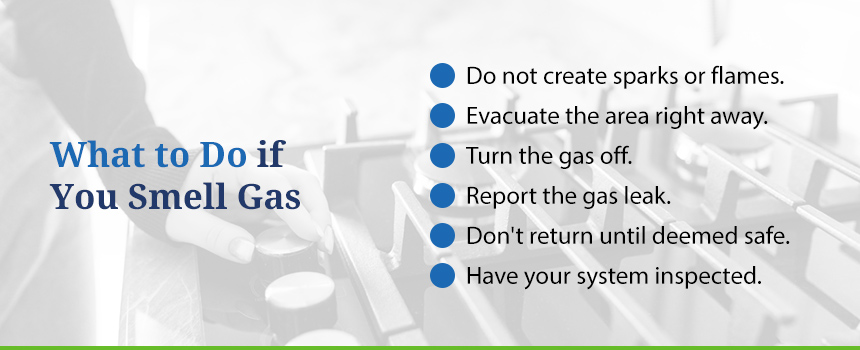
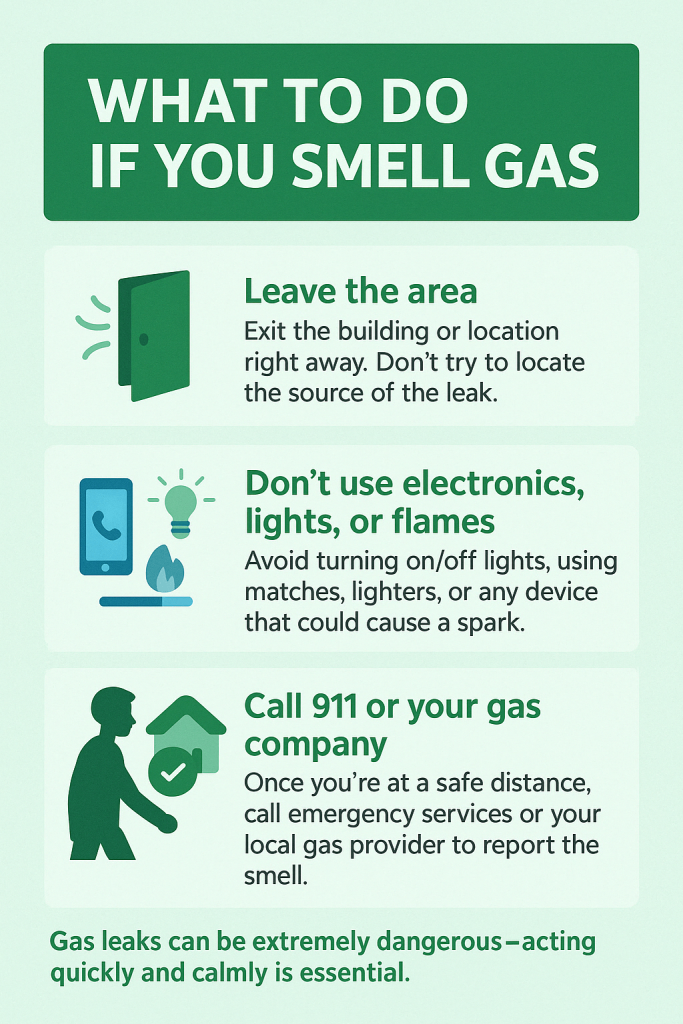
So, how can you "explore" this topic in a practical, non-alarming way? First, familiarize yourself with the smell. If you've never encountered it, you can sometimes get a tiny, safe whiff from an unlit gas burner (don't leave it on!). The golden rules are simple but critical: DO NOT turn on or off any lights, use cell phones *inside* the house, light matches, or operate any electrical appliances. Instead, the moment you suspect a gas leak: get everyone out of the house immediately. Once you are at a safe distance, ideally at a neighbor's house or from your cell phone once you're well away from the building, call your gas company's emergency line or 911. They are the experts, and they will guide you further. Take a moment to locate your local gas company's emergency number right now and perhaps stick it on your fridge. Discuss these steps with your household. It's a small action that offers a huge payoff in safety!