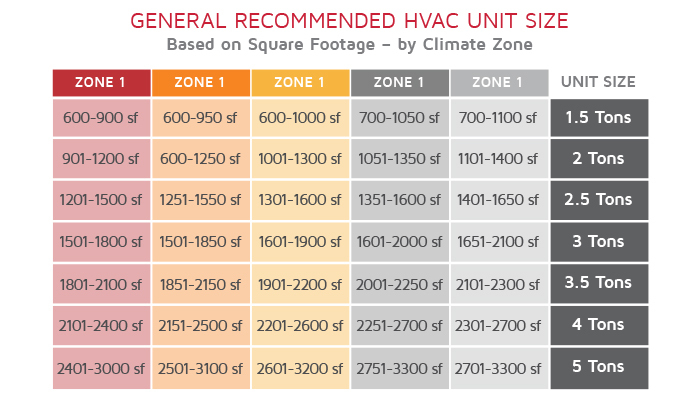
Alright, so you've got a 2300 square foot home, and you're staring down the barrel of another summer (or maybe you're just planning ahead, you smart cookie!). The big question looming, like a heatwave on the horizon, is: "What size AC do I actually need for this place?"
And let me tell you, friend, it’s a question that keeps many a homeowner up at night, usually while sweating. It’s not quite as simple as "one size fits all," or "just multiply by 20," unfortunately. If only life were that easy, right?
So, 2300 Sq Ft, Huh? Not Just a Number!
You might think, "Okay, 2300 sq ft, give me the BTU number!" And I totally get that impulse. We want quick answers! But sizing an AC is a bit like choosing the perfect pair of jeans – it’s not just about your waist size. There are so many other factors involved that make all the difference between feeling perfectly chilled and either sweating buckets or freezing your socks off (and wasting a ton of energy in the process!).
Think of it this way: 2300 square feet in a new, super-insulated house in, say, San Diego is a whole different ballgame than 2300 square feet in an older, drafty home with huge, sun-facing windows in Phoenix. See what I mean?
Why "Just Google It" Won't Cut It (Mostly)
Yeah, you can Google "AC size for 2300 sq ft," and you'll get some rough estimates. They'll probably say something like 1 ton for every 400-600 sq ft, which would put you in the 3.8 to 5.75 ton range (that's 45,600 to 69,000 BTUs, if we're speaking AC-nerd). But those are just starting points, like telling someone they need "medium" clothes without knowing if they're 5'2" or 6'5".
The truth is, those generic calculators miss so much crucial info. Your home has a personality, and your AC needs to match it!
The Nitty-Gritty: Factors That REALLY Matter
Let's dive into the juicy bits, the things that truly sway that final BTU number. Get ready to feel like an HVAC detective!
1. Location, Location, Location! (Climate, Duh!)
Where do you live? This is HUGE. If you're in a consistently hot, humid climate (hello, Florida!), your AC will work a lot harder than if you're in a more temperate zone with mild summers. Humidity, especially, makes your AC struggle, as it's not just cooling the air but also pulling out all that moisture. It’s like it’s doing two jobs at once!
2. Your Home's Hug (Insulation & Windows)
Is your house a cozy, well-insulated fortress, or does it feel more like a sieve in the winter and an oven in the summer? Good insulation (walls, attic, floors) means less heat gets in (or out), so your AC doesn't have to fight as hard. The same goes for your windows. Are they modern, double-pane, energy-efficient marvels, or do they feel like giant magnifying glasses for the sun?
And speaking of sun, how many windows do you have facing south or west? Those sunbeams are lovely, but they’re also heat-beaming agents straight into your home!
3. Ceilings, Critters, & Cookouts (Height, People, Heat Sources)
Tall ceilings (think vaulted or cathedral) mean more air volume to cool, naturally bumping up your BTU needs. And how many people live in your house? Every human is a little heat generator, right? Plus, all your fun gadgets – big screen TVs, gaming PCs, kitchen appliances – they all kick off heat. Even Fido, bless his furry heart, adds a bit to the thermal load!
4. Ductwork Drama (The Unsung Hero/Villain)
This one often gets overlooked, but it's super important. Your ductwork is the highway for your cool air. If it's leaky, poorly insulated, or improperly sized, all that perfectly conditioned air is escaping into your attic or crawl space. It’s like trying to fill a bucket with a hole in it! Wasted energy and a house that never quite feels cool enough.
Okay, But Give Me A Number! (A Starting Point)
Alright, alright, I know you want something concrete. For a 2300 sq ft home, you're likely looking at something in the range of 4 to 5 tons, which translates to roughly 48,000 to 60,000 BTUs. Many homes this size land squarely on a 4-ton or 5-ton unit.
But remember, this is truly just a *starting point* for discussion, a rough ballpark figure. Please, please, please don't go ordering a unit based solely on this! That would be like ordering a pizza for a party without asking how many people are coming!
Seriously, Call a Pro. No, REALLY.
This is where the rubber meets the road. The absolute best way to figure out the right AC size for your 2300 sq ft home is to have a qualified HVAC professional perform a "Manual J" load calculation. This isn't just some guy eyeballing your house; it's a detailed, scientific calculation that takes into account literally everything we've talked about (and more!).
They’ll look at insulation values, window types and orientation, ceiling height, your home's airtightness, and even your local climate data. It’s the difference between a guessing game and a precise, tailor-made solution for your comfort.
Why is getting it right so critical?
- If your AC is too small, it will run constantly, never truly cool your home, struggle with humidity, and cost you a fortune in energy bills. You'll be perpetually uncomfortable, and the unit will wear out faster.
- If your AC is too big (which surprisingly is a common and equally problematic mistake!), it will "short cycle." It'll blast cold air, quickly hit the thermostat setting, and shut off before it has a chance to properly dehumidify the air. This leaves your home feeling clammy and damp, even if the temperature is cool. Plus, frequent on-off cycles are rough on the equipment, leading to premature breakdowns.
So, save yourself the headache, the discomfort, and the money. Your 2300 sq ft home deserves the perfect fit. Invest in that professional assessment, get the right-sized AC, and then kick back, relax, and enjoy that perfectly chilled indoor climate. You've earned it!
/air-conditioning-chart-1152654_final-01-5c522db7c9e77c0001d7671e.jpg)