Ever thought about something as common as ordinary table salt? We sprinkle it on our food, and it disappears into water, but what if we told you it holds a surprising secret? This humble crystal possesses a fascinating property called density, and it’s far more entertaining than you might imagine. Get ready to look at your salt shaker with new eyes!
Salt’s density isn't just a dry scientific fact; it’s a tiny superpower. This inherent characteristic allows for some truly remarkable and fun demonstrations. It makes everyday kitchen experiments feel like a magic show, right in your own home.
So, what exactly *is* density in simple terms? Think of it as how much "stuff" is packed into a certain space. Imagine a feather and a small rock; the rock feels much heavier for its size because its material is packed more tightly. Salt crystals are a bit like those rocks, compact and surprisingly hefty for their tiny appearance.
Even though each individual grain is minuscule, it holds a lot of material. This intrinsic weight per volume is what gives salt its amazing abilities. When you start dissolving these dense little crystals, you begin to unlock their real magic.
The Secret Weight of Tiny Crystals
Those sparkling grains of salt you see are actually quite dense. For their size, they pack a good punch of molecular weight. This means that a small volume of salt contains a surprising amount of mass.
It’s this inherent compactness that makes salt so special when it interacts with other things, especially water. Its density is the key to unlocking a world of simple wonders. It’s like a hidden strength, just waiting to be revealed.
Think of it as salt having its own little personal gravity well. When you add enough of these dense little particles to a liquid, they begin to collectively change the liquid’s overall character. This is where the fun truly begins for anyone watching.
The Magic Behind the Float!
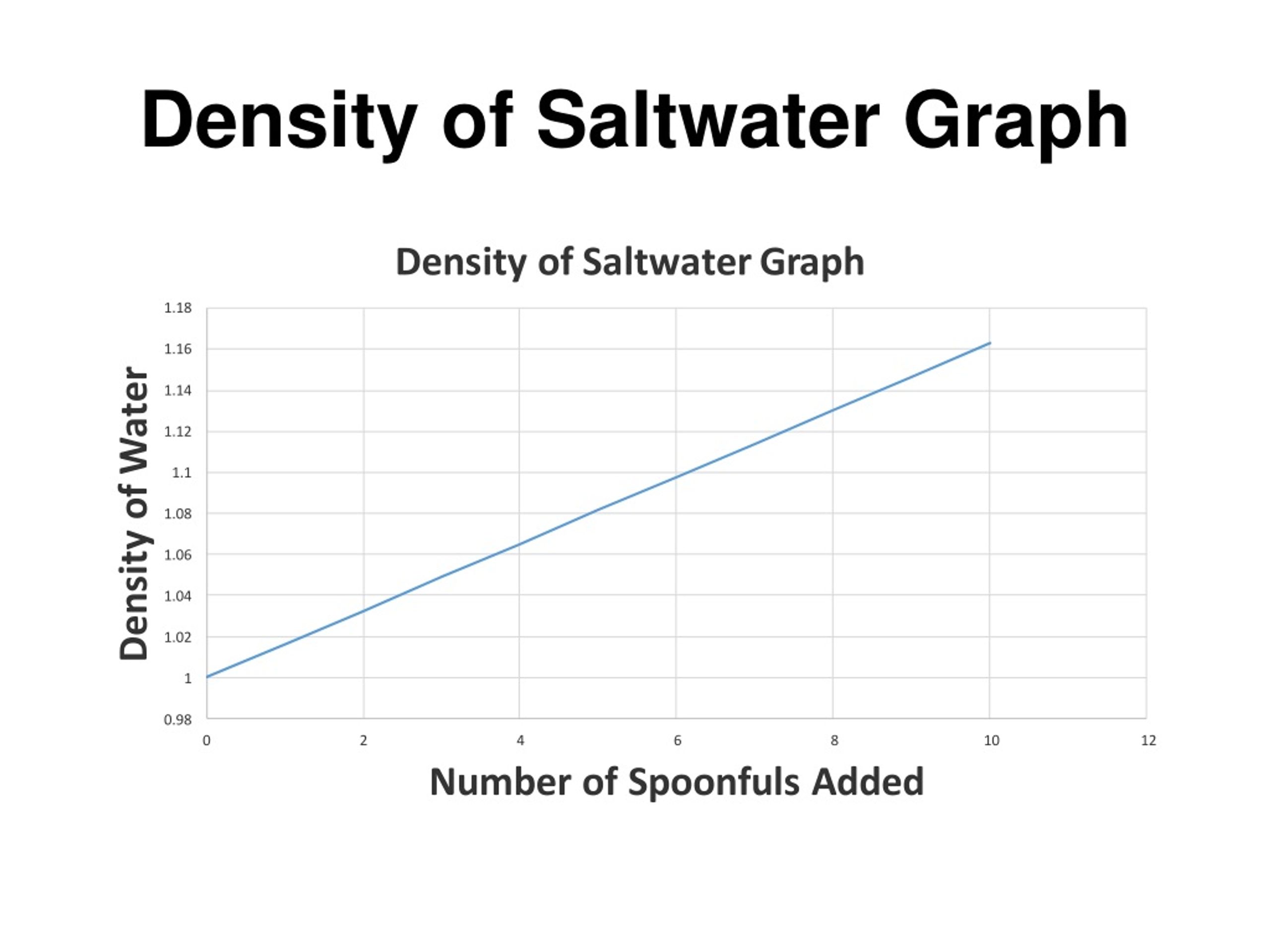
Here’s where salt’s density gets incredibly entertaining: when you dissolve it in water. As more and more salt dissolves, it fills the spaces between the water molecules, making the water itself heavier. Essentially, the water becomes more "packed" with stuff.
This makes the salty water significantly denser than regular freshwater. Suddenly, objects that would normally sink in plain water find themselves buoyed up. It’s like the water suddenly gained a superpower to hold things up!
This simple change in water’s properties is the foundation for countless fun experiments and natural phenomena. It's truly captivating to witness. The humble grain of salt transforms ordinary water into something extraordinary.
The "Wow!" Factor: Experiments You Can Try
One of the most engaging ways to experience salt’s density is through the classic
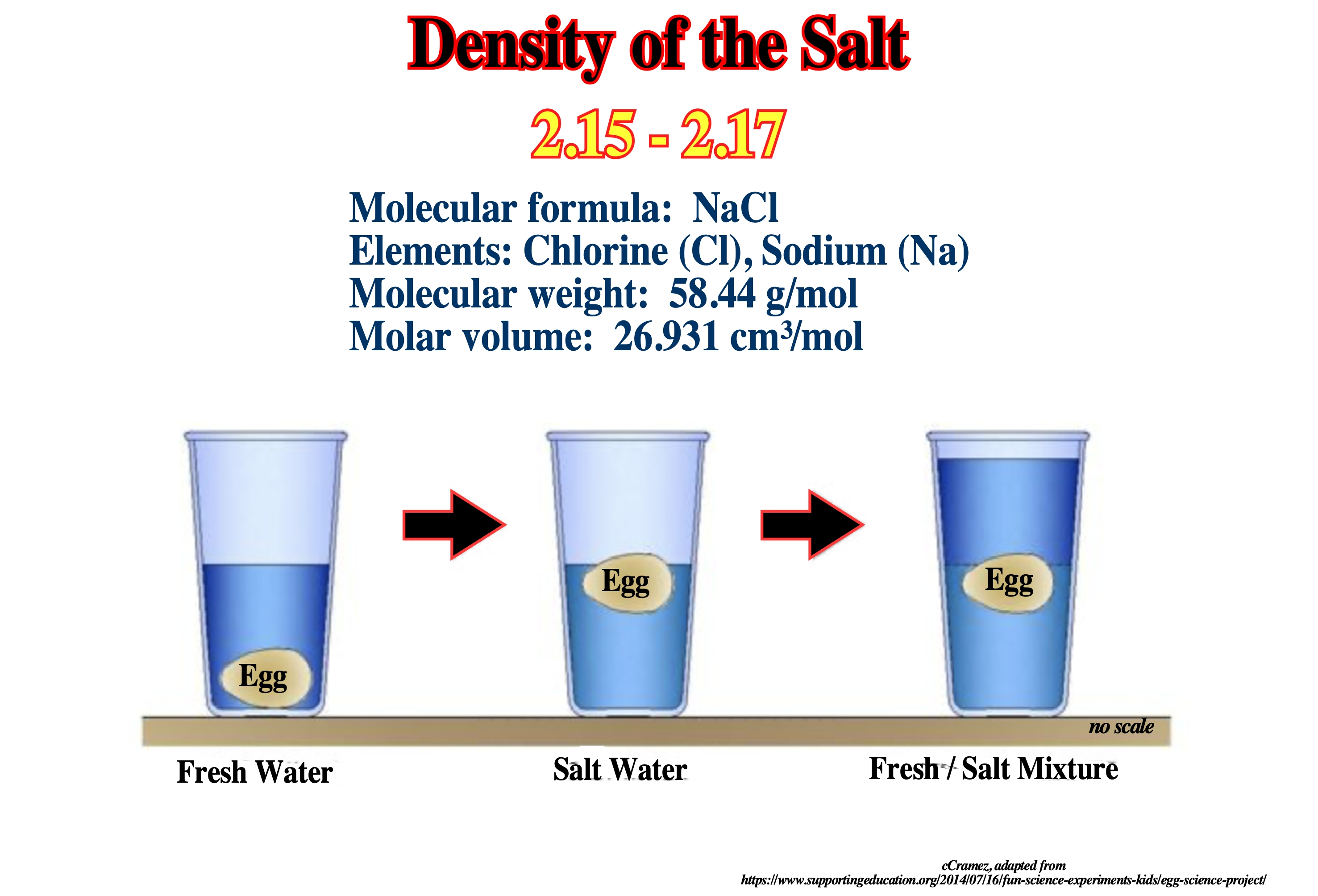
floating egg experiment. Take a fresh egg and drop it into a glass of plain tap water; it sinks to the bottom without hesitation. That’s what we expect, right?
Now, here’s the magic trick! Remove the egg, and stir in several generous spoonfuls of salt until it mostly dissolves. Carefully place the egg back into this newly made saltwater. Prepare to be amazed!
Instead of sinking, the egg now floats gracefully, often bobbing halfway up the glass! It’s an instant visual delight, a true testament to the power of salt’s density. This simple kitchen experiment feels like genuine sorcery.
Kids and adults alike light up watching this simple demonstration. It sparks immediate curiosity: "Why did that happen?" It's a wonderful, hands-on way to understand a fundamental scientific concept. Who knew a raw egg and a pinch of salt could be so captivating?
Beyond the Egg: The Mighty Dead Sea
The principles of salt’s density aren't just for kitchen tricks; they’re evident in some of Earth’s most incredible places. Think of the famous Dead Sea, nestled between Israel and Jordan. People effortlessly float on its surface there!
This isn't because of any special swimming technique or secret; it’s purely due to the incredibly high concentration of salt. The Dead Sea is one of the saltiest bodies of water in the world, making its water extremely dense. Its water literally pushes you up.
Imagine lying back, reading a book, and just floating on the surface without any effort whatsoever. It's a surreal and utterly unique experience, all thanks to the astounding density of the dissolved salt. It's a truly spectacular natural wonder.
The Dead Sea offers a global, grand-scale demonstration of what happens when salt works its magic. It turns swimming into an act of effortless suspension. It’s an awe-inspiring example of salt’s pervasive influence.
Salt's Density in Everyday Life (It's Not Just for Floating!)
The impact of salt’s density extends far beyond floating eggs and famous seas. It plays a crucial role in our culinary world, enhancing flavors and textures. Have you ever wondered why chefs sometimes recommend a brine for poultry?
Brining involves soaking meat in a solution of very salty water. This process uses the principles of density and osmosis to draw moisture and flavor into the meat. The meat emerges juicier and more tender. It’s another subtle but powerful use of salt’s properties.
Even in food preservation, salt’s density has been a historical hero. Ancient civilizations used salt to preserve meats and fish, preventing spoilage. The high salt concentration effectively created an environment hostile to bacteria, ensuring food lasted longer.
So, next time you enjoy a perfectly moist chicken or marvel at cured meats, remember that salt’s extraordinary density is working its quiet magic behind the scenes. It's a testament to its versatility.
A Touch of History and Mystery
For thousands of years, humans have recognized the special qualities of salt. The ancient Egyptians, for example, used a form of salt called natron in their mummification process. This dense substance was crucial for drying out and preserving bodies.
It allowed them to preserve Pharaohs and their treasures for millennia. This historical application shows just how profound and impactful salt’s inherent density truly is. It's a link to ancient mysteries.
From preserving food to preserving royalty, salt’s unique properties have been a cornerstone of human ingenuity. It’s a humble substance with a surprisingly grand history. This makes it even more special to consider.
Why Salt's Density is So Utterly Engaging
What makes the density of salt so utterly engaging? It’s the sheer contrast. From tiny, unassuming crystals comes such transformative power. It turns the ordinary into something truly extraordinary right before your eyes.
It’s accessible science, available in every kitchen and backyard. You don't need fancy equipment to witness its effects. This makes it an incredibly democratic form of wonder. Anyone can experience its magic.
The concept of salt’s density sparks genuine curiosity about the hidden mechanisms of our world. It encourages us to look deeper at everyday objects. It reminds us that even the simplest things have complex and fascinating stories to tell.
It adds a layer of appreciation to something we often take for granted. Who knew that the simple act of dissolving salt could reveal such profound principles? It turns a mundane ingredient into a source of endless fascination.
Your Invitation to Explore!
So, why not grab some salt and try that
floating egg experimentyourself? Experience the delightful surprise firsthand. It's a simple, safe, and truly captivating way to engage with science.
Or, the next time you visit a beach, think about the different feeling of the ocean water versus a freshwater lake. That subtle difference in buoyancy? It’s all thanks to the dissolved salt and its fantastic density. It changes everything.
Don't let the simplicity of salt fool you. It's packed with scientific wonder and delightful surprises. Let its humble yet powerful density inspire your curiosity. Go ahead, sprinkle a little wonder into your day!