Alright, so picture this: my buddy Mark, bless his heart, lives in a house that, despite all his efforts, feels like a permanent sauna every summer. He’d crank his ancient air conditioner, and the noise it made could rival a small jet engine taking off. Yet, the temperature inside barely budged from "uncomfortably warm." And then, like clockwork, the monthly electric bill would arrive, causing his jaw to drop faster than a hot potato. He’d stare at it, perplexed, muttering about how his AC was obviously just "eating money for breakfast."
Sound familiar? You probably know that feeling, right? That mysterious drain on your wallet when the summer heat kicks in and your AC unit starts working overtime. Mark, like many of us, knew his AC was inefficient, but he didn't quite grasp why, or what made one AC unit a power-hungry monster versus a quiet, wallet-friendly champion.
And that, my friends, is where the hero of our story steps in: the SEER rating. Don't worry, it's not some secret society or a new cryptocurrency; it's actually pretty straightforward once you get the gist.
What Even IS SEER, Anyway?
SEER stands for Seasonal Energy Efficiency Ratio. Catchy, right? Basically, it's a way to measure how efficient your air conditioner (or heat pump, for that matter) is over an entire cooling season. Think of it like the miles per gallon (MPG) for your car, but for your home's comfort system. A higher SEER number means your unit is more efficient, using less energy to deliver the same amount of cooling. And less energy usage, as Mark found out the hard way, translates directly into lower electricity bills. Boom!
It's not just about a single snapshot of performance; it takes into account how the unit performs under varying temperatures throughout a typical season. So, when you see a SEER rating, you're looking at its average efficiency.
Why Should You Care About This Magic Number?
Okay, besides the obvious "I like money in my pocket" reason, there are a few compelling arguments for paying attention to SEER:
-
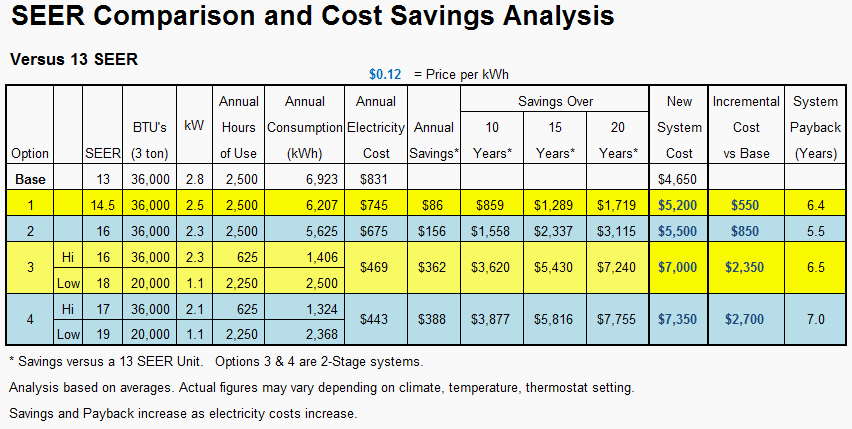
Your Wallet: This is the big one. An older, low-SEER unit could be costing you a small fortune every summer. Upgrading to a higher SEER system can lead to significant savings on your energy bills year after year. We're talking hundreds, sometimes even thousands, over the lifespan of the unit. Imagine what you could do with that extra cash! (Maybe finally buy that fancy espresso machine you've been eyeing? Just saying.)
-
Comfort: More efficient units often provide more consistent cooling, leading to fewer hot spots and a more comfortable home overall. They're also often quieter, which is a huge bonus if you're like Mark and your old unit sounds like it's trying to escape the backyard.
-
The Planet: Lower energy consumption means a smaller carbon footprint. So, you're not just saving money; you're also being a good global citizen. High five!
Wait, What's SEER2? The Plot Thickens!
Just when you thought you had SEER figured out, they throw a wrench in the works! Don't panic. Recently, the Department of Energy updated the testing standards, and now we have SEER2. It's essentially the same concept, but the testing methods are more rigorous and designed to reflect real-world conditions more accurately. For instance, the new tests account for things like external static pressure (which means, roughly, the resistance your AC faces trying to push air through your ducts). This wasn't fully considered in the original SEER tests.
So, a 13 SEER unit isn't necessarily equivalent to a 13 SEER2 unit. The SEER2 number for the *same physical unit* will typically be a bit lower than its old SEER rating, even though its efficiency hasn't changed. It's just a different, more realistic way of measuring it. When you're shopping for new equipment now, you'll primarily be seeing SEER2 ratings, especially in the US.
What's a "Good" SEER Rating, Anyway?
This is where it gets a little nuanced. The minimum SEER (or SEER2) rating for new AC units varies by region. For example, in the northern US, the minimum might be 13 SEER2, while in the warmer southern states, it's often 14 or 15 SEER2. Generally, anything in the 16-18 SEER2 range is considered high-efficiency and a fantastic sweet spot for many homes.
You can find units with SEER2 ratings well into the 20s, which are super-efficient. However, they also come with a higher upfront cost. It’s a bit like buying a car with mind-blowing MPG – it might cost you more initially. You have to weigh the initial investment against the long-term energy savings. If you're planning on staying in your home for decades, investing in a really high SEER2 unit might pay off big time. If you're moving in a few years, maybe a mid-range high-efficiency unit is your best bet.
Beyond the Numbers
While SEER is a critical factor, remember it's just one piece of the puzzle. Proper installation, good insulation in your home, and regular maintenance of your unit are all vital for achieving optimal efficiency and comfort. Even the highest SEER-rated unit will underperform if it's installed incorrectly or your attic insulation is practically non-existent. (Trust me, Mark found that out too).
So, next time you're sweating over your utility bill or considering a new AC unit, don't just pick one at random. Ask about the SEER rating, understand what it means for your wallet and comfort, and make an informed decision. Your future self (and your bank account) will thank you for it!