Hey there! Grab a mug, settle in. You know when you're looking at a new air conditioner, or maybe just trying to figure out if your old one is slowly draining your bank account? You see all these letters and numbers: BTU, AFUE… and then there's SEER. Sounds kinda mysterious, doesn't it? Like some ancient HVAC deity or a secret agent code. Well, trust me, it’s not that dramatic, but it is super important for your comfort and your wallet. Let's peel back the layers, shall we?
So, What's the Deal with SEER?
Alright, first things first: SEER stands for Seasonal Energy Efficiency Ratio. See? Already less scary, right? Think of it like the miles per gallon (MPG) for your car, but for your air conditioner instead. When you're buying a car, you want a higher MPG because it means you'll spend less on gas. Same exact principle here. A higher SEER number means your AC unit is more efficient. Simple as that!
Basically, it measures how much cooling your AC unit provides for every unit of electricity it uses, but over an entire cooling season. And that "seasonal" part? That's key! It’s not just about how it performs on one perfect 80-degree day, but how it holds up through scorching July heatwaves, milder spring afternoons, and everything in between. It gives you a much more realistic picture of its year-round efficiency.
Why Should You Even Care About a Bunch of Letters?
Oh, my friend, you should care a lot. Why? Because SEER directly impacts two of your favorite things: your comfort and your utility bills. A higher SEER unit uses less energy to achieve the same cooling effect. And what does less energy usage translate to? You guessed it: lower electricity bills. Boom! Imagine saving a noticeable chunk of change every single month. That's more money for lattes, or that concert ticket, or... well, whatever floats your boat!
Plus, let's be honest, nobody wants to sweat through August. A more efficient unit often means more consistent cooling, less strain on the system, and generally a happier, cooler home. It’s like the difference between a sputtering old jalopy and a smooth, reliable ride. Which one would you rather have?
Breaking Down the Ratio (and Meeting SEER2!)
Let’s get a tiny bit technical, but I promise we won't stay here long! The ratio is the cooling output (how much cool air it pumps out, measured in BTUs) divided by the electrical energy input (how much electricity it chews through, measured in Watt-hours). So, a higher number means you're getting more bang for your buck. More cooling, less electricity. It's the HVAC version of a superhero!
Now, you might also hear about SEER2. What’s that all about? Think of it as SEER's slightly more accurate cousin. SEER2 became the new standard (as of January 1, 2023) because it uses a more stringent testing procedure that better reflects real-world performance. So, if you see an AC unit with a SEER2 rating, you know it's even more reliable in predicting how it'll perform in your actual home, with all its dusty ducts and varying temperatures. More realistic, basically!
What's a "Good" SEER Number?
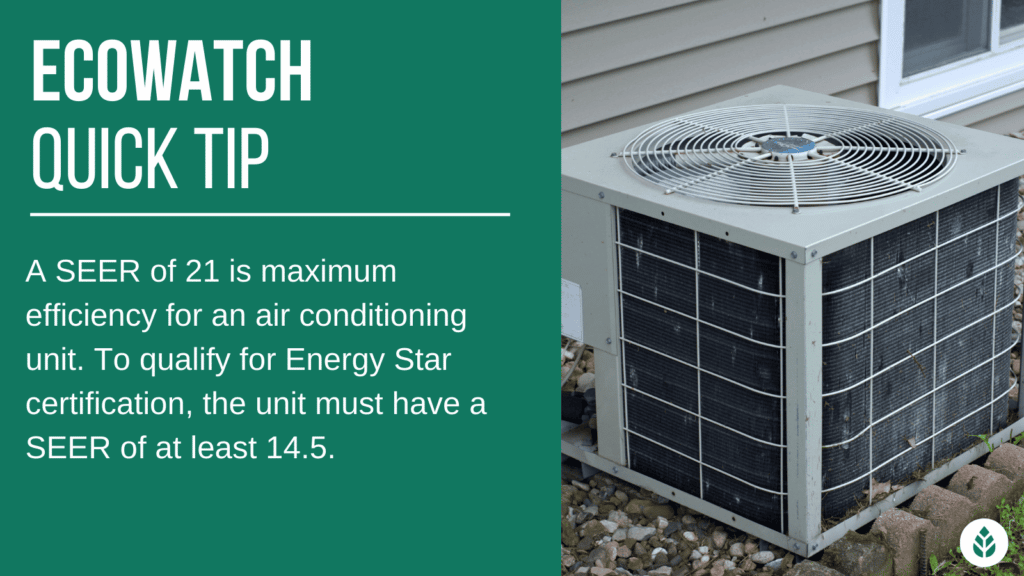
That's a fantastic question! For residential units, the minimum SEER rating has changed over time. It used to be 13, then 14 in some regions. With SEER2, the minimums shifted again. So, anything above those minimums is going to be more efficient. Units can go way up, into the high teens, twenties, and even beyond! Some fancy inverter-driven systems can hit SEERs in the high 20s or even 30s. Wild, right?
Do you need the absolute highest SEER possible? Not necessarily! It's kind of like buying a car. An ultra-efficient hybrid might be amazing, but if you only drive a few miles a day, the extra upfront cost might not pay off quickly. The sweet spot for you will depend on where you live (how hot does it really get?), how long you plan to stay in your home (to recoup the initial investment), and your budget. A higher SEER unit usually costs more upfront, but it pays for itself over time through those glorious energy savings. It's a balancing act!
More Than Just a Number
Okay, one last thing. While SEER is super important, it’s not the only piece of the puzzle. A high-SEER unit won't perform optimally if it's installed incorrectly, if your ductwork is leaky, or if your home isn't properly insulated. Even a fancy race car won't win if the driver doesn't know how to steer, right? So, always make sure you're getting a quality installation from a reputable technician. They can also advise you on the best SEER rating for your specific home and climate. Don't be afraid to ask questions!
So, the next time you hear someone mumble about SEER, you can nod knowingly, maybe even drop a few wisdom bombs. It's not just a cryptic abbreviation; it's your ticket to a cooler home, a lighter wallet, and a slightly greener footprint. Pretty cool, huh? Now, about that refill…