Hey there, welding newbie or curious cat! Ever wondered about the differences between resistance welding and forge welding? Well, pull up a virtual chair, and let's dive in. Think of it as comparing a microwave to a blacksmith's forge – both cook (or, well, weld) things, but in vastly different ways. And while I admire a good blacksmith as much as the next person, sometimes you just need that quick, easy button to push.
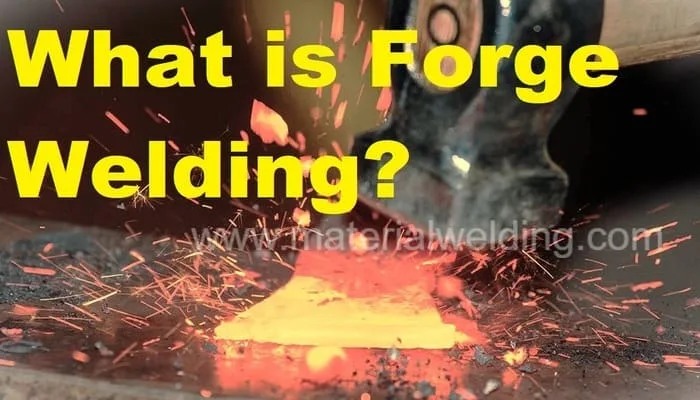
Let’s talk about forge welding first. Imagine a burly blacksmith, heating metal red hot in a fiery forge, then hammering away like they're single-handedly rebuilding the world! Forge welding involves heating two pieces of metal to a seriously high temperature – we're talking "glowy orange" territory – and then, with a whole lot of muscle and carefully shaped tools, smashing them together until they fuse. It’s an ancient art, beautiful and impressive, but… let's just say it has some drawbacks in today's fast-paced, automated world.
Resistance Welding: The Modern Marvel
Now, enter resistance welding. Think of it as the *smart* kid in class. It uses electricity – lots of it – to generate heat *directly* at the point where you want to join the metals. Instead of heating the entire piece, you're focusing the energy like a laser (though, no lasers involved, sadly – maybe in the future!). Pressure is applied *while* the electricity is flowing, and boom! You've got a weld. It's precise, it's efficient, and it's generally a lot less… blacksmith-y.
So, what advantages does resistance welding have over its older, more muscular cousin, forge welding? Glad you asked!
Speed Demon
First off, speed. Resistance welding is *fast*. Like, "blink and you'll miss it" fast. We're talking fractions of a second in some cases. Forge welding, on the other hand, requires heating, hammering, reheating (probably), more hammering… you get the picture. It's a labor of love, but not exactly efficient when you need to churn out thousands of parts an hour.
Precision Power
Secondly, precision. With resistance welding, you can control exactly where the heat is applied and how much. This means you get consistent, repeatable welds, even on small or intricate parts. Forge welding? Well, it’s more of an art than a science. There’s skill involved, absolutely, but consistency can be a challenge. Imagine trying to bake a cake the same way every time… without measuring cups!
Automation Ace
Thirdly, automation. Resistance welding is perfect for automated production lines. Robots can be programmed to perform resistance welds with incredible accuracy and speed. Try programming a robot to swing a hammer accurately and consistently. I’d pay to see that, but I also wouldn’t trust it to build my car! The point is, resistance welding lends itself much easier to modern mass production.
Cleanliness Counts
Fourth, cleanliness. Resistance welding is generally a cleaner process. There's no need for flux (a substance used to prevent oxidation in some welding processes), and there’s minimal spatter. Forge welding, while visually dramatic, can be a bit messy, with flying sparks and the inevitable need for cleanup.
Less Skill Required (Relatively Speaking!)
Okay, before all the blacksmiths come after me with their hammers, let me clarify. All welding requires skill! But resistance welding, particularly in automated setups, is generally easier to learn and operate than forge welding. You don’t need years of experience to get decent results with resistance welding equipment (though, proper training is always a must!). Forge welding, on the other hand, is a true craft that takes dedication and practice.
Think of it this way: anyone can press a button on a microwave, but only a seasoned chef can create a culinary masterpiece in a wood-fired oven. Both get the job done, but one requires significantly more expertise.
The Takeaway
So, there you have it! Resistance welding offers significant advantages over forge welding in terms of speed, precision, automation, cleanliness, and ease of learning. While forge welding remains a respected and beautiful art form, resistance welding is the workhorse of modern industry. It’s the quick, reliable, and efficient choice for mass production and consistent results.
Ultimately, both methods have their place. But for modern manufacturing, resistance welding is the undisputed champion. Now go forth and weld something… safely, of course!