Ever flick a light switch or plug in your phone charger without a second thought? Most of us do! We live in a world powered by electricity, yet how many of us truly understand the silent workhorse behind it all: watts? Diving into "watts needed to run a house" isn't just for electricians or engineers; it's a surprisingly fun and incredibly practical journey into understanding your home, your energy use, and even your wallet. Think of it as peeling back the curtain on the invisible energy that keeps your life humming along!
At its core, understanding watts helps you grasp how much power your gadgets and appliances consume. A watt is simply a unit of power, telling you how much energy an electrical device needs to operate at any given moment. For example, a 100-watt light bulb uses 100 watts when it's on. The real benefit here is empowerment. Knowing about watts allows you to make informed decisions. You can pinpoint energy hogs, appreciate the efficiency of modern tech, and even troubleshoot why a circuit breaker might trip (it’s often about too many watts!). It’s like having an x-ray vision for your home's energy flow, leading to smarter choices that can save you money on your electricity bill and even reduce your environmental footprint.
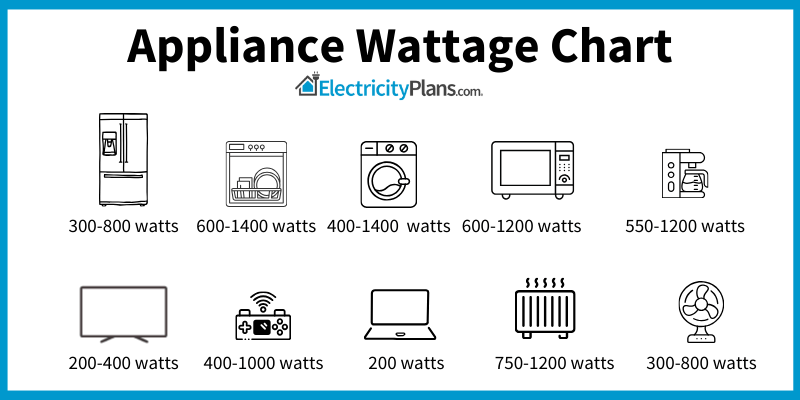
This knowledge isn't just abstract; it pops up everywhere! In daily life, you see wattages listed on almost every appliance, from the tiny 5-watt phone charger to the hefty 1500-watt microwave. When you’re shopping for a new refrigerator, you might compare its annual kilowatt-hour (kWh) usage – which is just watts over time – to pick an energy-efficient model. Ever wondered why your space heater can only be plugged into certain outlets? It’s often because of its high wattage, and the circuit it’s on has a limit to prevent overheating. In an educational context, understanding watts is foundational for physics students learning about electricity and power. It also plays a key role in environmental science, helping us calculate carbon emissions linked to energy consumption, or in basic math classes where students can calculate the cost of leaving a TV on all day. It brings abstract concepts to life in a tangible, home-based way.
Ready to become a watt-watcher yourself? It’s surprisingly easy and super interesting! One of the simplest ways to explore is to grab an inexpensive gadget called a Kill-A-Watt meter (or similar energy monitor). You plug your appliance into it, and then plug the meter into the wall, and it will tell you exactly how many watts that device is currently drawing. It’s fascinating to see how much power your TV uses when it’s on versus in standby mode! Another easy tip: walk around your home and simply read the labels on your appliances. Most will clearly state their wattage. Make a list! Compare a hair dryer to a laptop, or an old incandescent bulb to a new LED. You’ll quickly start to develop an intuitive sense of what's "a lot" and "a little" in the world of electricity. Start small, get curious, and you’ll soon be seeing your home's energy landscape in a whole new, empowered light!