Alright, snow day warriors! When those fluffy white flakes start to dance, our inner child might scream with joy. But our sensible adult brain whispers, "Uh oh, driving time!" Fear not, intrepid motorists, because navigating a winter wonderland on wheels can totally be your superpower. Let's make you the snow-driving hero of your dreams!
Forget the scary stories you've heard about icy roads and slippery slopes. We're here to sprinkle some simple, golden advice that will have you gliding (safely!) through the snow like a majestic polar bear on roller skates. Well, maybe not roller skates, but definitely with confidence and a twinkle in your eye.
Gearing Up for Glory: Prep Like a Pro!
1. Give Your Tires a Big Hug (and a Check-up!)
Your tires are your car's best friends, especially when the ground turns into a giant slippery sheet of ice. Think of them as your car's superhero boots! Before you even think about venturing out, give those trusty round rubber buddies some love.
Are they looking a bit bald? Like a worn-out sock? Bald tires are a big no-no in the snow; they just can't grip. You want those deep grooves, called treads, ready to bite into the snow like a hungry monster truck.
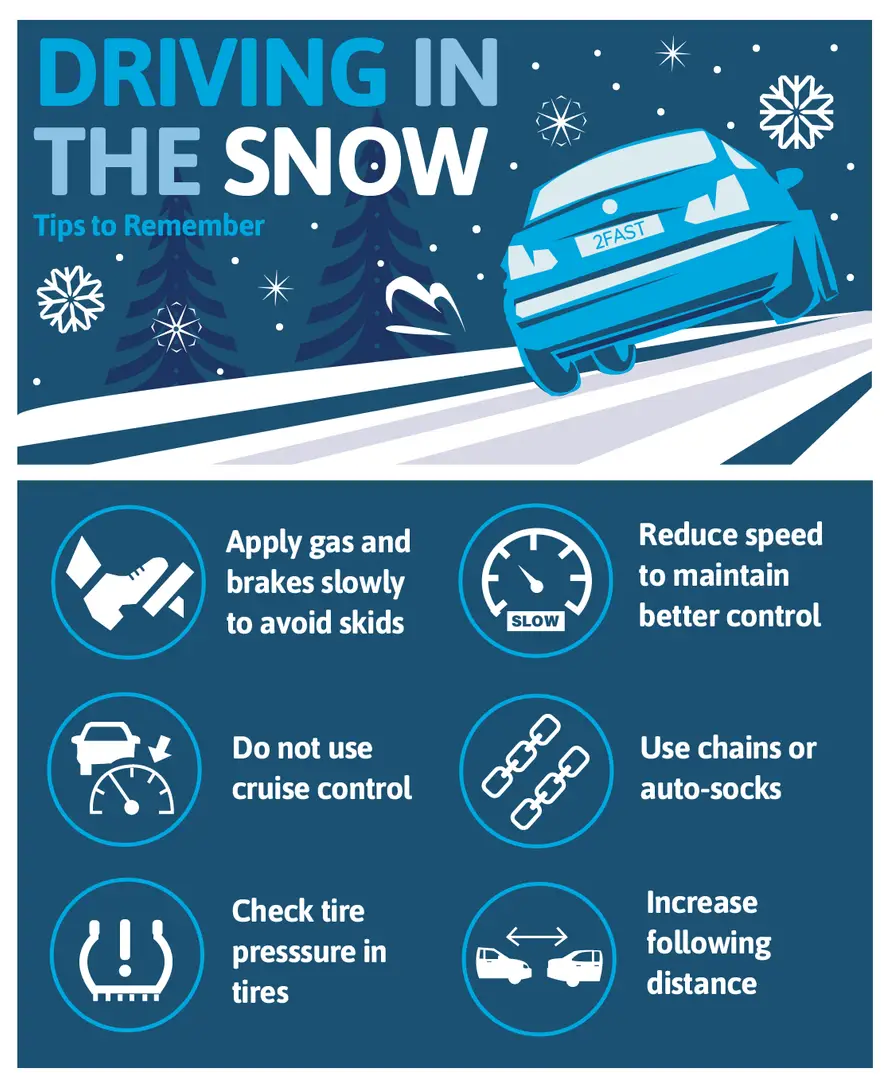
Check your tire pressure too! Cold weather makes air shrink, so your tires might be feeling a bit deflated. Proper inflation helps them perform their best, giving you maximum traction. It's like making sure your superhero boots are tied tight!
And if you really want to level up your winter driving game, consider winter tires. These aren't just for show; they're like special ninja shoes designed specifically for snow and ice. They grip, they grab, they conquer!
Regular all-season tires are fine for light snow, but winter tires have a magical rubber compound that stays softer in the cold. This gives you superior grip when it really counts. They’re worth every penny for that peace of mind!
Imagine trying to run on ice in regular sneakers versus spiked ice-climbing boots. That’s the difference! So, show your tires some love, and they’ll return the favor by keeping you safely on the road.
2. Banish the Snow Hat! Clear Your Ride Completely
Remember that cool snowman you built on your car roof last night? Well, it's not so cool when it flies off and blinds the poor soul driving behind you. This is a biggie: clear every single inch of snow and ice from your vehicle.
We're talking windshield, all windows, headlights, taillights, and especially that snowy lump on the roof. Think of your car as a giant, important eye that needs to see perfectly. And you don't want to be accidentally pelting fellow drivers with frozen chunks of snow!
Grab a good brush and scraper, maybe even a small shovel for the bigger drifts. Make sure your mirrors are clear too. You want a full 360-degree view, like an eagle soaring over the mountains, not a confused owl peeking through a peephole.
"A fully cleared car isn't just polite; it's the law and a cornerstone of safe winter driving!"
3. Pack an Emergency Kit: Your Winter Survival Stash!
This isn't about doomsday prepping; it's about being a savvy snow traveler. Imagine you're on a mini-adventure; what would your trusty sidekick bring? A blanket, some snacks, and maybe a tiny shovel, right?
Your car's emergency kit should include essentials like a warm blanket (or two!), extra hats and gloves, a flashlight with fresh batteries, and a phone charger. Seriously, a dead phone in a chilly situation is not a party.
Don't forget some non-perishable snacks like granola bars or trail mix. A small bag of sand, cat litter, or even a cardboard mat can be a lifesaver if your tires get stuck and need some grip. Jumper cables are always a smart move too!
On the Road: The Art of Snow-Driving Zen!
4. Slow Down, Buttercup, Seriously!
This is probably the most crucial tip, so let's shout it from the snowy rooftops: SLOW DOWN! Pretend you're driving a delicate teacup full of warm cocoa, and you absolutely cannot spill a drop. Your speedometer should look like it's taking a nice, long nap.
The speed limit is for dry pavement, folks. In snow and ice, it's just a suggestion, and a bad one at that. Halve your usual speed, or even more. Think tortoise, not hare.
Every single thing takes longer in the snow: accelerating, turning, and especially stopping. Give yourself an enormous buffer of time. You're not trying to win a race; you're trying to arrive safely and perhaps enjoy the frosty scenery.
"In the snow, patience is your co-pilot, and slowness is your superpower."
5. Gentle Everything: The Feather-Light Touch
Imagine you're trying to sneak past a sleeping dragon. You wouldn't stomp, would you? Similarly, in snow, every action needs to be gentle. Think soft, smooth, and oh-so-delicate.
Accelerate like you're trying to hatch an egg without cracking it. Brake like you're trying to whisper "whoa" to your car. Steer like you're guiding a butterfly. Sudden moves are the enemy here; they can easily make your tires lose their precious grip.
No sudden jerks of the steering wheel, no stomping on the gas pedal, and absolutely no slamming on the brakes. Smooth inputs are the secret handshake for driving safely on slippery surfaces. Your car will thank you, and so will your nerves.
6. Give Yourself Acres of Space: Increase Following Distance
Remember the "three-second rule" for following distance? Well, in snow, that rule got swallowed by a Yeti and now it's the "six-second rule," or even more! You need what feels like an absurd amount of space between your car and the one in front of you.
Stopping on snow and ice takes significantly longer. If the car in front suddenly slams on its brakes (and someone always does!), you need ample time and distance to react. Pretend there's an invisible force field around your car that extends way out.
This extra space isn't just for stopping; it gives you more time to react to anything unexpected. It's like having your own personal safety bubble, letting you breathe easy and drive with less stress. Be generous with your space!
7. Be a Seer: Look Far Ahead!
In snow, you need to develop a bit of a psychic ability, or at least excellent foresight. Don't just look at the car directly in front of you; scan much further down the road. What's happening three, four, five cars ahead?
Are brake lights flashing way down the line? Is there a patch of dark, suspicious-looking ice? The earlier you spot potential hazards, the more time you have to adjust your speed and course with those lovely gentle inputs we talked about.
Think of yourself as a super-observant owl, rotating its head to take in the entire snowy landscape. Anticipation is your best friend. It allows you to plan your moves and avoid sudden reactions, which are kryptonite on slippery roads.
8. Braking Smarts: ABS vs. the Old School Pump
If your car has Anti-lock Braking System (ABS) (most modern cars do!), it's your friend. When you need to brake firmly, press down steadily and let the car do its magic. You might feel a pulsing sensation in the pedal and hear some grinding noises – don't panic! That's ABS working its wonders, preventing your wheels from locking up.
If you have an older car without ABS, the old technique of "pumping the brakes" (applying firm pressure, releasing slightly, then reapplying) can help. But generally, the best advice is to brake gently and progressively, well before you absolutely need to stop.
Remember, the goal is always to reduce your speed *before* you need to brake hard. Braking should be a smooth, controlled decrease in speed, not an emergency stop. Practice gentle braking in a safe, empty snowy parking lot if you can!
9. No Cruise Control: It's a Trap!
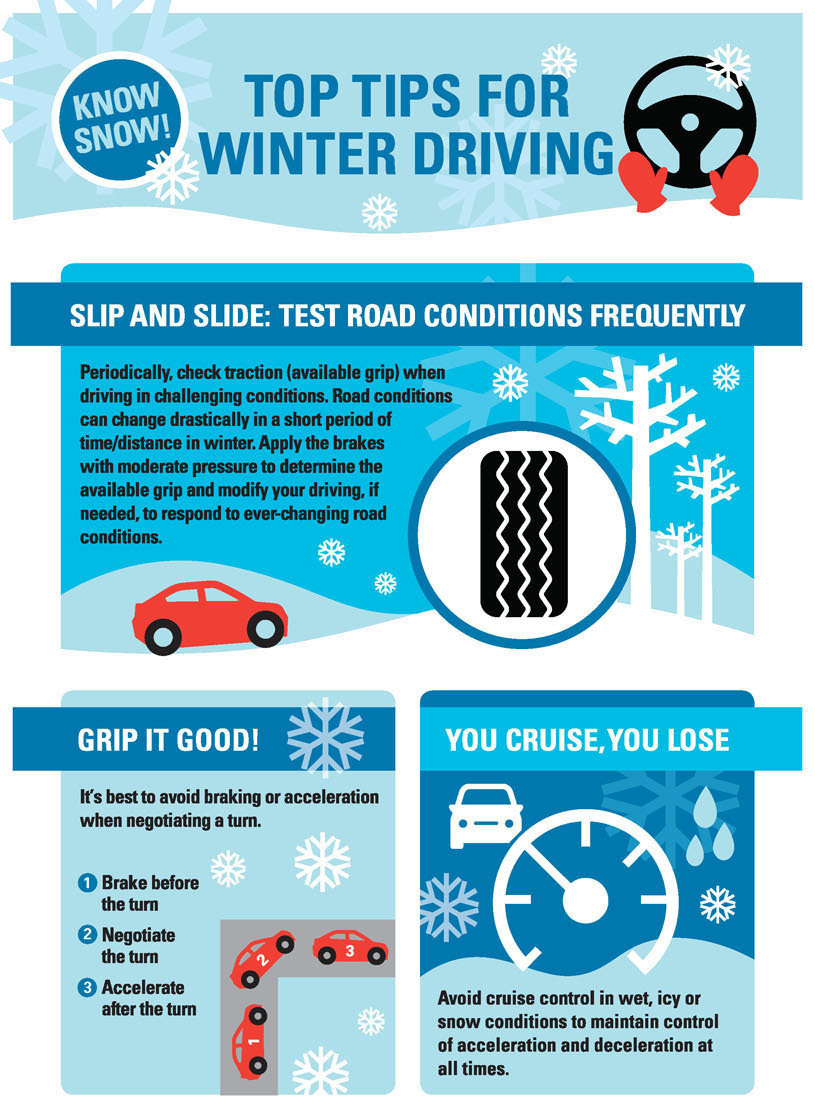
Repeat after me: "Cruise control and snow do not mix." Ever. Not even for a second. While cruise control is great for long, boring highway stretches on dry roads, it can be downright dangerous in slippery conditions.
If your car hits a patch of ice or deep snow while on cruise control, it might try to maintain its set speed by accelerating, which can easily lead to a loss of traction and a scary skid. You want to be in full, immediate control of your speed and power.
Keep your foot ready on the accelerator and brake. Your brain is much better at sensing subtle changes in road conditions than your car's computer in these specific scenarios. So, hit that "off" button and stay present.
10. Skid Happens: Stay Calm and Steer!
Okay, deep breaths! If your car starts to skid, it can be a heart-pounding moment. The absolute key is to stay calm and resist the urge to slam on the brakes or yank the steering wheel. That's usually what makes things worse.
The golden rule for skids is to "steer into the skid." This means if the rear of your car is sliding to the left, gently steer the front of your car to the left. If it's sliding right, steer right. Look where you want the car to go, and gently point the front wheels that way.
Ease off the accelerator and don't touch the brakes initially unless you're steering out of the skid and need to slow down gently once traction returns. It takes practice and a cool head, but knowing this simple principle can be a lifesaver.
11. Be a Lighthouse: Turn On Your Lights!
Even if it's broad daylight, if there's snow falling or snow on the ground, turn on your headlights! We're not just talking about seeing; we're talking about being seen. Snow acts like a giant white camouflage blanket.
Your taillights are just as important as your headlights, making you visible to drivers behind you. Use your low beams; high beams can actually reflect off the snow and make it harder for you to see. Think of yourself as a friendly beacon in the snowy landscape.
Don't just rely on automatic settings; manually switch them on. Fog lights (if you have them) can also be helpful for improving visibility close to your car in heavy snow, but remember to turn them off when conditions improve.
12. The Ultimate Tip: Don't Drive If You Don't Have To!
Here's the most powerful snow-driving tip of all: if the weather is truly nasty, the roads are treacherous, and your trip isn't absolutely essential, then stay home! Seriously, sometimes the best snow driving is no driving at all.
Curl up with a hot chocolate, binge-watch your favorite show, build a fort, or tackle that book you've been meaning to read. There's no shame in admitting that some days are just meant for cozy indoors activities. Your safety is worth more than any errand.
So, there you have it, future snow-driving champions! With a little prep, a gentle touch, and a healthy dose of common sense, you'll be navigating those winter roads like a pro. Stay safe, stay warm, and maybe enjoy a little extra hot cocoa!