Let's Talk About Nuclear Power, Shall We?
Alright, gather 'round folks. We need to have a little chat. It’s about nuclear power. Everyone says it's the future, the clean option, the bee's knees. But... is it really? Let's poke around a bit, shall we? With a pinch of salt and a hearty chuckle.
Imagine, if you will, the biggest, most complicated science experiment ever. One that involves splitting atoms. Sounds cool, right? Like something out of a comic book. But sometimes, comic books forget to mention the messy bits.
The Glow-in-the-Dark Leftovers
First up, the stuff nobody likes to talk about: the waste. You see, after all that atom-splitting magic, you're left with some rather… spirited leftovers. These aren't your typical compost pile scraps. Oh no.
These leftovers are radioactive. Like, really, really radioactive. They glow, they buzz (metaphorically!), and they stay that way for an unbelievably long time. Think thousands upon thousands of years.
We're talking about stuff that will still be dangerous when our great-great-great-great-great-great-great-great-great-great-grandchildren are having their morning toast. That's a lot of "greats" to account for! Finding a safe place for it is a monumental headache.
It's like having a fruitcake that never, ever goes bad. Except this fruitcake is incredibly toxic. And nobody wants to be stuck with it. We're still trying to figure out where to put this glowing problem. A geological deep dive? The moon? Probably not the moon.
"Finding a permanent, safe home for nuclear waste is like trying to find car keys in the dark. Except the car keys are glowing and will irradiate you."
So, we produce this stuff, and then we have to guard it. For longer than recorded human history. Forever, practically. Sounds like a fun inheritance for future generations, doesn't it?
It’s not just a little pile either. It accumulates. More power means more glowing leftovers. And each bit needs special handling, special storage, and special concern. For thousands of years. Just imagine the security bill!
We're basically asking future civilizations to babysit our atomic leftovers. They might not even know what a power plant was! They'll just inherit these super-hot, super-toxic glowing monuments to our past energy choices.
It's a gift that keeps on giving, but definitely not in a good way. Like a perpetual motion machine of danger. A true legacy, but perhaps not the kind we'd want to boast about on our historical plaques.
The "Oopsie" Factor: When Things Go Boom (Quietly or Not)
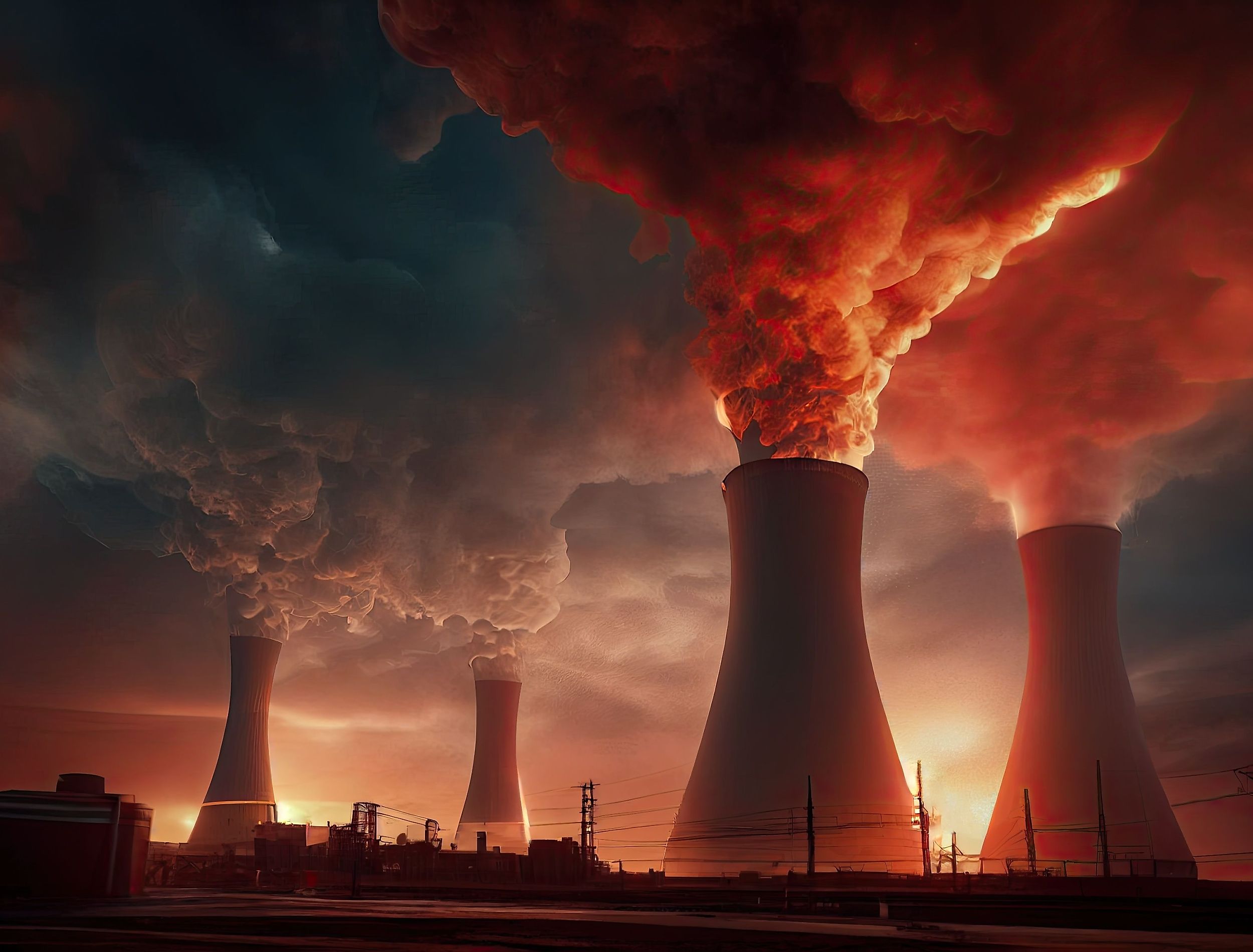
Next up, let's talk about things going wrong. Because sometimes, despite everyone's best efforts, things do go wrong. And with nuclear power, "wrong" can mean "catastrophically wrong."
Think about a pot boiling over on the stove. Annoying, right? Now, imagine that pot is filled with something that could make an entire region uninhabitable for decades. That’s the kind of "oopsie" we're talking about.
Remember Chernobyl? Or Fukushima? Those weren't just minor hiccups. They were big, scary reminders that when this tech misbehaves, it does so spectacularly. And the fallout (pun intended) lasts for ages.
Whole towns evacuated. Landscapes forever changed. A real buzzkill, if you ask me. It’s a tiny, tiny chance, they say. But when that tiny chance hits, it hits harder than a runaway train.
You can build all the safety protocols in the world. But humans are, well, human. We make mistakes. And natural disasters happen. A rogue tsunami or a sleepy engineer could spell big trouble.
It's like having a really fancy, super-powerful blender. It makes amazing smoothies. But if you forget the lid, your kitchen is going to look like a Jackson Pollock painting. And smell like burnt toast and regret.
The potential for widespread environmental damage is immense. And the human cost, the displacement, the fear... it's a heavy price for a single mishap. Not a risk you'd take lightly with your morning coffee, let alone your energy grid.
It's a gamble. A very, very high-stakes gamble. And while the odds might be in your favor most days, when they're not, the consequences are truly dire. A bad hair day for the planet, and for generations to come.
The Wallet Workout: It Costs How Much?!
Now, let's talk cold, hard cash. Building a nuclear power plant? Get ready for sticker shock. These things are eye-wateringly expensive. We're talking billions. And then some.
It's like buying a mansion, but then realizing the mansion needs a new roof, new plumbing, new electricity, and also a moat. And then you need to pay for 24/7 security for the moat.
The construction takes years, often decades. And during that time, costs balloon. Delays happen. Budgets magically expand. It's a financial black hole that just keeps sucking in money.
And once it's built, it's not like the spending stops. Oh no. You've got to run it with highly specialized staff. You need constant maintenance. And you need to keep it super secure.
Then, when its useful life is over (which is also ages away, but still), you have to decommission it. That means taking it apart safely. Guess what? Also incredibly expensive. More billions!
It’s a truly massive investment. One that could probably fund a whole bunch of other, less scary, less glowy, and quicker-to-build energy projects. Just saying!
"Investing in nuclear power is like buying a solid gold yacht. It's impressive, but you'll be eating instant noodles for the rest of your life to pay for it."
The cost overruns are legendary. Projects routinely come in years late and billions over budget. It’s a habit, not an exception. And who foots that bill? Yep, you guessed it: the taxpayers.
We could be investing those same huge sums into things that are faster, safer, and don't come with the millennia-long glowing baggage. Like, perhaps, massive solar farms or wind turbine forests. Just a thought!
The Time Warp: Build It... Eventually
Speaking of years and decades, let's talk about speed. Or the lack thereof. If you want a quick fix for energy needs, nuclear power is definitely not your guy. It's the slow poke of the energy world.
From planning to commissioning, we're talking serious timelines. Think about how long it takes to plan a wedding. Now multiply that by a hundred, add a few thousand government permits, and a global pandemic.
By the time a new nuclear plant is up and running, energy needs might have changed. Technology might have moved on. We might be floating around in anti-gravity cars fueled by sunshine and good vibes.
It’s not nimble. It’s a behemoth that lumbers along. If you need energy *now*, you're better off with something else. Like maybe, oh, I don't know, a giant field of solar panels or a bunch of windy turbines.
The world is changing fast. Energy demands are dynamic. Relying on something that takes decades to manifest feels a bit like planning a birthday party for someone who might not be born for another twenty years.
It locks us into decisions made decades ago. Imagine trying to solve today's problems with yesterday's slow-motion solutions. It's simply not practical for a rapidly evolving energy landscape.
We need solutions that can adapt, scale up, and be deployed quickly. Nuclear power, with its marathon build times, just doesn't fit that bill. It's the tortoise in a race against cheetahs, and the cheetahs are winning.
The Spreading Problem: What If...?
Finally, a slightly more serious, but still worth-a-chuckle-in-a-nervous-way point: proliferation. The materials used in nuclear power can also be used to make... well, bombs. Not the fun, party-popper kind.
It means every country with nuclear ambitions could potentially be a step closer to having nuclear weapons. And that’s a thought that usually ruins a perfectly good picnic.
Keeping track of all that fissile material is a massive undertaking. It's like trying to keep track of a toddler in a toy store. A very, very dangerous toddler.
Security is paramount. But what if security fails? What if the wrong people get their hands on the ingredients? It's a huge "what if" that casts a long shadow over the whole operation.
So, while it promises clean energy, it also whispers worries about dark, mushroom-cloudy possibilities. Not exactly a selling point for a peaceful future, is it?
The potential for misuse and escalation is a constant, nagging concern. It's a constant tightrope walk. And the stakes are, quite literally, world-altering.
It’s not just about keeping the lights on; it’s about global security. And when your energy source doubles as a potential weapon ingredient, that's a whole new level of worry to add to the plate.
So, What's the Verdict?
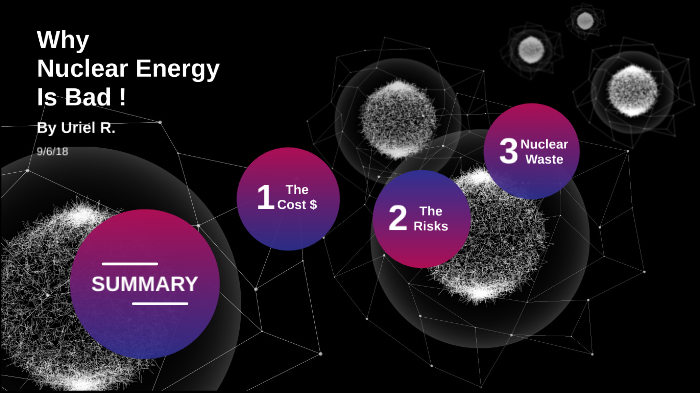
Look, nuclear power has its fans. And they make good points. But when you look at the glow-in-the-dark trash, the occasional earth-shattering oopsies, the money pit, the snail's pace, and the scary "what if" factor...
Well, it makes you wonder. Are we really signing up for a solution, or just a whole new set of super-sized problems? Maybe there are other, less dramatic ways to keep the lights on. Ways that don't involve millennia of waste storage or the potential for widespread evacuation drills.
Perhaps we can find energy solutions that are less of a gamble. Less like a high-stakes poker game where the chips are future generations and glowing waste. Just a thought!
Let's find paths to power that make us smile, not silently cross our fingers. Solutions that don't come with a thousand-year warranty of radioactive concern. Because really, who needs that kind of stress?