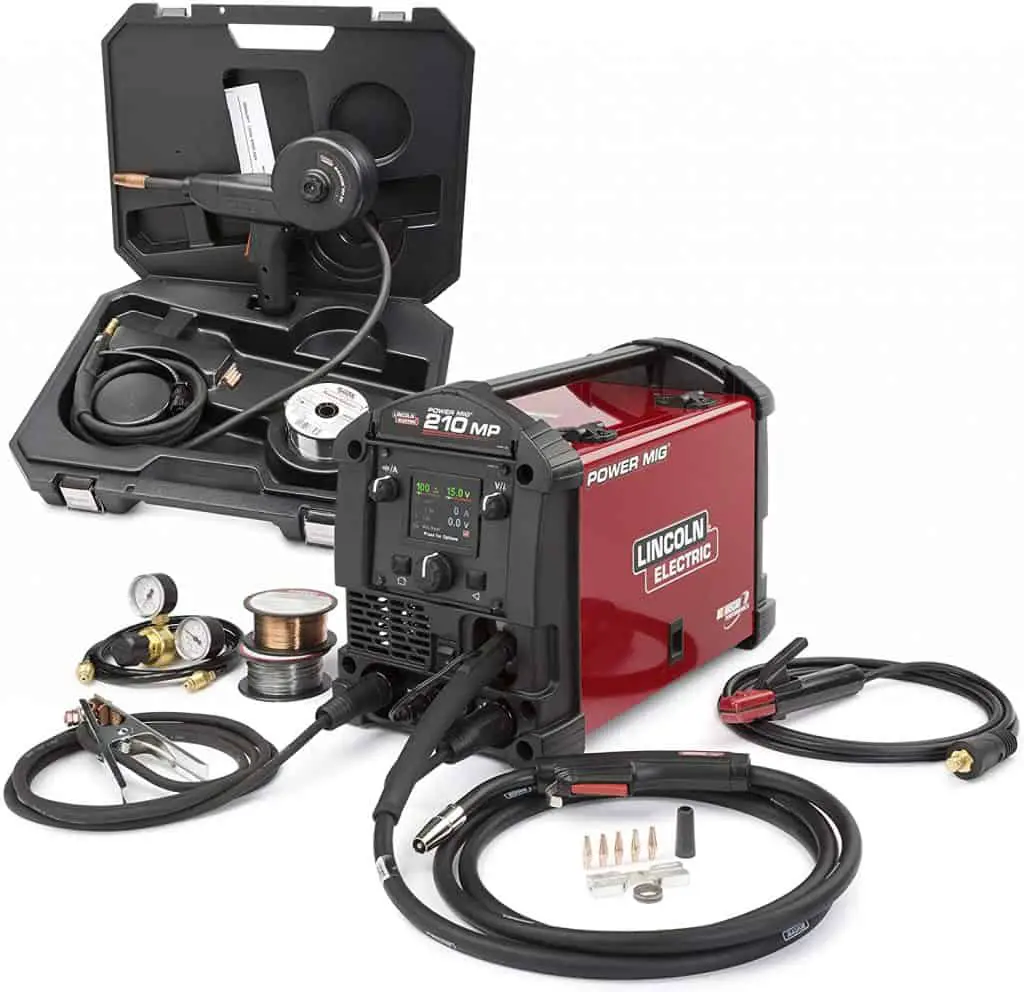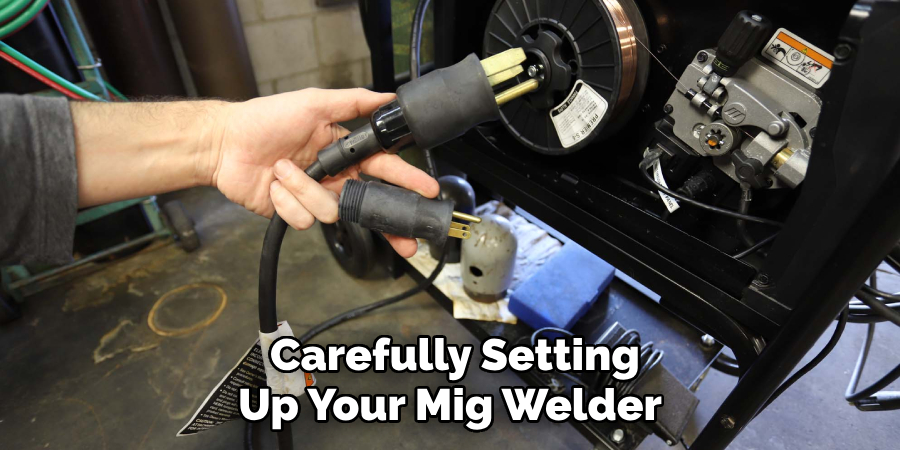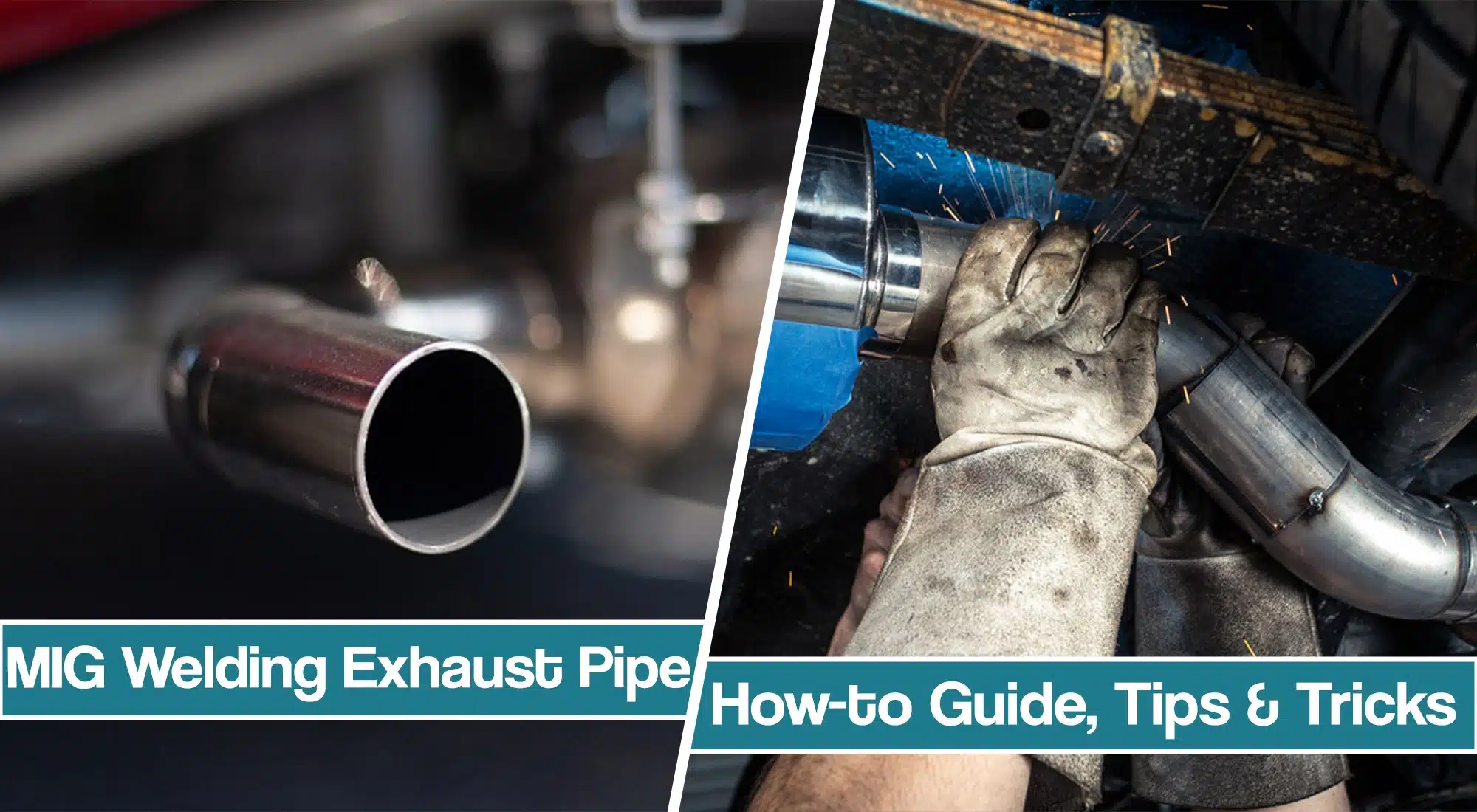
Let's talk about the unsung hero of many a driveway and garage, the silent savior of rattling rides, the magnificent metal mender: the MIG welder for exhaust pipes. Because let's be honest, few sounds are as soul-crushingly awful as that of a dying exhaust system. It’s like your car is trying to communicate its imminent demise through a series of increasingly frantic farts.
One minute you're cruising, windows down, singing along to questionable pop hits. The next, your car sounds like a squadron of angry hornets just moved into its underside. And then comes the dreaded quote from the mechanic, usually delivered with a sympathetic head tilt that screams, "Prepare your wallet for a financial colonoscopy." But what if I told you there’s a way to silence those metallic protests and save enough cash for, say, a small tropical island getaway? (Okay, maybe a really nice dinner, but still!)
Why MIG is Your Exhaust Pipe's Best Friend
Now, you might be thinking, "Welding? Isn't that for burly dudes who build battleships?" And sure, TIG welders are like the surgeons of the metal world, capable of exquisite, delicate work. Stick welders are the lumberjacks, throwing sparks like confetti at a heavy metal concert. But for exhaust pipes, you want the Goldilocks of welding: just right. And that, my friends, is where the MIG welder (Metal Inert Gas) steps in.
MIG is the friendly, approachable uncle of the welding family. It’s significantly easier to learn than TIG, and far more forgiving than stick, especially when you're dealing with the notoriously thin metal of an exhaust pipe. Trying to stick weld an exhaust is like trying to nail jelly to a tree – you'll mostly just make a mess and burn through everything. MIG, on the other hand, is like a hot glue gun for metal. Point, squeeze, and make magic. Well, almost.
It uses a continuous wire feed and a shielding gas (usually a mix of argon and CO2) to protect your weld from contaminants. Think of that gas as an invisible force field, keeping oxygen and other nasty bits from ruining your beautiful bead. This means cleaner, stronger welds, which is exactly what you need when you're attaching something that's going to be rattling around under your car, exposed to all the road grime and existential angst of a Monday morning commute.
Pre-Weld Prep: More Important Than Your First Date Outfit
Before you even think about firing up that beautiful beast, a crucial, often skipped, and eternally messy step: preparation. If you skimp here, your weld will be weaker than a kitten after a marathon. Trust me, I once tried to weld over rust and paint – my "weld" looked like a pigeon had sneezed on the pipe, and it lasted about as long as a New Year's resolution.
First, safety. Don't be a hero. Get yourself a good welding helmet (auto-darkening is a game-changer), some thick gloves, and fire-resistant clothing. You're about to play with molten metal hotter than the surface of the sun (okay, slight exaggeration, but really hot – we're talking arc temperatures around 6,000°C or 10,000°F!). You want to look like you're about to defuse a bomb, not just fix a pipe.
Next, the grunt work: cleaning. Grab a wire brush, an angle grinder with a wire wheel, or even some sandpaper. You need to get rid of every spec of rust, paint, dirt, and the ghosts of forgotten roadkill. You want shiny, bare metal where you're going to weld. This is non-negotiable. Seriously. Your weld will thank you by not falling off at the first bump.
Finally, fit-up. Make sure your pipe pieces are as snug as two peas in a pod. The less gap you have, the easier your welding life will be. If there's a big gap, you're just going to burn through, creating more holes than you started with. We call that the "Swiss cheese effect," and it’s not what we're going for.
The Spark Show: Mastering the MIG
Alright, helmet down, gloves on, welder humming. This is where the magic happens. Your MIG welder will have a couple of dials: wire speed and voltage. These are like the volume and bass controls of your metal-joining symphony. Too much voltage, and you'll blow holes. Too little, and your wire will just stutter and create cold, lumpy welds. Most welders come with a chart for common metal thicknesses, so start there!
When you pull the trigger, you'll hear that glorious, satisfying sizzle. It sounds like bacon frying, but with more sparks. That's the sound of success (or at least, potential success). For exhaust pipe's thin metal, you'll want to use a technique called tacking. Think of it as putting little spot welds around the joint, just enough to hold it in place without overheating. Once it’s tacked, you can go back and fill in the gaps with small, controlled passes.
You’re essentially drawing with sparks, pushing your weld puddle along. You can do little circles, whips, or just a steady pull. The key is to keep moving to avoid burning through. The average exhaust pipe is made from steel that's often around 1.5mm (0.06 inches) thick, sometimes even less! It's super easy to burn through if you linger too long. If you start seeing a bright red hole appear, pull away, let it cool, and adjust your settings or technique. It happens to the best of us!
The Glorious Aftermath
Once you’re done, you'll have a slightly scorched, perhaps not entirely beautiful, but hopefully structurally sound weld. Give it a gentle tap with a chipping hammer to knock off any slag (the glassy bits that form on top) and admire your handiwork. You can grind it down if you want it smoother, but for an exhaust, functionality usually trumps aesthetics. A quick coat of high-heat exhaust paint will make it look professional and help prevent future rust.
Then comes the moment of truth: starting the car. The engine rumbles to life, and instead of a thunderous cacophony, you hear... a normal, healthy exhaust note. That, my friends, is the sound of victory. You’ve just saved yourself a bundle, learned a cool new skill, and silenced your car's complaints. Your neighbors will wonder if you finally learned to play the saxophone, or if you've just become a metal whisperer.
So next time your exhaust starts sounding like a broken trombone, don't despair. Grab a MIG welder. You might just find that fixing your own car is not only incredibly satisfying but also a surprisingly entertaining way to spend an afternoon. Just remember the bacon sizzling sound, and you'll be golden (or, well, welded).