Have you ever found yourself scrolling through the news, maybe catching a snippet about energy, and a thought pops into your head: "Wait, is the US actually a net exporter of oil now?" If so, you're not alone! It's one of those head-scratchers that can feel a bit counter-intuitive, especially if you remember a time when energy independence seemed like a distant dream. Let's dig into this fascinating shift, shall we?
What Even is a "Net Exporter," Anyway?
Before we get too deep, let's simplify. Being a net exporter basically means that a country sends out more of a particular product than it brings in. Think of it like a lemonade stand. If you make 100 cups of lemonade and only drink 10 yourself, selling the other 90, you're a net exporter of lemonade. Easy, right? For a long, long time, when it came to oil, the US was definitely on the lemonade-drinking side, bringing in vast quantities from other countries.
From Thirsty Consumer to Global Player: The Great Transformation
For decades, the story of US oil was largely about importation. We drove big cars, our industries boomed, and our demand for energy seemed insatiable. We relied heavily on oil from overseas, and that reliance shaped a lot of our foreign policy and economic anxieties. It felt like we were always keeping an eye on global oil prices, hoping they wouldn't spike and hit our wallets too hard at the gas pump.
But then, something truly remarkable happened. It wasn't an overnight flick of a switch, but a gradual, persistent change that began to reshape the entire energy landscape.
The Shale Revolution: A True Game Changer
The biggest driver behind this transformation? You guessed it: the shale revolution. Sounds fancy, right? In simple terms, it's all about new technologies, primarily hydraulic fracturing (fracking) and horizontal drilling, that allowed us to access vast reserves of oil and natural gas trapped in shale rock formations deep underground. These resources were always there, but we just didn't have the key to unlock them efficiently and economically.
Imagine finding a secret room full of treasure in your house that you never knew about, and then inventing a super-cool gadget that lets you get in there easily. That's kind of what happened with shale. Places like Texas, North Dakota, and Pennsylvania saw an incredible boom in production, turning previously inaccessible deposits into valuable energy sources. It was like the US discovered its own massive, hidden oil garden!
But Wait, There's Nuance! Crude vs. Refined Products
Now, here's where it gets a little more interesting and slightly less straightforward. When we talk about "oil," we're not always talking about the same thing. There's crude oil – the raw stuff that comes out of the ground – and then there are refined petroleum products like gasoline, diesel, jet fuel, and heating oil. The US has some incredible refineries, which are like giant, super-efficient kitchens that turn crude oil into all sorts of useful products.
So, even if the US still imports some types of crude oil (sometimes because our refineries are specifically designed for certain types of crude, or because it's simply more economical for a particular region), we've become a massive exporter of those refined products. We import some crude, process it, and then export the finished goods. Think of it like importing raw coffee beans, roasting them to perfection, and then shipping out your delicious, custom-blended coffee. Pretty cool, huh?
So, Is the US Actually a Net Exporter of Oil?
Okay, drumroll please! The answer is a resounding... yes, when you look at petroleum products in their entirety!
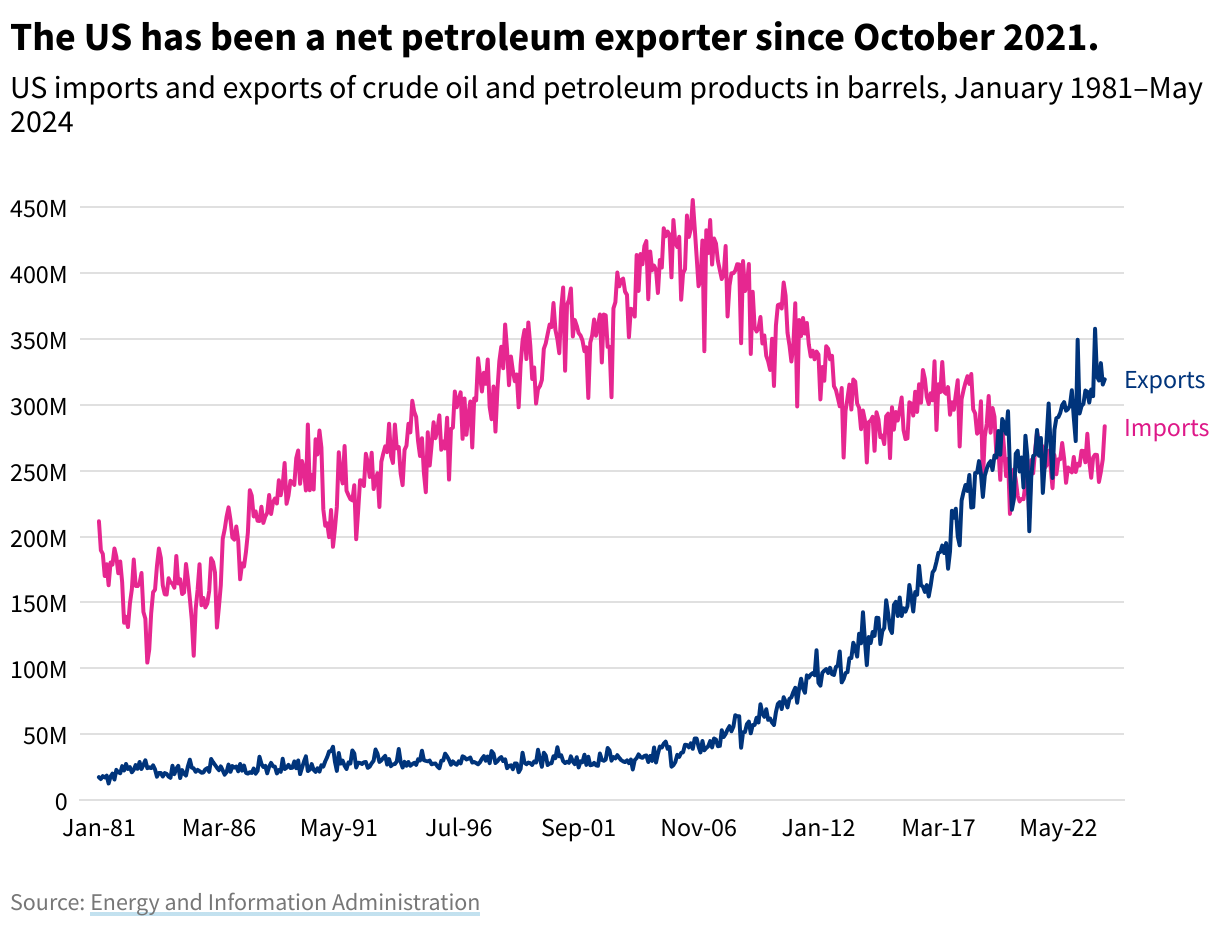
Since late 2019, the US has consistently been a net exporter of total petroleum products (including crude oil and refined products). It's a truly significant milestone. For a while, during the peak of the shale boom, the US was also briefly a net exporter of crude oil itself, but that can fluctuate based on global demand and prices. However, when you combine crude oil and those valuable refined products, the trend is clear: we're sending out more than we're taking in.
It's like going from always having to borrow sugar from your neighbors to suddenly having so much sugar you can share it with the whole block.
Why Is This Such a Big Deal?
Beyond just being a cool fact, this shift has huge implications.
- Energy Independence: It means less reliance on potentially volatile international markets and less vulnerability to disruptions in global supply chains.
- Economic Impact: The oil and gas industry supports millions of jobs and contributes significantly to the economy. Being a net exporter means more economic activity stays within the country.
- Geopolitical Influence: Having abundant domestic energy resources changes a nation's standing on the world stage, giving it more leverage and flexibility.
It's a testament to innovation and human ingenuity, proving that even long-established narratives can be completely rewritten.
What About the Future?
Of course, the energy world is always changing. Debates around climate change, renewable energy, and sustainable practices are more critical than ever. While the US is a significant oil and gas producer and exporter now, the long-term goal for many is a transition towards cleaner energy sources. But for today, understanding this incredible journey from major importer to a powerful net exporter gives us a fascinating snapshot of where we are and how far we've come.
Pretty wild to think about, isn't it? The US energy story is definitely one for the books!