Ever stared at your electricity bill, scratching your head, convinced there’s a secret party happening in your house every night that *you’re* not invited to? You know, the one where all your appliances throw caution to the wind and just guzzle power like it’s going out of style? Yeah, we’ve all been there. It’s like trying to figure out which of your kids secretly ate all the cookies – you have your suspicions, but no hard proof.
The good news is, you don't need a detective agency or a degree in electrical engineering to get to the bottom of it. You just need a little curiosity and a super handy, super simple gadget. Think of it as your personal energy truth serum.
The Mystery of the Mighty Watt
Before we dive into the gadget, let’s quickly demystify the lingo. You hear about watts, volts, and amps, and it can sound like a foreign language spoken by highly caffeinated scientists. But it’s actually pretty straightforward.
Imagine your electricity is water flowing through pipes. The volts are like the water pressure – how hard it’s pushing. The amps are the amount of water flowing through the pipe – how much volume. And the watts? That’s the real star of the show for us. Watts are the actual power being used, like how much work that water is doing when it turns a waterwheel. High watts mean that appliance is working hard, probably sipping on your wallet’s resources.
So, when your fridge kicks into gear, making a noise like a small jet preparing for takeoff, it's pulling a certain number of watts. When your phone charger is just sitting there, not even charging a phone, it’s still pulling a tiny bit of power – a true vampire of the modern age!
Meet Your New Best Friend: The Power Meter
Alright, enough with the analogies, let’s talk tools! The easiest way to become an energy Sherlock Holmes is with a little device often called a Kill-A-Watt meter (or something similar). It’s usually a small, unassuming box with a plug on one side and an outlet on the other, plus a little screen. Don't let its humble appearance fool you; this thing is powerful!
Using it is as simple as making toast (and probably less likely to set off the smoke detector). You literally just plug it into a wall socket, and then you plug your appliance into the meter. That’s it! No wires to strip, no complicated settings, no secret handshakes required. It's gloriously plug-and-play.
Let the Detective Work Begin!
Once your appliance is plugged into the power meter, the little screen will light up, probably showing a bunch of numbers. Don't panic! You're looking for the watts. Many meters have a button to cycle through different readings, so press it until you see "W" or "Watts."
Here’s the fun part:
- The Instantaneous Guzzle: Plug in your microwave and zap a cup of water. Watch those watts rocket up! It's like seeing how many calories your body burns when you sprint. Or plug in your hairdryer. Prepare for a shock – those things are power beasts!
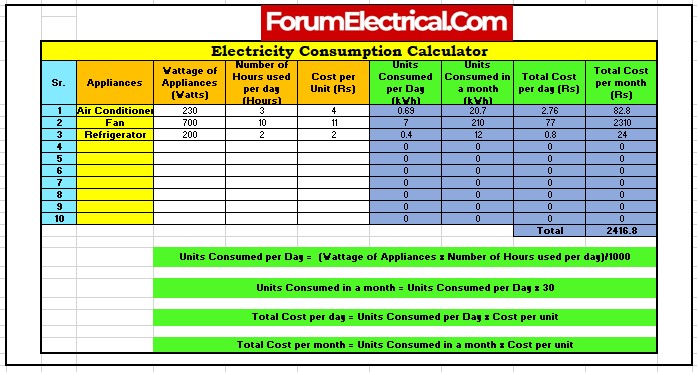
- The Long Game: Some appliances, like your fridge or freezer, don’t just suck power constantly. They cycle on and off. For these, you’ll want to let the meter run for a few hours, or even a full day. Many meters can track kilowatt-hours (kWh) over time. This is the golden number your electricity company actually charges you for! One kWh is 1,000 watts used for one hour. So, if your meter says your fridge used 2.5 kWh in 24 hours, you’re looking at a real, tangible number you can compare to your bill.
- The Sneaky Vampires: This is my favorite part. Go around your house and plug in all the things that are "off" but still plugged in. Your TV on standby? Your phone charger with no phone attached? That coffee maker that just sits there looking innocent? You'll be amazed at how many of these little power vampires are sucking tiny bits of electricity all day, every day. It might only be 0.5 watts here, 2 watts there, but it adds up! It’s like finding loose change in every couch cushion – small amounts that become significant over time.
What Do I Do With This Power (Usage) Information?
Once you've got the numbers, you're empowered! You can now make informed decisions. Maybe that ancient mini-fridge in the garage, bless its heart, is actually costing you more to run each month than a brand new, energy-efficient model. Or perhaps you'll decide to actually unplug your phone charger when you're not using it (because, let's be honest, we usually don't).
It’s not just about saving money; it’s about understanding your home and its energy habits. You might find that your gaming PC, with all its flashing lights and high-performance demands, is less of a hog than your old, clunky dehumidifier. Who knew?
So, grab a power meter. It's a small investment for a big understanding. You'll be smiling, nodding, and probably yelling "Aha!" at inanimate objects in no time. Happy power sleuthing!