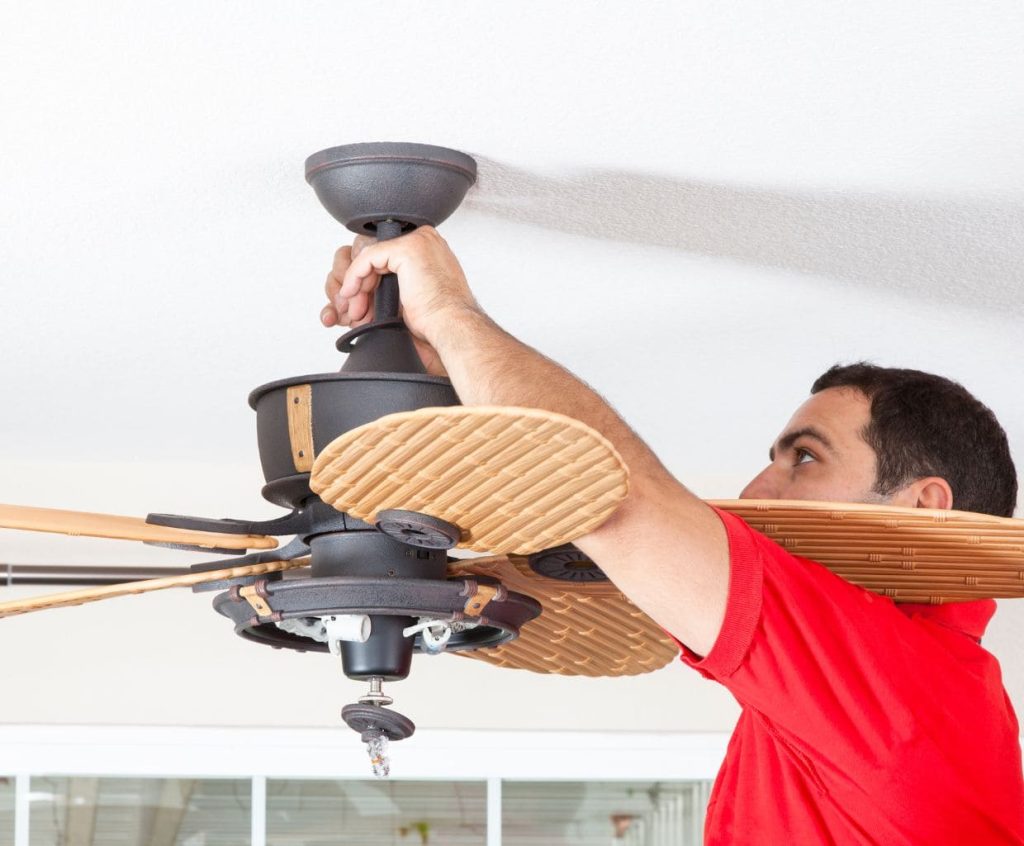
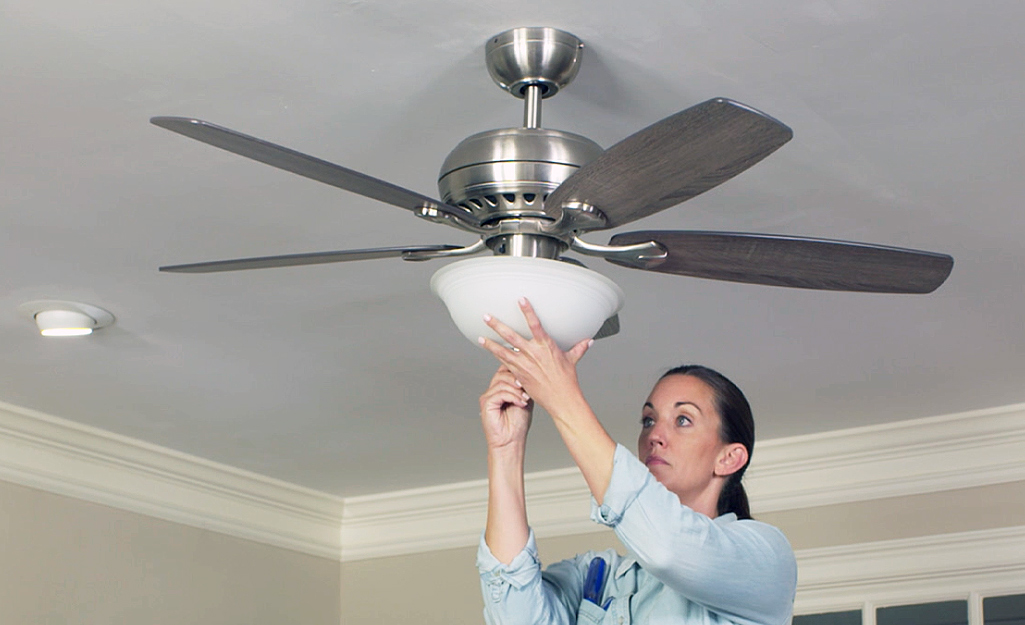
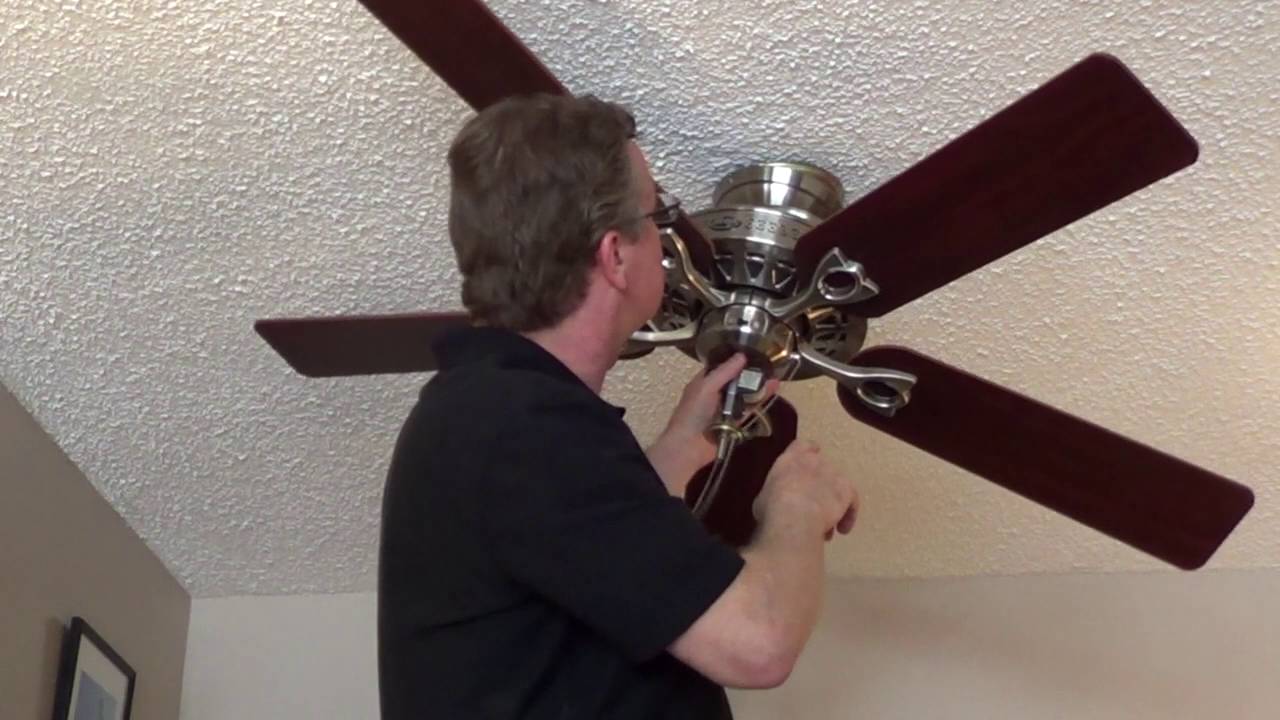
Alright, let’s talk about something truly revolutionary. Something that, frankly, could change your life. No, I’m not talking about cold plunges or intermittent fasting. I’m talking about something far more accessible, far more immediate, and arguably, far more *satisfying*: learning how to turn off your ceiling fan.
Pause for a moment. Are you picturing that gentle, or perhaps not-so-gentle, whirring above you right now? Maybe it’s been on for hours, days, or dare I say, weeks? You know the feeling. That little voice in your head that whispers, "Should I really be running this thing all the time?" Or maybe it’s less subtle, like a full-blown internal monologue screaming, "My energy bill! My poor, overworked fan motor!"
Why Bother? The Grand Philosophy of Fan Control
Now, you might be thinking, "This is basic, I already know this." But hear me out. There’s a certain zen, a profound sense of accomplishment, that comes with mastering the humble ceiling fan. It's not just about saving a few pennies on electricity (though, let’s be honest, that’s a huge bonus!). It’s about taking control. It’s about being an active participant in your living space, rather than a passive observer of a perpetually spinning appliance.
Imagine this: a sudden gust of cool air drifts in through an open window. Instead of shrugging and accepting the internal breeze battle, you, my friend, become the master of your microclimate. A flick, a pull, a press – and suddenly, harmony. Your home responds to you. Pretty cool, right? Pun absolutely intended.
Method 1: The Mystical Pull Chain (A.K.A. The Original & Best)
Ah, the pull chain. The classic. The OG. This is often the first method people encounter, and sometimes the one that causes the most delightful confusion. You see, most ceiling fans with a pull chain often have two. One for the light (if it has one), and one for the fan speed.
So, here’s the secret sauce: the fan chain often cycles through speeds. One pull for high, another for medium, then low, and finally… OFF! Yes, that glorious, silent "off" setting is usually the last stop on the chain’s journey. If you’ve been endlessly pulling, only to find the fan just changes speeds, congratulations, you’ve been living the pull-chain puzzle! Now you know the final, triumphant move.
Pro-tip: If your chains are different lengths, the shorter one is usually for the fan, and the longer one for the light. But hey, don’t take my word for it. Experiment! Feel the power of discovery!
Method 2: The Wall-Mounted Wizardry
Next up, we have the wall switch. This one can be a little trickier because there are variations. Sometimes it’s a simple on/off toggle for the fan. Other times, it’s a dimmer-like switch that controls the fan speed, often with a dedicated "off" position.
If you have a separate fan control on your wall, you’re in luck. It’s usually a straightforward dial or slider. Simply rotate it counter-clockwise, or slide it down, until you hear that satisfying click and the fan sputters to a halt. Victory! If your fan is wired to a regular light switch, a simple flick should do the trick. Just make sure you’re flipping the right switch. We’ve all been there, turning off the entire room’s power instead of just the fan. No judgment here!
Method 3: The Remote Control Renaissance
Welcome to the 21st century! Many modern ceiling fans come with a remote control. This is the ultimate in armchair fan management. Look for a button clearly labeled "OFF" or a fan icon. A simple press, and *poof* – silence. It’s like magic, but with batteries.
Now, if your remote isn't working, first check the batteries. A dead remote is a sad remote, and an even sadder fan owner. If the batteries are good, ensure there's no obstruction between you and the fan's receiver. Sometimes, it’s just about pointing it in the right direction, like a tiny conductor orchestrating the breeze.
Beyond the Spin: What This Means for You
You see? Turning off a ceiling fan isn't just about practical mechanics. It's a metaphor, a tiny, everyday act of empowerment. It’s about understanding the world around you, even the parts that spin above your head. It’s about realizing that seemingly complex problems often have beautifully simple solutions.
Think of all the other "complicated" things in your life that might just need a little pull, a little flick, or a tiny button press to be brought under control. Maybe it’s that overwhelming email inbox, that messy closet, or that habit you’ve been meaning to change. Starting small, with something as fundamental as your ceiling fan, builds confidence.
So, go forth! Embrace the power of the "off" switch. Feel the quiet. Savor the stillness. And when you’ve mastered this small, yet significant, life skill, you’ll realize that your potential for learning and conquering new challenges is truly limitless. What will you master next? The world, my friend, is your oyster – now go turn off that fan!