Ever dreamed of a perfectly chilled room on a sweltering summer day? Of course you have! We all crave that glorious blast of cool air, but picking the right window AC unit can feel like trying to solve a cryptic ancient riddle. Fear not, my frosty-air-seeking friend!
Sizing your window AC unit doesn't have to be a brain-buster. In fact, we're going to make it downright fun! Think of this as your secret decoder ring to ultimate indoor comfort.
The Mighty BTU: Your New Best Friend!
First things first, let's talk about the big kahuna: BTUs. This isn't a secret code for "Big Temperature Undertaker" (though it totally should be!). It stands for British Thermal Units.
In simple terms, a BTU is just a fancy way to measure how much heat an AC unit can remove from a room in an hour. More BTUs mean more cooling power. Easy peasy!
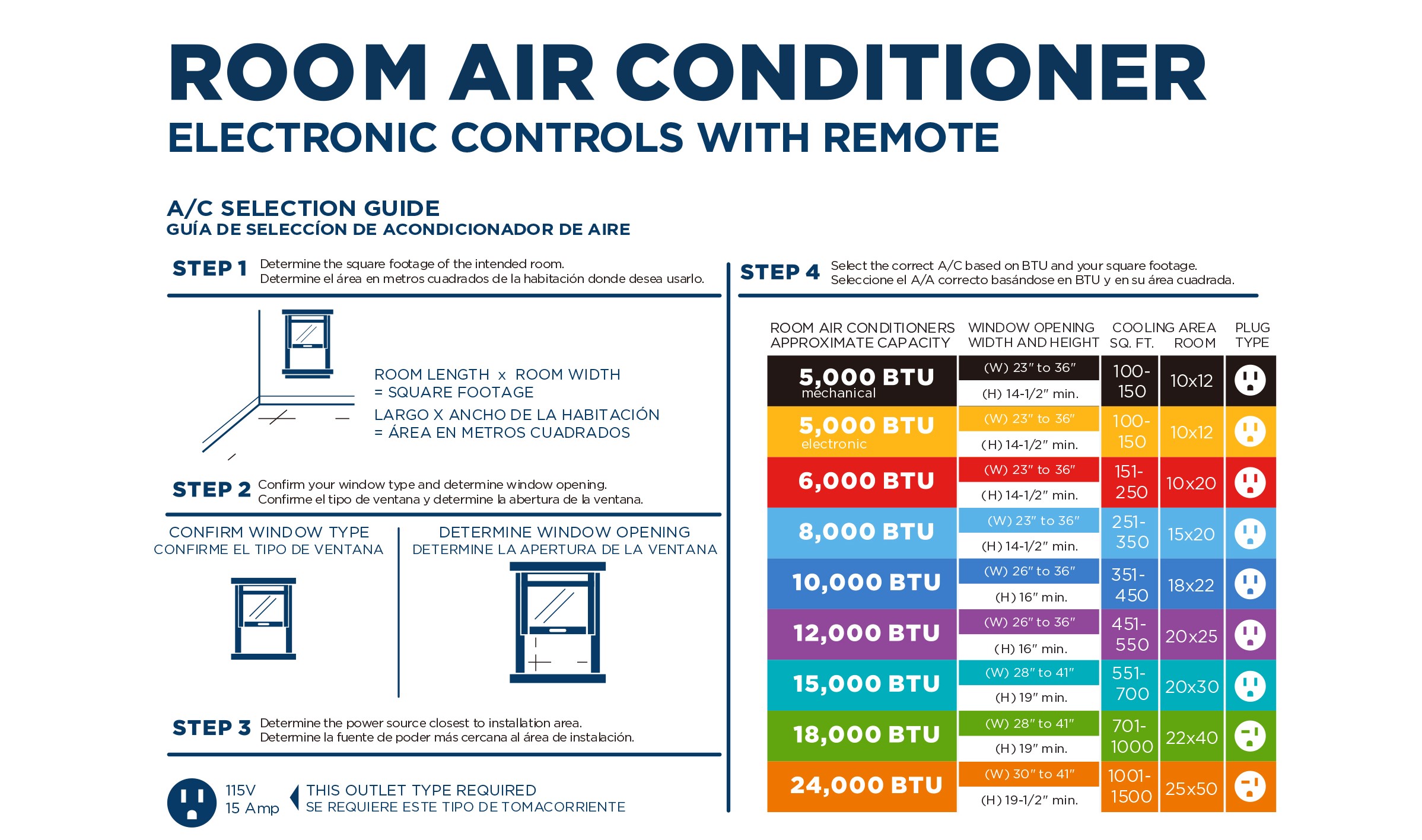
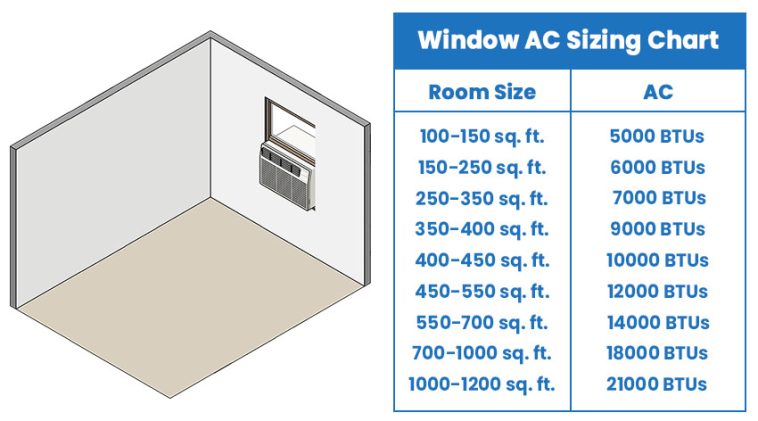
Imagine a tiny superhero AC unit with only 5,000 BTUs. It’s great for a small bedroom, a cozy office, or perhaps a particularly chilly closet. But try to put that little guy in a grand ballroom, and you’ll get... well, a very confused, very sweaty ballroom.
On the flip side, cramming a massive 18,000 BTU beast into a petite powder room would be like trying to cool a single ice cube with a snow cannon. Overkill, much?
Step 1: Measure Your Oasis (aka Your Room!)
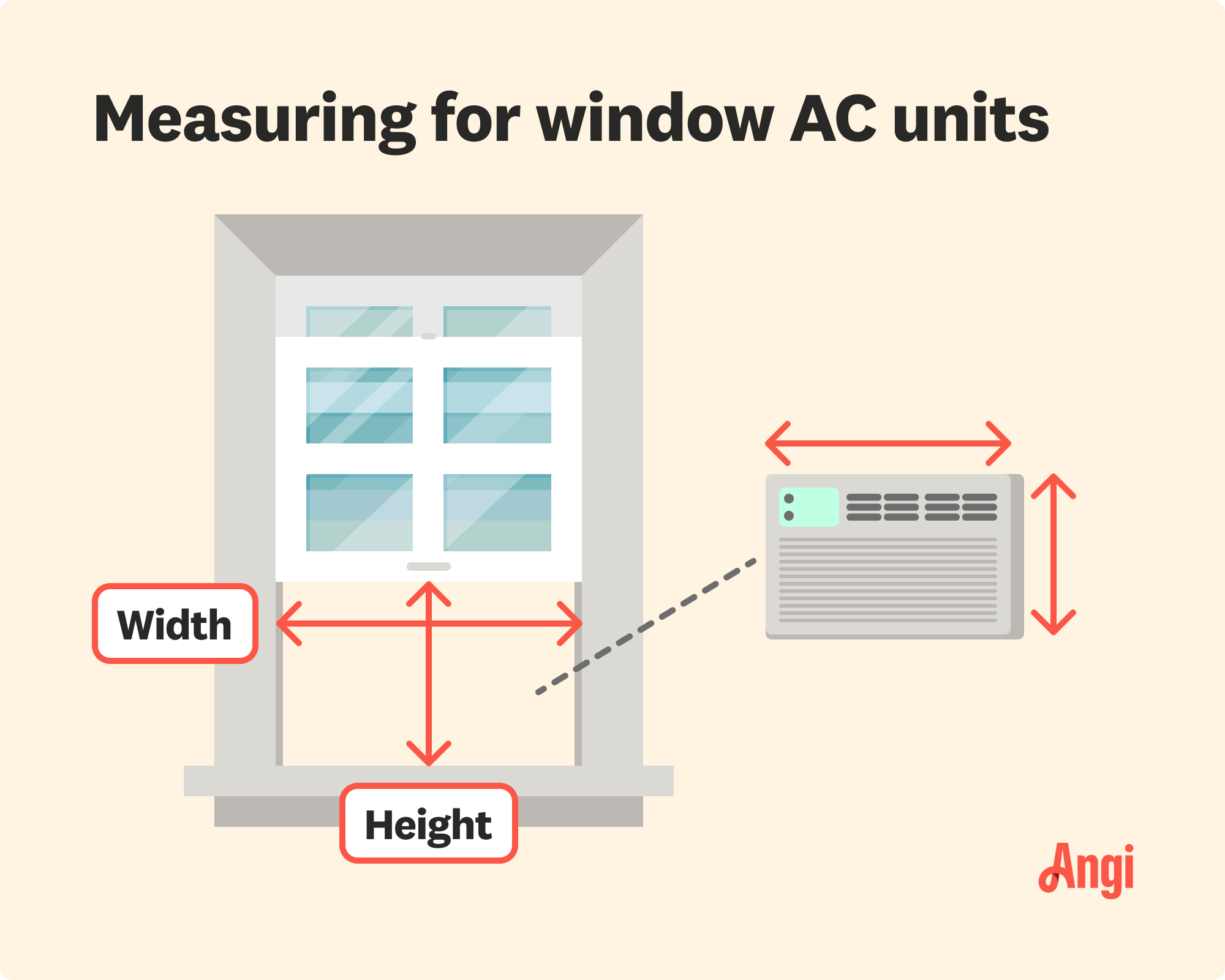
Grab a measuring tape! We need to find the square footage of the room you want to cool. Don't worry, no complex geometry needed here.
Simply measure the length of the room and then its width. Multiply those two numbers together. Length x Width = Square Footage. Boom! You're practically an architect now.
For example, if your living room is 10 feet long and 15 feet wide, then 10 x 15 equals 150 square feet. Write that number down, it's gold!
Step 2: The Basic BTU Blueprint
Now that you have your square footage, let's get a baseline BTU estimate. This is your starting point, like the delicious dough before you add all the extra pizza toppings.
General Rule of Frosty Thumb: You'll need about 20 BTUs per square foot.
Let's use our 150 square foot living room example. 150 square feet x 20 BTUs/square foot = 3,000 BTUs. Is that all? Well, not quite! This is where the fun adjustments come in.
Step 3: The "Life Happens" Adjustments (aka Room Specifics)
Rooms aren't just empty boxes, are they? They have windows, people, maybe a kitchen that turns into a volcano. These factors add heat, and our AC needs to be ready to battle it!
Is Your Room a Sun Worshiper? (+10% BTU!)
Does your room get blasted by sunlight all day long? Is it a glorious, light-filled space that also doubles as a personal sauna in the afternoon? That sunshine is a magnificent heat source.
If your room is super sunny, especially if it's south or west-facing, you'll want to increase your BTU estimate by about 10%. Think of it as giving your AC unit a little extra muscle to fight those fiery rays!
So, our 3,000 BTU estimate for the sunny living room now becomes 3,300 BTUs. Every little bit helps keep things chill.
Party Central? (Add 600 BTUs Per Extra Person!)
Are you cooling a room where more than two people typically hang out? Like a bustling family room, a gaming den, or your weekly bridge club meeting? Humans are lovely, but they also generate heat!
For every person regularly in the room beyond the first two, add an extra 600 BTUs to your total. It’s like each guest brings their own mini-heater to the party!
If our 150 sq ft living room (originally 3,000 BTUs) usually hosts a family of four, that's two extra people. 2 x 600 BTUs = 1,200 BTUs. Suddenly, we're up to 4,200 BTUs!
Kitchen Chaos? (+4,000 BTUs!)
If you're cooling a kitchen, or a room that's open to a kitchen, brace yourself! Ovens, stovetops, dishwashers – they all pump out serious heat. This isn't a small adjustment; it's a big one!
For a kitchen or any open concept area with a kitchen, add a whopping 4,000 BTUs to your estimate. Your AC unit needs to be ready to tackle that culinary inferno.
Imagine your kitchen, 150 square feet, sunny, and you usually have two people. Base: 3,000 BTU. Sunny: +300 BTU. Kitchen: +4,000 BTU. Total: 7,300 BTU. See how quickly it adds up?
High Ceilings & Leaky Windows?
Does your room have super high ceilings, say, over 8 feet? You're cooling more air volume! Or do you have old, drafty windows that leak air like a sieve? These factors mean your AC has to work harder.
While there's no exact formula for these, a good rule of thumb is to bump up your BTU estimate slightly, maybe by 5-10%, if you have especially high ceilings or notoriously bad insulation/windows.
It’s like packing an extra snack for a really long hike. Better to have a little too much cooling power than not enough!
The Golden Rule of Goldilocks: Not Too Small, Not Too Big!
This is crucial! You might think "bigger is always better," but that's not necessarily true for AC units.
If your AC unit is too small, it will run constantly, struggling to reach your desired temperature. It'll guzzle energy, never truly cool the room, and likely burn out faster. Think of it as a hamster trying to power a rocket ship.
But here's the kicker: if your AC unit is too big, it's also a problem! A unit that's too powerful will cool the room super fast, then shut off. This is called "short cycling."
When an AC short cycles, it doesn't run long enough to effectively remove humidity from the air. The result? A room that feels cool but clammy and damp. Yuck! You'll feel like you're trapped in a giant, chilly sponge.
The ideal AC unit will run for longer cycles, allowing it to both cool the air and dehumidify it properly. This is the sweet spot for maximum comfort!
Putting It All Together: You're a Sizing Superhero!
So, let's recap your journey to air-conditioned bliss!
- Measure Your Room: Length x Width = Square Footage.
- Get Your Baseline: Square Footage x 20 BTUs.
- Adjust for Reality:
- Sunny room? Add 10%.
- More than 2 people? Add 600 BTUs per extra person.
- Kitchen in the mix? Add 4,000 BTUs.
- High ceilings/leaky rooms? Consider a slight bump.
Armed with this simple knowledge, you're no longer guessing in the dark. You're making an informed decision, ensuring your summer days are filled with glorious, crisp, perfectly dehumidified air.
No more shivering in a swampy room or sweating under an overmatched unit! You've got this. Go forth, measure with confidence, and choose your perfect cool-air companion. Your future, comfortable self will thank you!
Happy cooling, everybody! May your summer be nothing short of spectacularly chilly.